


Acromegaly isn’t something you wake up with overnight. It creeps in slowly - your rings don’t fit anymore, your shoes feel tighter, your jaw seems to have grown. At first, you blame aging, weight gain, or even just bad posture. But if you’re one of the 3 to 4 people per million diagnosed each year, this isn’t normal. It’s a rare endocrine disorder caused by too much growth hormone in your body after your bones have stopped growing. And if left untreated, it can change your life - and shorten it.
What Actually Happens in Acromegaly?
Inside your brain, at the base of your skull, sits the pituitary gland. It’s small, about the size of a pea, but it controls many of your body’s hormones. In most cases of acromegaly, a benign tumor - called a pituitary adenoma - starts growing on this gland. This tumor pumps out too much growth hormone (GH). That hormone then tells your liver to make more insulin-like growth factor-1 (IGF-1). Together, they trigger your tissues to keep growing - even after your growth plates have closed.
That’s why adults with acromegaly don’t get taller. Instead, their hands, feet, jaw, and nose get bigger. Skin thickens. Voice deepens. Joints ache. And the changes are often so gradual, people don’t notice until someone else points it out. One patient told me their spouse noticed they were ‘looking different’ after a photo from five years ago was pulled up. That’s how slow it is.
What Are the Real Signs You Might Have It?
It’s not just about big hands. The symptoms are wide-ranging and often mistaken for other conditions. Here’s what actually shows up in most patients:
- Enlarged hands and feet - reported in 90% of cases. People often notice they need larger ring or shoe sizes.
- Facial changes - protruding brow ridge, enlarged nose, thickened lips, and a forward-jutting jaw. These aren’t cosmetic - they’re structural.
- Thick, oily skin with skin tags - 70% of patients develop this.
- Deepened voice - vocal cords swell, changing how you sound.
- Joint pain - 79% of people experience it, often misdiagnosed as arthritis.
- Carpal tunnel syndrome - numbness or tingling in the hands, affecting nearly half of patients.
- Headaches and vision problems - caused by the tumor pressing on nearby nerves.
- Sleep apnea - around 60% of people with acromegaly stop breathing briefly during sleep.
- High blood pressure and diabetes - both are common due to how excess GH affects metabolism.
Men often report erectile dysfunction. Women may have irregular periods. Fatigue is nearly universal, even after treatment. These aren’t side effects - they’re direct results of the hormone imbalance.
How Is It Diagnosed?
There’s no single test. Diagnosis takes time - and often, years. The average person waits 7 to 10 years before getting a correct diagnosis. Why? Because the symptoms are vague, and most doctors haven’t seen a case in years.
Here’s how it’s actually confirmed:
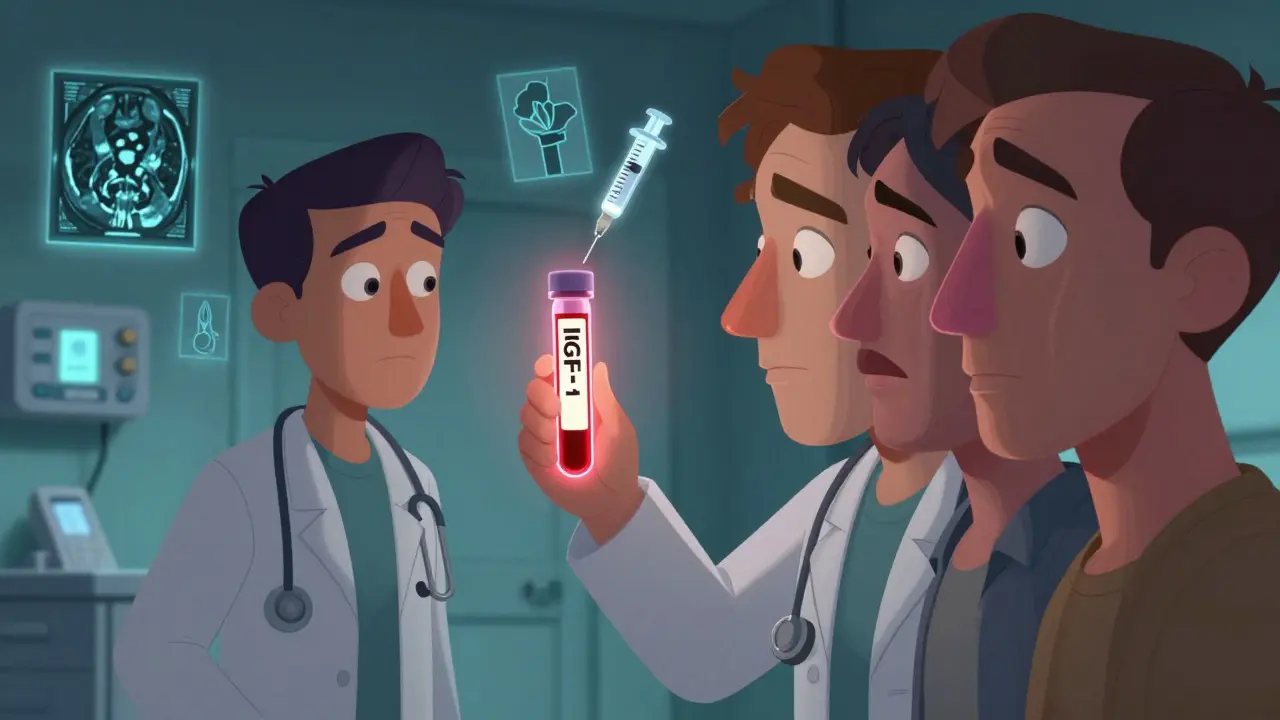
- IGF-1 blood test - This is the first step. IGF-1 levels stay steady throughout the day, unlike growth hormone, which spikes randomly. If IGF-1 is high, it’s a strong signal something’s wrong.
- Oral glucose tolerance test - Normally, drinking sugar water makes GH levels drop. In acromegaly, they don’t. If your GH stays above 1 μg/L after the test, it’s diagnostic.
- Pituitary MRI - This finds the tumor. About 75% of cases show a macroadenoma (larger than 1 cm). The rest have smaller tumors, called microadenomas.
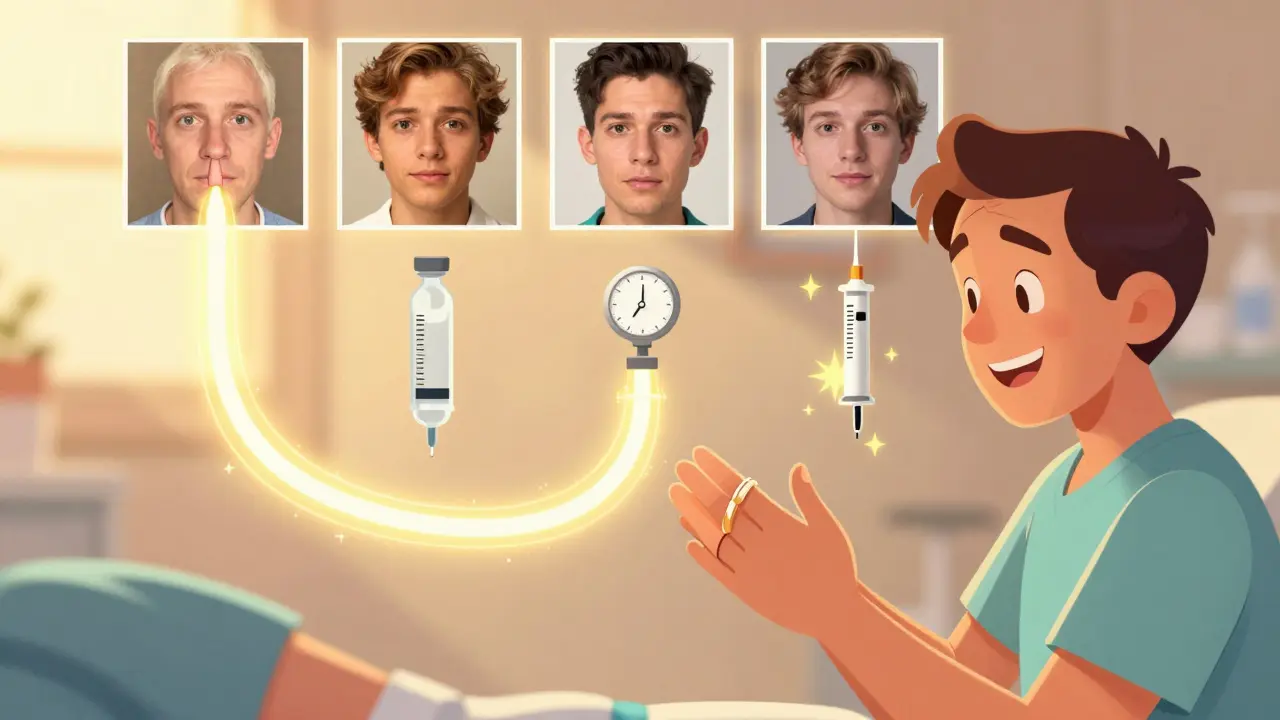
It’s not just about the numbers. Doctors look at your history, your photos from years ago, your symptoms. Sometimes, AI tools are now being tested to analyze facial changes in old photos - detecting acromegaly with 89% accuracy. That could cut diagnosis time dramatically in the future.
How Is It Treated?
Treatment isn’t about curing - it’s about controlling. The goal is simple: bring GH and IGF-1 levels back to normal so your risk of early death drops to near-normal levels. Studies show that when this happens, life expectancy matches that of someone without the condition.
1. Surgery - First Choice for Most
Transsphenoidal surgery - done through the nose - is the first-line treatment for most patients. It’s minimally invasive and works best for small tumors. Success rates? Around 80-90% for microadenomas. For larger tumors, it’s 40-60%. Recovery takes 2-4 weeks. Many patients notice their rings fitting better within months.
But surgery isn’t perfect. If the tumor is too big or stuck to critical nerves, it can’t all be removed. That’s when you move to the next step.
2. Medications - The Long-Term Lifeline
Three main types of drugs are used:
- Somatostatin analogs - Octreotide (LAR) and lanreotide. These block GH release. Given as monthly shots. Cost: $6,200-$7,800 per month in the U.S. Many patients see IGF-1 drop and symptoms improve - but side effects include digestive issues and gallstones.
- Dopamine agonists - Cabergoline. Less effective than somatostatin analogs, but cheaper ($150-$300/month). Used mostly for smaller tumors or when other drugs don’t work.
- Growth hormone receptor antagonist - Pegvisomant. This doesn’t lower GH - it blocks its effect. Highly effective at normalizing IGF-1. Cost: $12,000-$15,000/month. Often used when other drugs fail. Requires weekly injections.
Some patients need combinations. A new trial in 2024 is testing pegvisomant with octreotide for tough cases. Early results look promising.
3. Radiation - Last Resort
Radiation is used when surgery and meds don’t work. It can take 5-10 years to fully work. And it comes with a big risk: 30-50% of patients develop hypopituitarism - meaning their pituitary stops making other essential hormones like thyroid, cortisol, or sex hormones. That means lifelong hormone replacement therapy.
It’s not the first choice - but for some, it’s the only option left.
What Life Looks Like After Treatment
Even when GH levels normalize, the damage doesn’t always reverse. Joint pain can linger for years. Sleep apnea might still need a CPAP machine. Diabetes and high blood pressure often require ongoing meds.
One patient shared: ‘After surgery, my ring size dropped from 13 to 10 in 18 months. But the knee pain? Took three years to ease.’
That’s why ongoing care is critical. You need regular IGF-1 checks every 3-6 months. You need to watch for signs of low cortisol - fatigue, dizziness, nausea - because if your pituitary stops working after treatment, you could go into adrenal crisis.
And yes, insurance is a nightmare. In the U.S., 32% of patients wait over 30 days just to get approval for their monthly shots. That delay can cost you months of progress.
Why Early Diagnosis Matters So Much
Every year without treatment adds to your risk. A 2012 study found people with uncontrolled acromegaly are 2-3 times more likely to die early - mostly from heart disease or stroke. But here’s the good news: when treated within 2-3 years of symptom onset, mortality drops to near-normal levels.
That’s why recognizing the signs early is everything. If your hands are changing, your jaw feels bigger, or you’re developing sleep apnea and joint pain out of nowhere - don’t wait. Ask for an IGF-1 test. Push for an MRI if needed. Specialists say: ‘If you suspect it, test it.’
What’s Changing in Treatment Right Now
There’s hope on the horizon. In July 2023, the FDA approved a new long-acting form of pasireotide that only needs quarterly shots instead of monthly. That’s a huge improvement in quality of life.
Biosimilars of somatostatin analogs are already available in Europe and could cut costs by 30-50% in the U.S. soon. And AI tools that analyze facial changes in photos could soon be used in primary care - catching acromegaly before it causes irreversible damage.
But access is still unequal. People in rural areas wait 40% longer for diagnosis than those in cities. And even with better drugs, the emotional toll remains. Many patients feel isolated, misunderstood, or dismissed - especially when their symptoms are invisible.
What You Can Do If You Suspect Acromegaly
If you’re seeing these signs:
- Take a photo of your face and hands from 5 years ago. Compare them now.
- Ask your doctor for an IGF-1 blood test. Don’t accept a ‘wait and see’ response.
- If IGF-1 is high, insist on a pituitary MRI.
- Seek out a pituitary specialist - not just any endocrinologist. Centers that do more than 25 acromegaly surgeries a year have much better outcomes.
- Keep track of your symptoms - joint pain, sleep, energy levels. Bring a list to appointments.
There’s no shame in asking. This isn’t a ‘you should’ve known’ condition. It’s rare. And it’s treatable - if caught early.
Is acromegaly the same as gigantism?
No. Gigantism happens in children before their growth plates close, causing them to grow very tall. Acromegaly happens in adults after growth plates have fused, so instead of getting taller, the bones in the hands, feet, and face thicken and enlarge. They’re caused by the same hormone excess, but the effects are completely different because of when it happens in life.
Can acromegaly be cured?
It’s not usually cured, but it can be controlled. Surgery can remove the tumor and normalize hormone levels in many cases. For others, lifelong medication keeps GH and IGF-1 in check. When levels are stable, life expectancy returns to near-normal. The goal isn’t to erase the condition - it’s to stop it from harming you.
Do all patients need surgery?
No. Surgery is the first choice for most, especially with smaller tumors. But if the tumor is too large, too close to vital structures, or if the patient isn’t a good surgical candidate, doctors may start with medication. Some people manage well with drugs alone, especially if they respond to somatostatin analogs.
Why does acromegaly cause diabetes?
Excess growth hormone makes your body resistant to insulin - the hormone that moves sugar from your blood into your cells. When insulin doesn’t work well, blood sugar rises. That’s how type 2 diabetes develops. About one in three people with acromegaly will develop diabetes, even if they’re not overweight.
How often do I need blood tests after treatment?
During active treatment, IGF-1 and GH levels are checked every 3 to 6 months. Once levels are stable and symptoms are under control, testing may drop to once or twice a year. But even if you feel fine, regular monitoring is critical - hormone levels can creep up again without warning.
Can acromegaly come back after treatment?
Yes. Even after successful surgery, the tumor can regrow. That’s why lifelong follow-up is necessary. If IGF-1 levels start rising again, it’s a sign the condition is returning. Medication or radiation may be restarted. Early detection of recurrence is key to preventing long-term damage.
Is there a genetic cause for acromegaly?
Most cases are not inherited. They happen randomly due to a gene mutation in a single pituitary cell. But in about 5% of cases, it’s linked to rare inherited syndromes like multiple endocrine neoplasia type 1 (MEN1) or familial isolated pituitary adenoma (FIPA). If you have a family history of pituitary tumors or certain cancers, genetic testing may be recommended.
What’s the biggest mistake people make after diagnosis?
Waiting to start treatment. Some think, ‘I feel okay,’ or ‘It’s not hurting me yet.’ But acromegaly silently damages your heart, joints, and metabolism. The longer you wait, the harder it is to reverse the damage. Early action - even before symptoms feel severe - gives you the best chance at a normal life.
Acromegaly isn’t common, but it’s serious. And it’s treatable - if you know what to look for. Don’t ignore the slow changes. Your body is trying to tell you something. Listen.




My mom had this and no one caught it for years. She thought her joints were just 'old age' until her shoes exploded. Now she’s on monthly shots and her face looks like her old photos again. It’s not glamorous, but it’s life-changing.
Don’t ignore the small stuff. Your body’s whispering before it screams.
Ugh. Another ‘rare disease awareness’ post. Everyone’s got ‘symptoms’ now. Your rings don’t fit? Maybe you gained weight. Your jaw feels bigger? Maybe you’re clenching your teeth. Stop Googling and get a grip.
Also, $15k/month meds? Who’s paying for this? The government? My taxes? Thanks for nothing.
Let me tell you something that no one talks about - the psychological toll of watching your own face slowly become a stranger’s. I remember staring at a photo from 2018 and not recognizing myself. Not because I aged - because my bones were rewriting themselves. And the worst part? People would say, ‘You look… different.’ But never ‘What’s going on?’
It’s not vanity. It’s erasure. Your identity gets reshaped by a tumor you didn’t know existed. And then you’re told to wait seven years for a diagnosis? That’s not medical negligence - that’s systemic blindness.
And don’t even get me started on the insurance delays. I missed three months of treatment because they needed ‘prior authorization’ for a drug that literally keeps you from dying. Three months. Three months of my heart slowly turning to stone.
They say acromegaly is treatable. But what they don’t say is - it’s treatable if you’re rich, white, and loud enough to be heard. For everyone else? You just learn to live with the slow unraveling.
Y’all need to stop waiting for symptoms to be ‘bad enough.’ I had a friend who waited 9 years because she thought her big feet were just from walking a lot. By the time she got diagnosed, her spine was collapsing. Now she’s on pegvisomant and uses a cane.
But here’s the win - she’s alive. And she’s teaching other women in her yoga class to ask for IGF-1 tests. Small wins, people. Small wins matter.
It’s fascinating - and frankly, tragic - that a condition which has been medically documented since the 19th century (yes, even before MRI) still suffers from diagnostic inertia of nearly a decade. The pituitary gland, a structure so small it fits on a pencil eraser, holds dominion over metabolic fate - yet our healthcare system treats it like an afterthought.
And let’s not romanticize the ‘new’ treatments: quarterly pasireotide? A marginal improvement. Biosimilars? A band-aid on a hemorrhage. Until we restructure endocrine training in medical schools - and stop treating rare diseases as ‘curiosity cases’ - we’re just rearranging deck chairs on the Titanic.
Also - AI facial analysis? Cute. But if your primary care physician can’t recognize a prognathic jaw, what makes you think they’ll trust an algorithm?
i just found out my cousin has this and i had no clue. she’s been saying her hands hurt for years and i thought it was arthritis. now she’s doing the monthly shots and says it’s like getting her body back.
also her voice got deeper and she’s like ‘it’s kinda hot now??’ lol
anyone else have a weird story like this? i feel like this is so under talked about
Thank you for this comprehensive breakdown. As a nurse who works in endocrinology, I see the gaps in care every day. The biggest hurdle isn’t the science - it’s the stigma. Patients are told they’re ‘just getting older’ or ‘overreacting.’
One of my patients brought in photos from her wedding ten years ago. Her jawline was visibly different. We ordered the IGF-1 test that same day. She cried when the results came back. Not because she was scared - because someone finally believed her.
For anyone reading this and thinking ‘I don’t have time for this’ - you do. Take five minutes. Look at your old photos. Compare your ring size. Google ‘acromegaly facial changes’ and look at the side-by-sides. If something feels off, push for the IGF-1 test.
It’s not paranoia. It’s self-advocacy. And it saves lives.
Also - if you’re on meds and your insurance is dragging their feet? Call the patient assistance programs. Most drug companies have them. You’re not alone. I’ve helped 12 people get their shots covered. You can too.
i live in rural india and we dont even have pituitary specialist here. my uncle had this and they gave him painkiller for 4 years. then he got a MRI in bangalore and found tumor. now he takes cheap medicine from generic brand.
but still cant get regular checkups. every 6 month travel is hard. i wish someone help us
😭
My dad had it. Surgery worked. Now he’s fine. But he still gets IGF-1 tests every year. Don’t stop just because you feel better.
There’s something so quietly devastating about watching your body become a monument to something you didn’t ask for - a slow, silent rebellion of your own cells.
But here’s the thing I’ve learned: healing isn’t about going back to who you were. It’s about becoming someone who knows how to fight - even when no one’s watching.
That photo comparison? That’s your first act of rebellion. That phone call to your doctor? That’s your second.
You’re not broken. You’re becoming.
So you’re telling me I paid $12k/month for a drug that doesn’t even lower GH? Just blocks it? And the tumor’s still there? Cool. So I’m basically paying to be a zombie with normal IGF-1.
Also, ‘lifelong follow-up’? Yeah, thanks for the reminder that I’m now a medical exhibit.
But hey - at least my rings fit again. 🤡
Wait… so if it’s not inherited, why do people keep saying ‘if you have family history’? That’s contradictory. And AI analyzing faces? That’s just creepy. Are we gonna scan our old Facebook pics now? Next they’ll be scanning our Instagram stories for ‘acromegaly vibes’ 😂
Also - why is everyone so obsessed with ‘normal life expectancy’? Like, what’s the point of living longer if you’re just on drugs forever? 🤔
my sister got diagnosed last year and i didnt even know what it was until i read this. now i look at all our old pics and its so obvious… her jaw, her hands, even her voice. why did no one say anything?
thank you for writing this. i feel less alone now 💙