

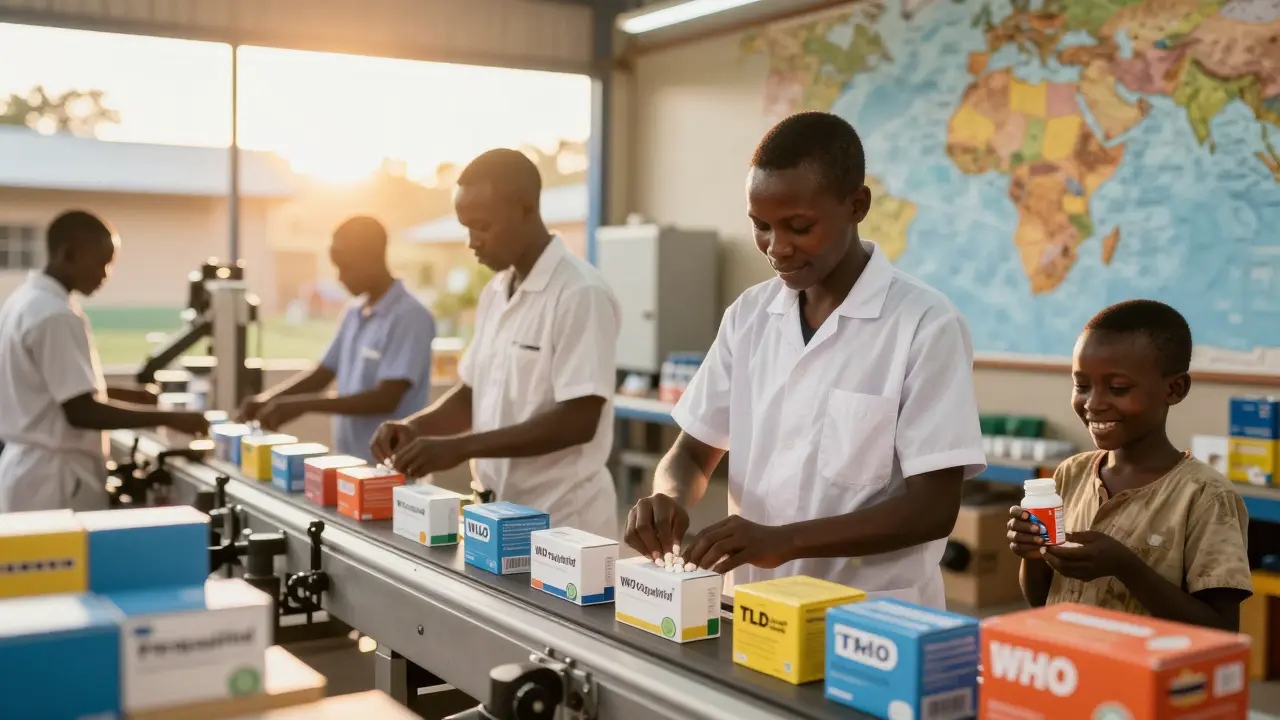
For years, Africa relied on medicines shipped from halfway across the world to keep people alive with HIV. Antiretroviral drugs - the life-saving pills that stop the virus from multiplying - were mostly made in India or Europe. The cost was high, supply chains were fragile, and delays could mean lives lost. But something major changed in 2025. For the first time ever, the Global Fund an international financing organization that supports programs to fight AIDS, tuberculosis, and malaria bought HIV treatment made in Africa. Not just a few bottles. Not a test run. Enough to treat over 72,000 people every year. The medicine? TLD - a single pill combining tenofovir, lamivudine, and dolutegravir. And it came from a factory in Kenya.
Why African-Made ARVs Matter
Sub-Saharan Africa carries 65% of the world’s HIV cases. Yet it produces less than 3% of its own medicines. That imbalance isn’t just unfair - it’s dangerous. When global supply chains broke down during the pandemic, African countries scrambled for pills. Some ran out. Others waited months. The cost of importing drugs isn’t just financial. It’s time. It’s trust. It’s control.
Now, with African manufacturers like Universal Corporation Ltd a Kenyan pharmaceutical company that became the first African manufacturer to receive WHO prequalification for TLD in 2023 producing WHO-prequalified antiretroviral drugs, the continent is taking charge. WHO prequalification isn’t a stamp of approval - it’s a global gold standard. It means the medicine meets the same safety, quality, and effectiveness benchmarks as those made in the U.S. or Europe. No compromises.
Before this shift, most African countries got their ARVs from Indian generics. Those helped cut the price of treatment from $10,000 per person per year in 2000 to under $100 by 2015. But relying on one region created new risks. Geopolitical tensions, shipping delays, currency fluctuations - all could cut off supply. Local production changes that. When a country can make its own pills, it doesn’t have to beg for them.
The TLD Breakthrough
TLD is the current gold standard for first-line HIV treatment in low-resource settings. It’s simple - one pill, once a day. It’s powerful - it suppresses the virus more reliably than older regimens. And it’s forgiving - even if someone misses a dose now and then, it still works. That’s huge in places where clinics are far away, transport is unreliable, and stigma makes it hard to pick up pills regularly.
The fact that Universal Corporation Ltd in Kenya got WHO prequalification for TLD in 2023 was a turning point. It proved African manufacturers could meet international standards. Then, on May 6, 2025, the Global Fund shipped its first batch of African-made TLD to Mozambique. That wasn’t just a delivery. It was a signal. To manufacturers, donors, governments - and to the 25 million people living with HIV in Africa - that this is real. This isn’t a pilot. This is the new normal.
Dr. Ussene Hilário Isse, Mozambique’s Minister of Health, put it plainly: “Africa’s growing capacity to locally produce lifesaving medications marks a strategic shift for our continent.”
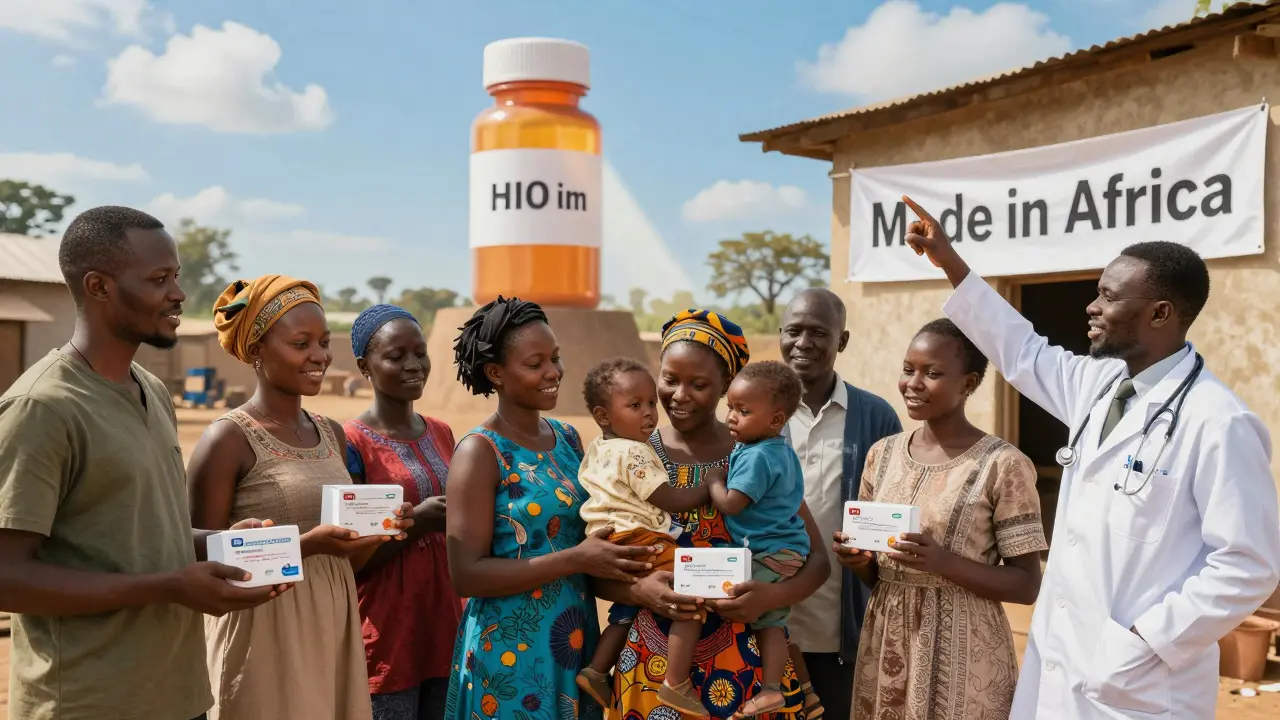
Beyond Pills: Building the Whole System
Getting pills to people isn’t just about manufacturing. It’s about diagnostics, supply chains, and trained health workers. And that’s where other breakthroughs are happening.
In Nigeria, Codix Bio a Nigerian in-vitro diagnostics company that received a sublicense from SD Biosensor to manufacture HIV rapid diagnostic tests is now producing HIV rapid tests under a technology transfer agreement with WHO and the Medicines Patent Pool. These aren’t just tests. They’re tools for early detection. For knowing who needs treatment. For tracking whether treatment is working. Before, many clinics had to wait weeks for lab results. Now, they can test and start treatment in one visit.
South Africa made headlines in October 2025 when it became the first African country to register the twice-yearly HIV injection, cabotegravir long-acting (CAB LA). That’s right - a shot every six months instead of a daily pill. And it’s not just the brand version. Gilead Sciences licensed six African manufacturers to produce generic versions. Experts say prices could drop 80-90% below the brand cost once generics hit the market. That’s game-changing for rural areas where clinic visits are hard.
Even more, Gilead is giving away lenacapavir - a new, ultra-long-acting PrEP drug - at no profit until generics can take over. They’re working with PEPFAR and the Global Fund to get it into 18 high-burden countries by the end of 2025. This isn’t charity. It’s a bridge. A way to get cutting-edge prevention tools to people now, while local manufacturers build capacity to make them later.
The Numbers Don’t Lie
In 2010, 1.3 million people died from AIDS-related causes. In 2022, that number dropped to 630,000. Why? Because more people got treatment. In Eastern and Southern Africa, 93% of people with HIV now know their status. 83% are on treatment. 78% have the virus under control. That’s progress. But in Western and Central Africa, the numbers are lower: 81%-76%-70%. Why the gap? Because access isn’t equal. And until local production scales up, it won’t be.
Africa needs about 15 million person-years of first-line ARV treatment every year. Right now, African manufacturers are only supplying a fraction of that. But the pipeline is filling fast. New factories are set to open in Q4 2025. Funding from Unitaid, the Gates Foundation, and CIFF is helping them get there. The African Union’s Pharmaceutical Manufacturing Plan aims to raise local production from 2-3% to 40% by 2040. That’s ambitious. But with the right support, it’s possible.
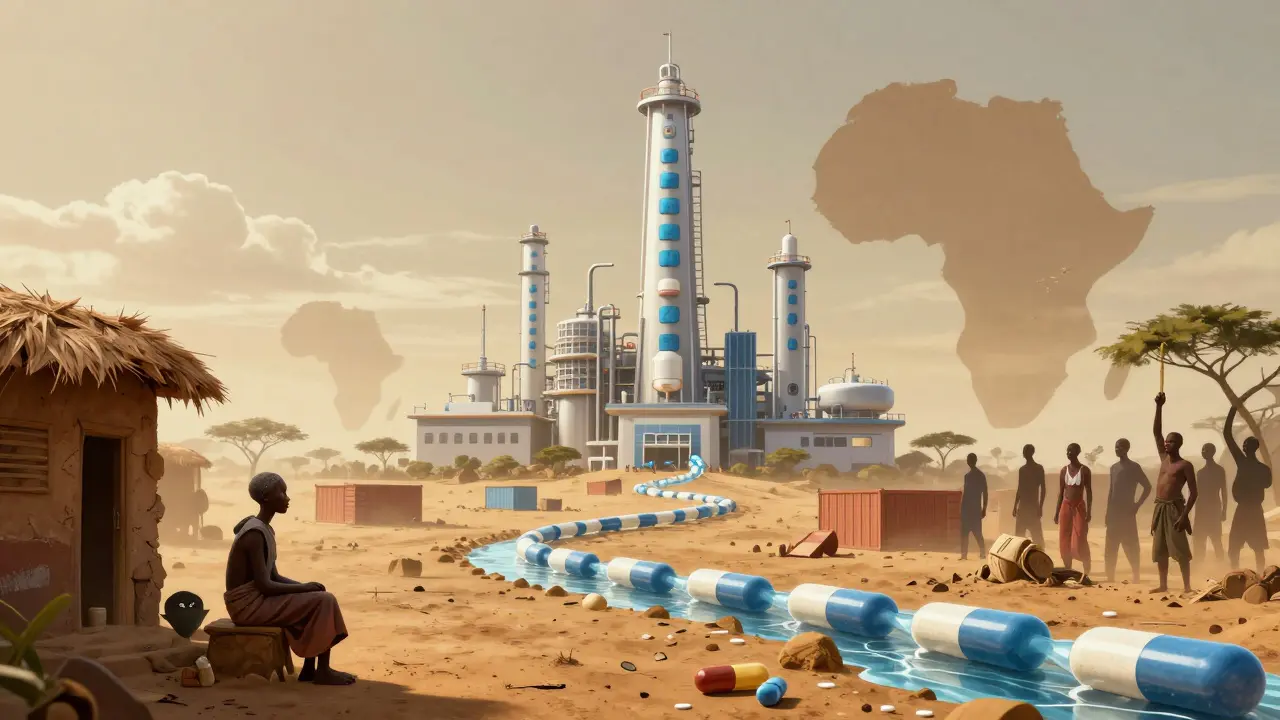
What’s Still Holding Us Back?
Progress is real. But challenges remain. One big one? Regulatory fragmentation. Every country has its own rules. What’s approved in Kenya might not be accepted in Nigeria. Harmonizing regulations across borders would cut costs and speed up access. Another? Financing. Building a pharmaceutical plant costs hundreds of millions. Most African governments can’t fund it alone. International partnerships are essential - but they must be long-term. Not just one-time grants.
There’s also the need for African-led research. Too often, treatments are designed for Western populations. But African patients have different co-infections, genetic profiles, and lifestyles. Local drug development isn’t just about making pills - it’s about making the right pills.
And then there’s integration. HIV services still operate in silos. A person might get their ARVs at one clinic, their TB test at another, their mental health care at a third. Connecting these services saves money, reduces stigma, and improves outcomes. The African Radical Agenda for HIV Sustainability calls this “moving from silos to integrated governance.” It’s not just smart. It’s necessary.
The Road Ahead
By 2030, African-made antiretrovirals could supply 20-30% of the continent’s needs. That’s not enough to cover everyone - but it’s enough to break the cycle of dependence. It’s enough to prove that Africa doesn’t need to wait for others to act. It can lead.
The Global Fund’s decision to buy TLD from Kenya wasn’t an act of charity. It was a market-shaping move. It told manufacturers: “We will buy from you. We will pay fairly. We will trust you.” That’s powerful. It creates jobs. It builds expertise. It turns patients into producers.
When a mother in rural Malawi gets her HIV pills from a factory just a few hours away, she doesn’t just get medicine. She gets dignity. Security. A future. And that’s what this is really about - not just pills, but power.



I cried when I read this. Like, actual tears. Not because I’m emotional (okay maybe I am) but because this is the first time I’ve seen Africa not just be a recipient of aid but a POWERHOUSE of innovation. That factory in Kenya? It’s not just making pills. It’s making dignity. 🥹
Cool. So now what?
Honestly? This is one of those rare moments where the narrative actually matches the reality. No hype. Just science, supply chains, and sovereignty. I’ve seen too many ‘African innovation’ stories that turn out to be PR fluff. This one’s real.
While commendable, one must acknowledge that WHO prequalification does not inherently equate to superior pharmacokinetic profiles. The regulatory frameworks of the EU and FDA remain the gold standard in terms of post-marketing surveillance and adverse event monitoring. This initiative, while symbolically potent, requires longitudinal data to substantiate its clinical equivalence.
This made my whole week 😭👏 Africa producing its own lifesaving meds?? YES. YES. YES. I’m so proud of the continent for taking control. The fact that they’re doing it with TLD? Perfect. Simple. Effective. No fluff. Just science that works. 🙌
so like... i read this whole thing and honestly? i didn't even know people in africa were making medicine. like, i thought all the pills came from india or something. but now i'm just wondering... if they can make this stuff, why not make like... insulin? or asthma inhalers? or birth control? like, why stop at hiv? this feels like the start of something bigger. idk. just thinking out loud. 🤔
This isn’t just about pills. This is about rewriting history. For decades, Africa was treated like a charity case. Now? They’re not asking for handouts. They’re building factories. Training engineers. Creating jobs. And the Global Fund? They didn’t just fund it - they bet on it. That’s the kind of partnership we need more of. 🇰🇪🇨🇲🇿🇳🇬 🌍❤️
Let me get this straight - we’re celebrating African-made HIV drugs like it’s some revolutionary breakthrough? Newsflash: the U.S. and EU have been producing high-quality generics for decades. This is just catching up. And don’t get me started on the ‘local production’ myth - it’s still reliant on foreign patents and tech transfers. Don’t act like this is self-made genius.
There’s something deeply philosophical here. The shift from dependency to self-determination isn’t just economic - it’s existential. When a person can access medicine produced in their own country, by their own people, it redefines their relationship to healthcare, to power, and to their own body. This isn’t logistics. It’s liberation.
Oh here we go. Another ‘Africa is saving the world’ narrative. Where’s the proof? Who’s auditing these factories? Who’s verifying the quality? And why is the Global Fund suddenly so eager to fund African production? Coincidence that this happened right after the U.S. started pressuring India to cut exports? This smells like a geopolitical play disguised as humanitarianism.
I keep thinking about the mother in rural Malawi getting her pills from a factory hours away... and how that changes everything. Not just the medicine - but the silence around her illness. The fear. The shame. Now she doesn’t have to hide. She doesn’t have to travel far. She doesn’t have to beg. She just... gets it. And that’s quiet power. 🌿
this is so beautiful i cant even 😭 like imagine being a kid in zambia and growing up knowing your country makes the pills that keep your parents alive. that’s not just health care. that’s legacy. and the fact that they’re making rapid tests too?? like... whoa. i’m so happy for them. 🥺💖
The real win here? The WHO prequalification. That’s the gate. Once you pass it, you’re in the global market. Kenya didn’t just make a pill - they cracked open the door. And now Gilead’s licensing CAB LA to African manufacturers? That’s not generosity. That’s strategy. Smart. Ruthless. Beautiful.
i just read this and thought... what if this is how the future of global health actually works? not top-down aid, but bottom-up capability. local factories. regional supply chains. shared patents. it’s messy. it’s slow. but it’s real. and honestly? it’s the only way this ends well.