

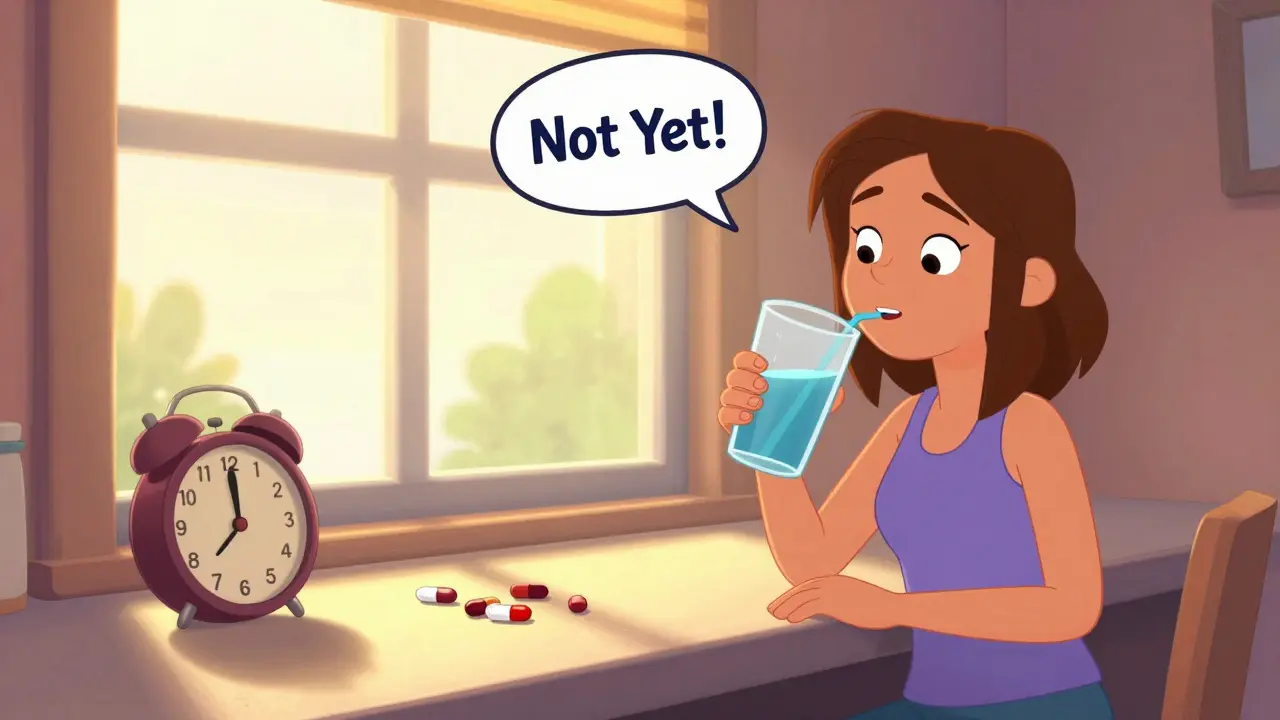
If you're taking levothyroxine for hypothyroidism, and you're also popping calcium or iron pills, you might be accidentally making your thyroid medication less effective - and you probably don't even know it. This isn't a rare issue. Around 15 million Americans take levothyroxine daily, and nearly half of them also take calcium or iron supplements. The problem? These supplements bind to your thyroid medicine in your gut, forming a kind of chemical glue that stops your body from absorbing it. The result? Your TSH levels creep up, your energy drops, and your doctor keeps adjusting your dose - all because of something as simple as when you took your pill.
How Calcium and Iron Block Thyroid Medication
Levothyroxine, the synthetic form of thyroid hormone, needs to be absorbed in the upper part of your small intestine. But when calcium or iron enters your stomach at the same time, their charged particles - calcium ions and ferrous ions - latch onto the levothyroxine molecule like magnets. This creates a big, insoluble clump that your body can't absorb. It just passes through and gets flushed out.
Studies show this isn't a small effect. When calcium carbonate (the most common form in supplements) is taken with levothyroxine, absorption drops by 22% to 36%. Iron supplements like ferrous sulfate reduce absorption by up to 39%. That means if your doctor prescribed you 75 mcg of levothyroxine, you might only be absorbing 45-50 mcg. Your body thinks you're undermedicated. Your thyroid-stimulating hormone (TSH) rises. You feel tired, gain weight, or get cold easily - even though you're taking your pill every day.
What the Guidelines Say About Timing
There’s no single rule, but all major medical groups agree on one thing: don’t take calcium or iron within hours of your thyroid pill.
- The American Thyroid Association and Mayo Clinic recommend waiting at least four hours after taking levothyroxine before taking calcium or iron.
- The European Thyroid Association says two to three hours is enough for calcium, and two hours for iron.
- The American Association of Clinical Endocrinologists says four hours for calcium, but only two for iron.
Why the difference? It comes down to how long each mineral stays active in your gut. Calcium can linger longer, especially if you take it with food. Iron gets absorbed faster, but still binds tightly to levothyroxine. The safest bet? Wait four hours after your thyroid pill before taking either supplement. Or, better yet - take your calcium or iron at bedtime, at least four hours after your last meal and thyroid dose.
Who’s Most at Risk?
Some people are way more likely to run into this problem.
- Pregnant women - Iron needs jump during pregnancy, and thyroid hormone requirements go up too. A 2023 case study showed a pregnant woman taking iron just four hours after levothyroxine still had a TSH of 8.2 - far above normal.
- Menstruating women - Many take iron for anemia. If they take it with breakfast alongside their thyroid pill, they’re setting themselves up for trouble.
- Elderly patients - Often on multiple meds: calcium for bones, iron for anemia, levothyroxine for thyroid. Their stomachs absorb drugs slower, so interactions last longer.
- People with gut issues - Celiac disease, IBS, or gastric bypass surgery already reduce levothyroxine absorption. Adding calcium or iron makes it worse.
A 2017 study of 450 patients found that 4.4% developed dangerously high TSH levels within a year just from taking calcium supplements without proper spacing. That’s nearly 1 in 20 people.

Other Things That Interfere - And How to Avoid Them
Calcium and iron aren’t the only troublemakers. A lot of everyday foods and supplements mess with levothyroxine too.
- Soy products - Soy milk, tofu, edamame. They can increase your levothyroxine dose needs by 18-30%.
- Walnuts - One study showed a 24% drop in absorption when eaten with the pill.
- Grapefruit juice - Slows down how fast your liver clears the drug, which can cause unpredictable levels.
- High-fiber foods - Eating a big bowl of oatmeal or bran cereal right after your pill can raise your TSH by 15-25%.
- Coffee and tea - Tannins in both reduce absorption. Wait at least one hour after your pill before drinking either.
- Biotin - Found in hair and nail supplements. At doses over 5 mg daily, it can make your lab results look fake - TSH looks low, T4 looks high - even if you’re actually undermedicated.
And don’t forget calcium-fortified foods. That glass of orange juice? A cup has about 350 mg of calcium - enough to interfere. Same with almond milk, soy milk, or cereals labeled "fortified with calcium." Read labels. If it says "calcium carbonate" or "calcium citrate," treat it like a supplement.
Real People, Real Problems
Online forums are full of stories like this:
- A woman on Reddit (u/ThyroidWarrior99) started taking calcium for osteoporosis. Her TSH jumped from 1.8 to 6.4 in three months. She didn’t realize the connection until her endocrinologist asked about her supplements.
- Another (u/HypoMama) took iron after having a baby. Her TSH stayed high no matter how much she increased her levothyroxine. She switched her thyroid pill to bedtime, took iron at lunch - and her levels normalized in six weeks.
These aren’t isolated cases. A 2022 survey by Thyroid UK found that 68% of people on levothyroxine struggled to keep their supplements timed right. Many were juggling five or more daily medications. It’s not their fault. Doctors rarely explain this clearly.
What Your Doctor Should Tell You
Here’s the sad truth: a 2023 study found that only 42% of patients got proper counseling about supplement interactions when they first started levothyroxine. Even though 89% of doctors know it’s important, they don’t always say it.
Ask your doctor these questions:
- "Do I need to separate my calcium or iron supplements from my thyroid pill?"
- "How long should I wait?"
- "Should I take my thyroid pill in the morning or at night?"
- "Are there any foods or vitamins I should avoid?"
If your doctor doesn’t give you clear, written instructions, ask for them. Print them out. Put them on your fridge.
What to Do Right Now
You don’t need to stop your supplements. You just need to time them right.
- Take levothyroxine first thing in the morning - on an empty stomach, with a full glass of water. Wait 30-60 minutes before eating or drinking anything else.
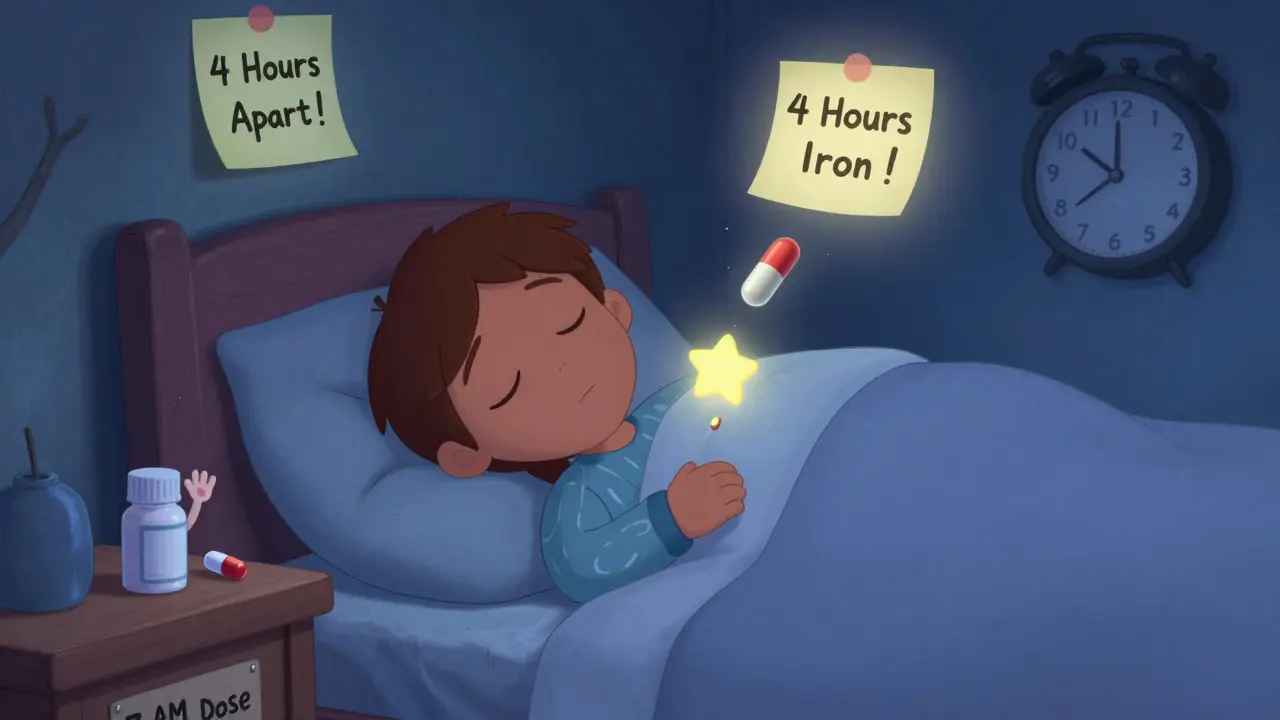
- Take calcium and iron at bedtime - at least four hours after your last meal and thyroid dose. This is the easiest way to avoid conflict.
- If you can’t take it at night - take your calcium or iron at least four hours before your thyroid pill. That means taking it at lunch, not breakfast.
- Check all your supplements - multivitamins, gummies, prenatal formulas - they often contain hidden calcium or iron.
- Don’t switch brands - different levothyroxine brands (Synthroid, Tirosint, generic) can behave differently. Stick with one.
- Get your TSH checked - six weeks after changing your supplement timing. That’s how long it takes for your levels to stabilize.
What’s Coming Next?
Good news: researchers are working on better versions of levothyroxine. A new liquid formulation has been tested and shows only an 8% drop in absorption when taken with calcium - compared to 32% for regular tablets. Another version, designed to release in the small intestine instead of the stomach, is in late-stage trials and could be available by 2025.
But until then? Timing matters. A lot.
Improper timing isn’t just inconvenient - it costs the U.S. healthcare system $187 million a year in extra lab tests, doctor visits, and unnecessary dose changes. You’re not just saving yourself from fatigue and weight gain - you’re helping reduce a huge, avoidable medical burden.
Can I take calcium and iron together with my thyroid medication if I wait a few hours?
No. Even if you wait a few hours after your thyroid pill, taking calcium and iron together can still interfere with absorption. Take them separately - one at a time - and wait at least four hours after your thyroid medication before taking either. If you need both, space them at least two hours apart from each other.
Is it safe to take thyroid medication at night?
Yes, and for many people, it’s better. Taking levothyroxine at bedtime, at least three to four hours after your last meal, avoids most food and supplement interactions. Studies show nighttime dosing works just as well as morning dosing, and many patients find it easier to stick with. Talk to your doctor before switching.
What if I forget and take my calcium with my thyroid pill?
Don’t panic. One mistake won’t ruin your treatment. But don’t take another dose. Just wait until tomorrow and follow the timing rules strictly. If this happens often, your TSH will rise over time. Get a blood test in six weeks to make sure your levels are back on track.
Do all forms of calcium and iron interfere the same way?
Yes. Calcium carbonate, calcium citrate, ferrous sulfate, ferrous fumarate, and ferrous gluconate all interfere. The form doesn’t matter - it’s the calcium or iron ion that binds to the thyroid hormone. Even calcium from fortified foods like orange juice or plant-based milk can cause problems.
Can I take a multivitamin with my thyroid medication?
Only if it doesn’t contain calcium, iron, or magnesium. Most multivitamins do. Check the label. If it has any of those minerals, take it at bedtime - at least four hours after your thyroid pill. Otherwise, skip it and take individual supplements instead.
How long does it take for my thyroid levels to stabilize after changing supplement timing?
About six weeks. Thyroid hormone has a long half-life, so it takes time for your body to adjust. Don’t check your TSH sooner than that. If you change your timing and get tested too early, you might get a misleading result and end up with an unnecessary dose change.
Are there any thyroid medications that don’t interact with calcium or iron?
Currently, no FDA-approved thyroid medication is completely free from these interactions. But new formulations - like liquid levothyroxine and enteric-coated tablets - are showing much less interference in trials. These aren’t widely available yet, and they’re significantly more expensive. For now, timing is still your best tool.
Final Tip: Write It Down
Put your supplement schedule on your phone, your mirror, your calendar. Example: "7 AM: Levothyroxine + water. Wait 60 min. Eat. 10 PM: Iron + calcium." Simple. Clear. No guessing. This isn’t just about taking pills - it’s about making sure your body gets the medicine it needs to work properly. Get it right, and you’ll feel like yourself again.





This is such a game-changer for me 😊 I was taking my iron at breakfast with my thyroid med and wondering why I was so tired all the time. Switched to bedtime and my energy is back. Thank you for the clarity!
Oh my god, I just realized I’ve been drinking calcium-fortified almond milk with my levothyroxine for two years. No wonder my TSH was always creeping up. I’m switching to oat milk now and taking my supplements at 10 PM like a proper adult. 🙌 Also, biotin? I thought it was helping my hair - turns out it was lying to my lab results. 😅
So let me get this straight - you’re telling me the reason I’ve been feeling like a zombie since 2021 is because I was swallowing my calcium gummies with my thyroid pill like they were candy? And my doctor never mentioned this? Classic. I’m printing this out and taping it to my fridge next to my ‘I survived another Zoom meeting’ sticker.
Thank you for writing this. I’ve been on levothyroxine for 8 years and never knew about the calcium thing. I take a multivitamin at lunch - turns out it had iron. I just stopped taking it and switched to separate supplements at bedtime. My fatigue is already less. Small changes, huge difference. 🙏
Same. Took my prenatal with my thyroid med for 6 months. TSH hit 12. My OB said ‘just increase your dose.’ I was like… maybe stop poisoning my absorption? Switched to bedtime iron + calcium. TSH back to 1.9 in 5 weeks. 🤯
Let’s be real - this isn’t just about timing. It’s about how broken our healthcare system is. 42% of patients get proper counseling? That’s criminal. I’m a nurse and I had to teach my own mother this after she ended up in the ER with TSH over 15. We don’t need fancy new drugs - we need doctors to spend 5 minutes explaining the basics. And we need pharmacies to print warning labels on every bottle of calcium. This shouldn’t be a secret.
Also - soy milk? I used to drink it every morning with my coffee and thyroid pill. Now I use rice milk. No more unexplained weight gain. And yes, grapefruit juice is a no-go. I used to think it was just for statins. Nope. It’s a sneaky saboteur.
And if you’re on biotin for hair? Stop. Just stop. Your nails might look better, but your lab results? They’re a lie. I’ve seen patients get misdiagnosed because of this. Your doctor thinks you’re overmedicated when you’re actually undermedicated. It’s terrifying.
And don’t get me started on the fact that generic levothyroxine brands aren’t interchangeable. I switched from one generic to another because it was cheaper - my TSH jumped 3 points. Went back to the original brand. Back to normal. Your thyroid doesn’t care about your budget. It cares about consistency.
Bottom line: Write it down. Set alarms. Use a pill organizer. This isn’t optional. This is survival. And if your doctor doesn’t get it? Find one who does. Your energy, your weight, your mood - they’re all on the line.
Just took my thyroid pill at 7am, coffee at 7:30am - and I’ve been fine for years. Maybe I’m just lucky? Or maybe my gut is a superhero? Either way, I’m not changing anything. My TSH is perfect. Maybe the science doesn’t apply to everyone?
My mom takes calcium, iron, and thyroid med all at once. She says she forgets. I just told her to put a sticky note on her mirror: ‘Thyroid. Wait. Then Calcium. Then Iron. Then Sleep.’ She laughed. I hope it sticks.
This is a most profound and medically significant exposition. In my country, Nigeria, many patients are unaware of these interactions due to limited access to endocrinology services. I commend the author for this lucid and comprehensive guide. It is my hope that this information is disseminated through community health workers and translated into local languages. The burden of mismanaged hypothyroidism is immense, and prevention through education is the most cost-effective intervention.
Wait - so I’ve been taking my calcium with breakfast for 5 years and my TSH is normal? Maybe it’s just me? Or maybe the 36% drop doesn’t matter if you’re on a high dose?
i took my pill at night last week and forgot to take iron till morning… i felt better. maybe i dont need the iron? maybe i just need sleep?
what if… the real issue is that we’re all just too stressed and our bodies are just… giving up? maybe the supplements arent the problem… maybe we just need to stop taking so many pills and go for a walk? 🤔
My doctor said ‘take it on an empty stomach.’ Didn’t say anything about calcium. Now I feel dumb.
As a healthcare professional from India, I’ve seen this pattern repeatedly. Patients assume supplements are harmless. They are not. In rural clinics, we often find TSH levels above 20 because patients take calcium tablets with breakfast - alongside thyroid medication. Education is the missing link. We need pamphlets in local languages, community radio spots, and pharmacy staff trained to ask: ‘Are you taking thyroid medicine?’ before selling calcium. This isn’t just medical advice - it’s public health.
Or… maybe Big Pharma doesn’t want you to know you can fix this by just changing your schedule? Why are they pushing expensive new formulations? Coincidence? I think not.