

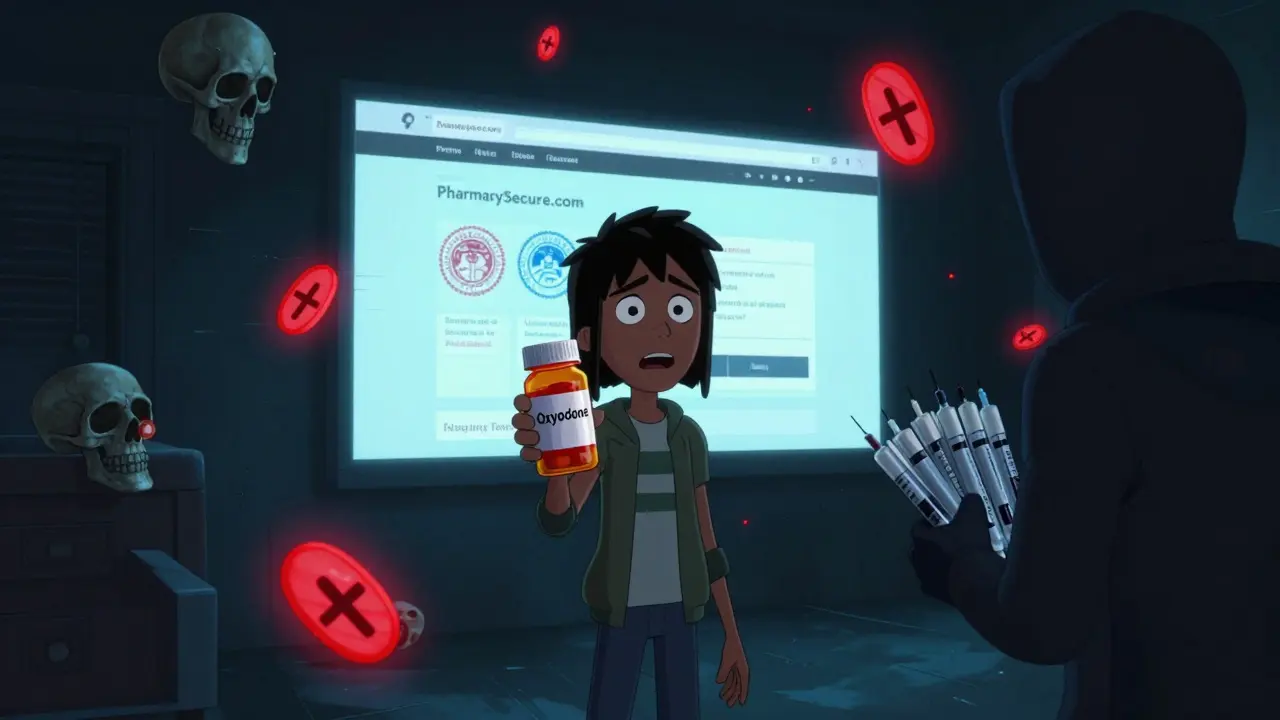
Buying medicine online sounds easy. You type in a name, click "Buy," and it shows up at your door in a couple of days. But what if that pill isn’t what it claims to be? What if it’s laced with something deadly? Every day, people across the world - including right here in Australia - order pills from websites that look real, act real, and even have fake U.S. or Canadian addresses. But they’re run by criminals. And the cost? Sometimes, it’s your life.
What you’re really buying when you click "Buy Now"
Most fake online pharmacies don’t sell medicine. They sell poison disguised as medicine. The U.S. Drug Enforcement Administration (DEA) found that in 2024, over 95% of websites selling prescription drugs online operate illegally. These aren’t shady back-alley operations. They’re slick websites with professional logos, secure-looking checkout pages, and even fake pharmacy licenses. They copy the design of real pharmacies like CVS or Walgreens. But they’re hosted on servers in India, the Dominican Republic, or China.
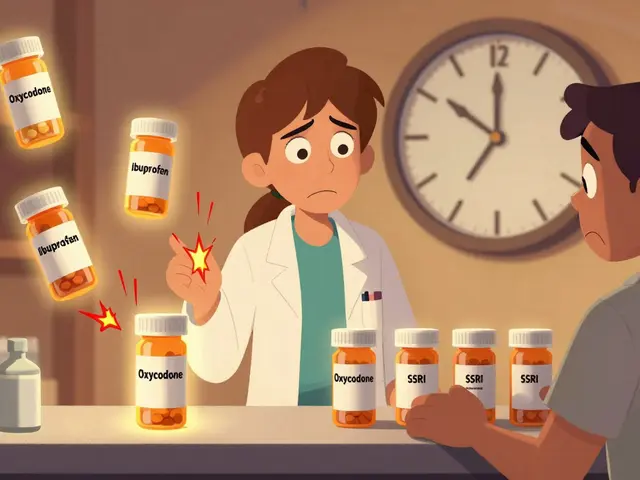
The pills inside? They’re a gamble. Some contain no active ingredient at all. Others have too much - like a fake Adderall pill with 10 times the normal dose of amphetamine. Others are laced with fentanyl, a synthetic opioid 50 times stronger than heroin. The DEA’s Operation Press Your Luck in September 2024 confirmed a woman in Ohio died after taking one pill she thought was oxycodone. It was pure fentanyl. She didn’t even know she was at risk.
Counterfeiters don’t just target painkillers. They’re flooding the market with fake versions of insulin, heart meds, cancer drugs, and even weight-loss injectables like semaglutide. A single fake semaglutide pen can sell for $300 or more on social media. But instead of the real drug, it might contain sugar water, bacteria, or industrial chemicals. One patient in Melbourne reported her diabetes got worse after using a "generic" insulin she bought online. Her blood sugar spiked. She ended up in the ER.
The hidden dangers: More than just bad pills
It’s not just about what’s in the pill. It’s about what’s missing.
Legitimate medicines are made under strict conditions. Temperature-controlled labs. Sterile environments. Quality checks at every step. Fake pills? Made in unregulated factories, sometimes in basements or garages. They’re mixed with whatever’s cheap and easy to find. Sawdust. Baking soda. Rat poison. Fentanyl. The result? No one knows what’s in them - not even the seller.
And it’s not just the drug. The packaging can be just as dangerous. Fake insulin pens might have fake labels that look real - but the liquid inside is contaminated. A patient in the U.S. reported that her fake Viagra dissolved instantly in water. That’s not how real pills behave. Real pills have binding agents that hold them together. Fake ones don’t. That’s how you know they’re not made to medical standards.
Then there’s the data risk. These sites ask for your credit card, your address, your doctor’s name, even your medical history. They don’t care about your privacy. They sell it. Or worse - they use it to steal your identity. One consumer in Sydney lost over $2,000 after a fake pharmacy used her card details to make dozens of unauthorized purchases.
How criminals are getting smarter
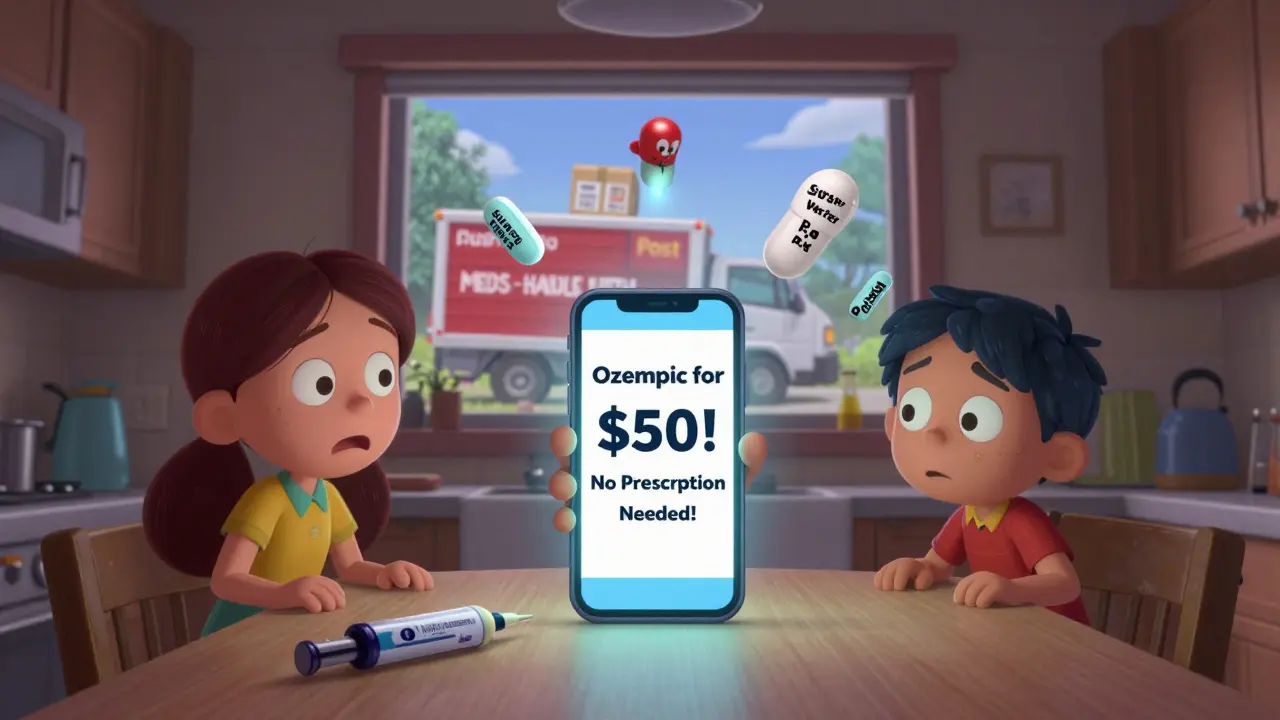
Criminals aren’t dumb. They’re using the same tools we all use - social media, Google Ads, Instagram influencers - to lure people in. You’ll see posts like: "Get Ozempic for $50! No prescription needed!" or "Adderall shipped overnight - no doctor visit!"
They know people are desperate. People who can’t afford their meds. People who are embarrassed to ask their doctor for help. People who think they’re saving money. But here’s the truth: a fake semaglutide pen might cost $50. But if it gives you a stroke, a heart attack, or kills you - how much is that worth?
According to Interpol’s 2025 Operation Pangea XVI, law enforcement shut down over 13,000 fake pharmacy websites and social media pages. But within days, new ones popped up. Criminals are now creating fake websites that mimic real ones so closely, even tech-savvy users get fooled. Some even use real pharmacy names in their domain names - like "pharmacy-secure.com" - to trick people into thinking they’re legit.
They’re also shipping in small parcels - often under 1kg - because customs scanners are less likely to check them. The OECD found that 65% of counterfeit drugs arrive by mail. That’s why Australia Post and other carriers are now training staff to spot suspicious packages. But it’s not enough.
Real people. Real tragedies.
Let’s be clear: this isn’t hypothetical. People are dying.
In 2024, the Pharmaceutical Security Institute recorded over 3,600 arrests globally linked to fake drug sales. But arrests don’t bring back the dead. The WHO estimates that 1 in 10 medicines in low- and middle-income countries are fake. But it’s not just those countries. In 2024, the U.S. FDA issued over 100 warning letters to fake online pharmacies. In Canada, Health Canada shut down 27 illegal sites in one year. And here in Australia, the TGA (Therapeutic Goods Administration) has repeatedly warned the public about fake online pharmacies selling prescription drugs.
Reddit threads like r/pharmacy and r/health are full of stories. One user wrote: "I ordered 30 mg Adderall. The pills were blue. Real ones are orange. I took one. My heart raced for 12 hours. I thought I was having a panic attack. Turns out it was pure amphetamine - no ADHD medication at all." Another: "I bought fake insulin for my dad. He went into a coma. The hospital said the insulin had no active ingredient. He survived. We lost $400. We almost lost him."
These aren’t rare. They’re common. And they’re getting worse.
How to protect yourself
If you’re buying medicine online, here’s what you need to know:
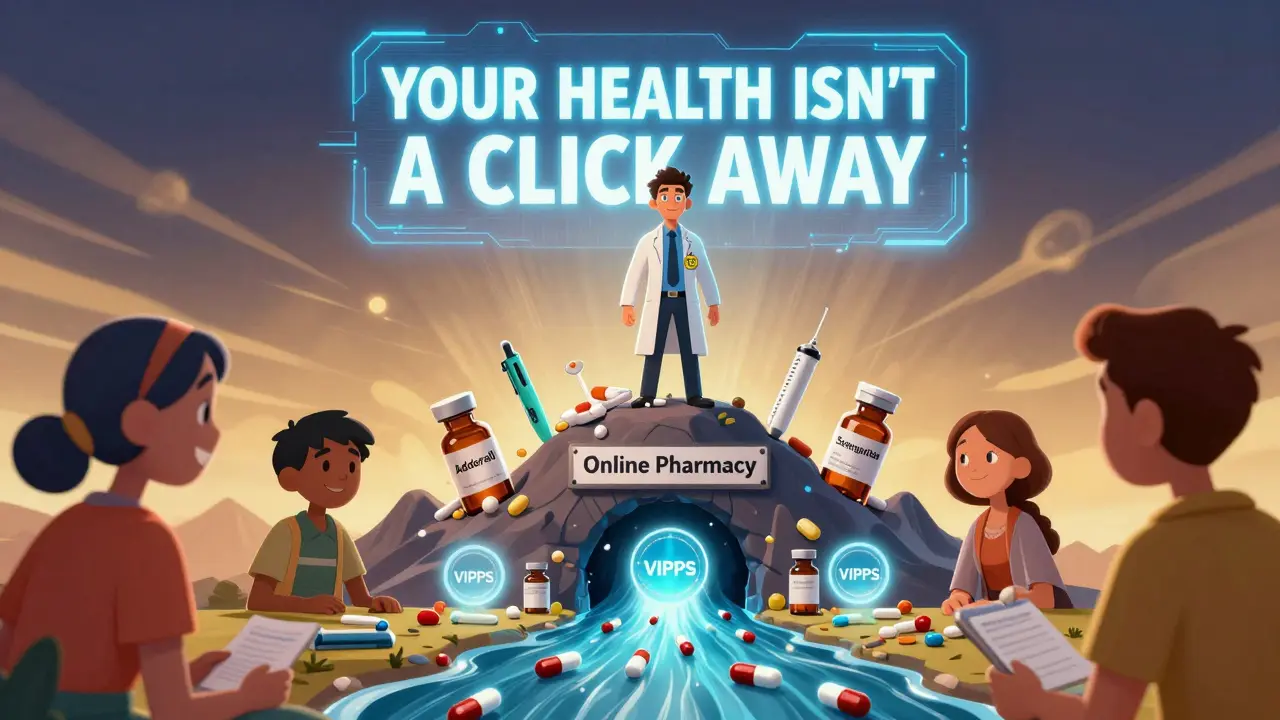
- Only use licensed pharmacies. In Australia, check the TGA’s list of approved online pharmacies. In the U.S., use the National Association of Boards of Pharmacy’s Verified Internet Pharmacy Practice Sites (VIPPS) program.
- Look for the VIPPS seal. It’s a small logo. Click it. It should take you to the official verification page. If it doesn’t, it’s fake.
- Never buy without a prescription. Legitimate pharmacies require a valid prescription. If a site says "no prescription needed," it’s illegal.
- Check the website address. Real pharmacies use .gov, .edu, or .pharmacy domains. Fake ones use .com, .net, or weird extensions like .xyz or .info.
- Compare packaging. Real pills have consistent color, shape, and markings. Fake ones vary. If the pills look different from what you’ve taken before, stop using them.
- Call your doctor. If a drug is too cheap, it’s too good to be true. Ask your doctor about affordable options. Many have patient assistance programs.
There’s no shortcut to safety. If it seems too easy - it is.
What’s being done - and why it’s not enough
Law enforcement is fighting back. Interpol’s 2025 operation seized over 50 million fake doses. The DEA, FDA, and TGA are working together to track down servers and shut down domains. But the scale is massive. Criminals create 20 new fake pharmacy sites every single day. That’s 7,300 a year. Law enforcement can’t keep up.
Why? Because the demand is growing. More people are turning to online pharmacies because of cost, lack of access, or stigma. The WHO says weak regulation, complex supply chains, and lack of affordable meds are the root causes. But until we fix those, people will keep risking their lives.
The solution isn’t just better policing. It’s better access. Better education. Better support. If you’re struggling to afford your meds, talk to your doctor. Ask about generic versions. Ask about patient assistance programs. There are legal, safe options. You just have to know where to look.
Bottom line: Your health isn’t worth the risk
You wouldn’t buy a fake car part for your brakes. You wouldn’t eat food from an unlicensed street vendor if you knew it was contaminated. So why take a pill from a website you can’t verify?
Counterfeit meds don’t just fail. They kill. And they’re easier to get than ever.
If you’ve ever bought medicine online without a prescription - stop. Talk to your doctor. Check the TGA website. Use a licensed pharmacy. It’s not about being perfect. It’s about being alive.
Can I trust online pharmacies that claim to be "international" or "licensed abroad"?
No. A pharmacy licensed in another country doesn’t mean it’s safe for you. Australia’s TGA, the U.S. FDA, and Health Canada don’t recognize foreign licenses as valid for selling to their citizens. Many fake pharmacies use fake licenses from countries with weak oversight. Always verify the pharmacy is licensed in your own country.
What should I do if I already took a pill from a fake website?
Stop taking it immediately. Call your doctor or go to the nearest emergency room. Bring the pill and packaging with you. Even if you feel fine, some counterfeit drugs cause delayed reactions. Fentanyl, for example, can be fatal hours after ingestion. Also report the pharmacy to your national health regulator - like the TGA in Australia or the FDA in the U.S.
Are generic drugs from online pharmacies safe?
Generic drugs are safe - but only if they’re from a licensed pharmacy. Many fake sites sell fake generics. Real generics have the same active ingredient, dose, and effect as brand-name drugs. Fake ones may contain nothing, too much, or dangerous fillers. Always check the pharmacy’s license and look for the TGA or FDA approval mark on the packaging.
Why are fake meds so common on social media?
Social media platforms have weak enforcement for health products. Advertisers use coded language - "weight loss miracle," "no prescription needed," "fast delivery" - to bypass filters. Influencers get paid to promote fake drugs, often without knowing they’re illegal. The result? Millions of people see these ads daily. The TGA and FDA are cracking down, but it’s a cat-and-mouse game.
Is it illegal to buy fake meds online?
Yes. In Australia, importing unapproved medicines without a permit is a criminal offense. You can be fined or even prosecuted. Even if you didn’t know it was fake, you’re still breaking the law. More importantly, you’re putting your health at risk. Always get prescriptions from licensed providers.
How can I report a fake pharmacy?
In Australia, report fake pharmacies to the Therapeutic Goods Administration (TGA) through their online reporting tool. In the U.S., use the FDA’s MedWatch system. In Europe, contact your national medicines agency. Provide the website URL, screenshots, order details, and any packaging you have. Your report helps authorities shut down these operations.
bro this is wild i bought fake adderall last year thought i was saving cash ended up in the er for 3 days my heart was pounding like a drum
people just dont care anymore its so easy to blame the system but if you dont check if its legit its your fault you almost died
i had a friend who bought fake insulin for her mom. she thought it was cheaper so she saved $200. mom ended up in the hospital for a week. dont be that person.
if it sounds too good to be true it is. always check the pharmacy. its not hard.
india makes 80% of the worlds generic drugs so why are you blaming us? you americans are just lazy and want everything free
look i get it man the system is broken but you cant just blame the guy who sells you a $50 semaglutide pen when your insurance costs $800 a month lol 🤡 the real villain is big pharma not the guy on instagram
this post made me cry. i lost my brother to a fake heart med. he thought he was saving money. he was 32. if you're reading this and you're thinking about buying from a sketchy site... please just call your doctor. there are options. you're not alone.
I JUST FOUND OUT MY NEIGHBOR BOUGHT FAKE OZEMPIC AND HER KID GOT SICK BECAUSE SHE WASN'T TELLING HER DOCTOR AND NOW SHE'S AFRAID TO GO TO THE HOSPITAL I'M SO ANGRY
you think fake meds are bad wait till you see the fake vaccines going around now theyre using glitter and glitter is the new fentanyl lmao
if you live in america and cant afford your meds thats your own fault stop being weak
honestly i think the real problem is that we dont teach people how to be responsible adults anymore like if you dont know how to check a pharmacy website you probably shouldnt be managing your own health care
i mean... i guess its sad but also... people are just stupid. you can't fix stupid. you can only warn them. and even then they'll still click buy.
i grew up in rural india where people buy medicine from street vendors because the clinic is 50km away. i dont judge people who buy online. i just wish we had better access. the real issue is healthcare inequality not the person trying to survive. i used to sell real generics from my village to neighbors. we never had fentanyl. we had rice flour and chalk. but we had love. maybe that's why no one died.
this is why i always ask my doctor for samples. they give me free ones. i never had to buy online. if you're struggling just talk to your doc. they want to help. really. they're not just here to charge you