

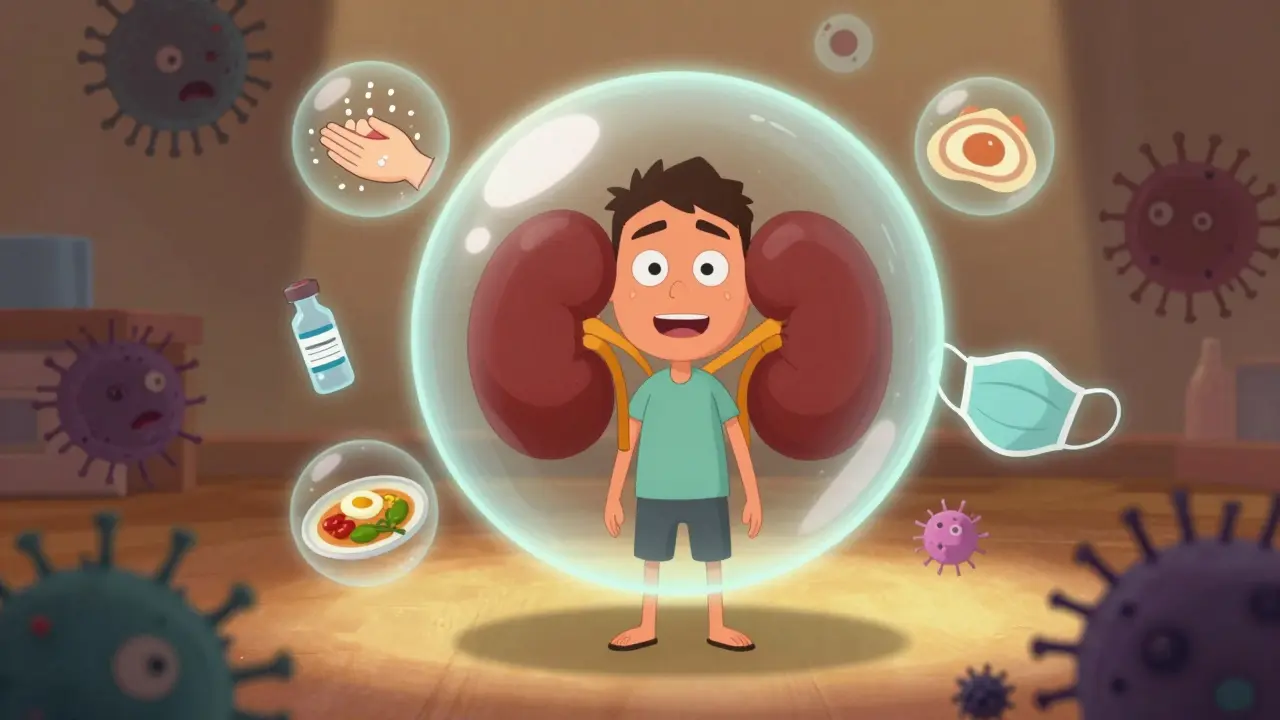
After a kidney transplant, the biggest threat isn’t rejection-it’s infection. You’re on powerful drugs to keep your new kidney safe, but those same drugs make you vulnerable. Bacteria, viruses, and fungi that your body used to shrug off can now turn deadly. The good news? We know how to stop most of them-if you act early and stay smart.
Why Infections Happen After Transplant
Your immune system was trained to fight off invaders. After transplant, doctors suppress it on purpose. Without that suppression, your body would attack the new kidney like a foreign object. But that leaves you open. You’re not just at risk from outside germs-you’re also at risk from germs already living inside you. Your own gut bacteria, skin microbes, or dormant viruses like CMV (cytomegalovirus) can wake up and cause trouble. The highest risk comes in the first six months. That’s when immunosuppression is strongest. But infections don’t disappear after that. Many patients get sick months or even years later, especially when they stop taking their antiviral drugs or get exposed to new germs in the community.Preventive Medicines: Your First Line of Defense
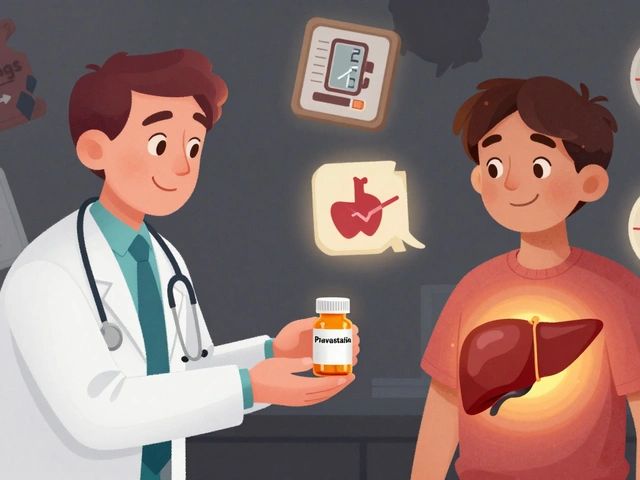
Doctors don’t wait for infection to show up. They start protective meds right away. These aren’t optional-they’re standard care.- For CMV: If you’re a recipient with no prior exposure (R-) and your donor had CMV (D+), you’re high risk. You’ll get valganciclovir for 3 to 6 months. It’s taken by mouth and works better than older drugs like ganciclovir. Some centers now use letermovir for high-risk patients beyond 100 days, especially after stem cell transplants.
- For herpes viruses: Acyclovir or valacyclovir is given for 1 to 3 months to prevent cold sores or shingles flare-ups.
- For Pneumocystis pneumonia: Trimethoprim-sulfamethoxazole (Bactrim) is used for at least 6 months to stop this life-threatening lung infection.
- For fungi: Fluconazole or posaconazole may be given if you’re at risk for yeast or mold infections, especially if you’ve had a stem cell transplant.
Vaccines: Timing Is Everything
Vaccines are your best long-term shield-but you can’t get them anytime. Live vaccines (like MMR, varicella, nasal flu) are off-limits after transplant. They contain weakened viruses that could make you sick.- Before transplant: Get everything you can. Flu shot, pneumococcal, hepatitis B, tetanus, HPV, meningococcal-do it all. Your immune system still works well enough to respond.
- After transplant: Wait at least 6 months. Then, you can get inactivated vaccines: flu shot (injectable only), Tdap, hepatitis A, and pneumococcal shots. These are safe and effective.
- Family matters: Your loved ones should be up to date on flu, whooping cough, and COVID vaccines. This creates a "cocoon" around you. If everyone around you is protected, you’re less likely to catch something from them.
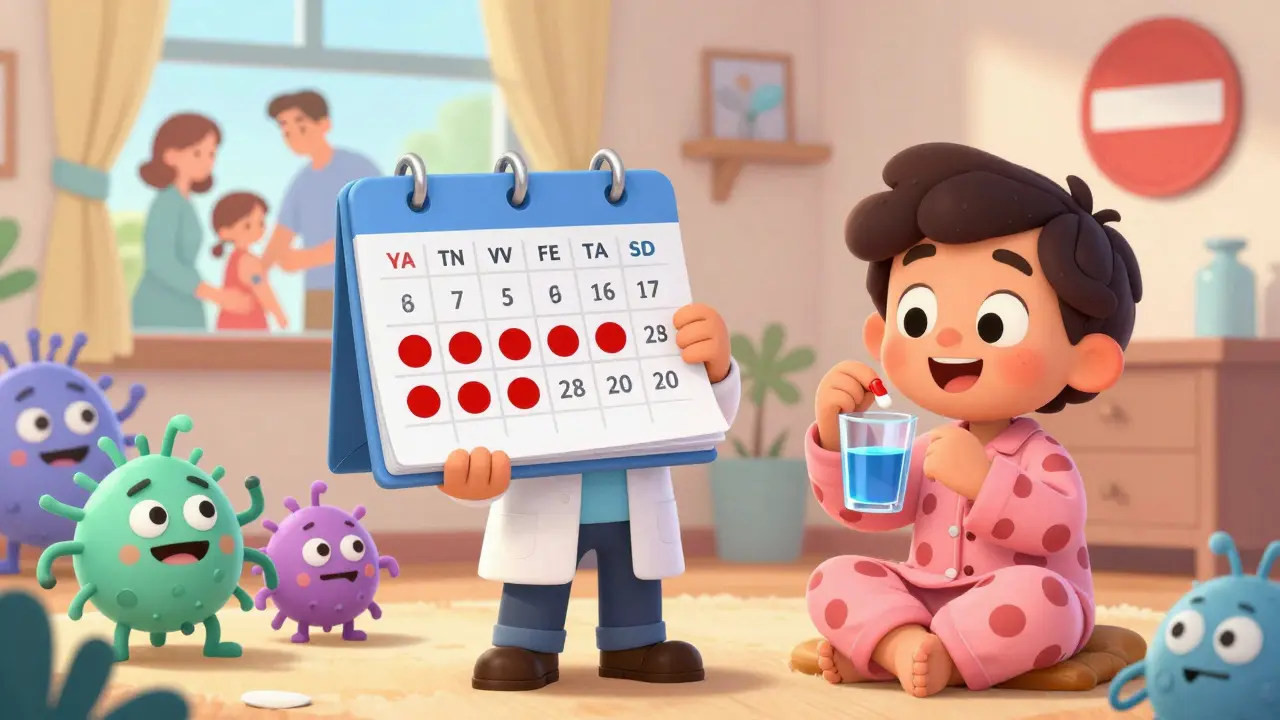
Monitoring: Catching Infections Before They Grow
You can’t wait for symptoms. By the time you feel sick, it might be too late.- CMV monitoring: Blood tests for CMV DNA every 1 to 2 weeks during the first 3 months, then monthly after. If the virus is detected early, treatment starts before you get sick.
- Fungal detection: Blood tests for beta-D-glucan and galactomannan help catch invasive aspergillosis early. These markers rise before you have symptoms.
- MDR organisms: If you’ve been in the hospital or had antibiotics before, your team may screen your stool or skin for drug-resistant bacteria like ESBL or MRSA. Weekly checks are common in high-risk units.
- Urinary tract infections: Routine urine tests are done at every visit. Many transplant patients get silent UTIs that can spread to the kidney graft.
Lifestyle: What You Do Every Day Matters
Medicines and tests help-but your choices make the biggest difference.- Food safety: No raw seafood, undercooked meat, or unpasteurized cheese. Listeria in deli meats or soft cheeses can kill transplant patients. Cook everything thoroughly. Wash fruits and veggies even if they’re labeled "pre-washed."
- Water: Avoid hot tubs, lakes, and rivers. Tap water is fine, but don’t drink from garden hoses or fountains. Use filtered water if you’re immunocompromised and traveling.
- Hand hygiene: Wash with soap and water for 20 seconds. Use hand sanitizer when you can’t wash. This alone cuts respiratory infections by half.
- People: Avoid crowds during flu season. Skip visiting sick friends or family. Wear a mask in hospitals, clinics, or public transit if you’re in the first year.
- Pets: Cats and dogs are okay-but no new pets in the first 6 months. Don’t clean litter boxes or bird cages. Wash hands after petting. Reptiles? Avoid them. They carry salmonella.
- Travel: Talk to your team before you go. Some countries have malaria, dengue, or unusual parasites. Avoid areas with poor sanitation.
What’s New in Infection Control
Science is moving fast. Here’s what’s changing:- Microbiome therapy: Fecal microbiota transplantation (FMT) is being tested to restore healthy gut bacteria after antibiotics wipe them out. This helps prevent recurrent C. diff and may reduce colonization by drug-resistant bugs.
- Anti-adhesion drugs: New treatments are being developed to stop bacteria from sticking to your bladder or catheters. Think of it like a shield that keeps germs from latching on.
- CMV vaccines: Multiple candidates are in trials. None are approved yet, but if one works, it could replace years of antiviral pills.
- Personalized dosing: Instead of giving everyone the same dose of antivirals, doctors are starting to use blood tests to measure your immune recovery and adjust meds accordingly.
What to Do If You Get Sick
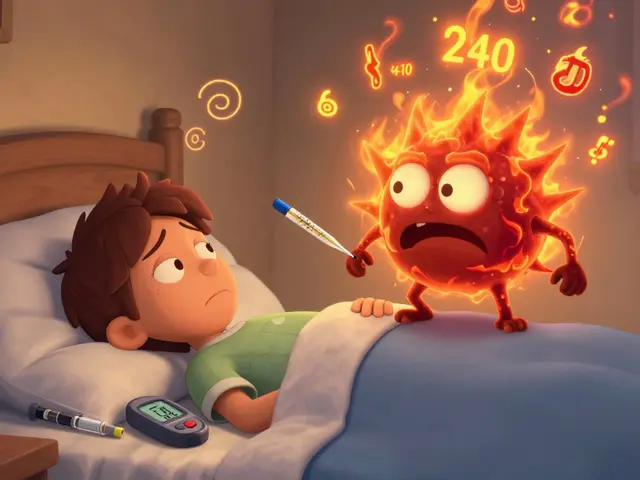
Fever. Chills. Cough. Diarrhea. Even a mild headache can mean something serious. Don’t wait. Don’t take Tylenol and hope it goes away. Call your transplant team immediately. Tell them:- What symptoms you have
- How long they’ve lasted
- Any recent travel, sick contacts, or food changes
- What meds you’re taking
Long-Term Outlook
Most transplant patients live full lives. Infections are a real risk-but they’re not inevitable. With the right prevention plan, your chances of staying healthy are high. The key is consistency. Take your meds. Get your shots. Wash your hands. Watch what you eat. Go to your checkups. These aren’t burdens-they’re your daily armor. As immunosuppression gets smarter, infection prevention will too. But right now, the best tool you have is awareness. Know your risks. Know your signs. Know your team.Can I get the flu shot after a kidney transplant?
Yes, but only after 6 months post-transplant and only the inactivated (injectable) version. Never take the nasal spray flu vaccine-it contains live virus and is unsafe for transplant patients. Get it every year, even if you’re feeling well.
Why can’t I have live vaccines after transplant?
Live vaccines contain weakened forms of viruses. After transplant, your immune system can’t control even these mild versions. That means you could get sick from the vaccine itself-like developing chickenpox from the varicella shot or measles from MMR. Stick to inactivated vaccines only.
How long do I need to take antiviral drugs after transplant?
It depends on your risk. Most kidney transplant patients take CMV antivirals like valganciclovir for 3 to 6 months. High-risk patients (donor positive, recipient negative) may stay on it longer. Some centers now extend it to 12 months with newer drugs like letermovir. Never stop without talking to your doctor.
Is it safe to have pets after a kidney transplant?
Yes, but with caution. Avoid new pets in the first 6 months. Don’t clean litter boxes, bird cages, or reptile tanks. Wash your hands after petting. Cats can carry toxoplasmosis, dogs can carry salmonella, and even hamsters can spread lymphocytic choriomeningitis virus. Pets offer emotional support-but safety comes first.
What foods should I avoid after a kidney transplant?
Avoid raw or undercooked meat, fish, and eggs. Skip unpasteurized cheeses like brie, camembert, or blue cheese. Don’t eat deli meats unless you heat them until steaming. Avoid raw sprouts, honey (risk of botulism), and food from street vendors. Always wash produce-even if it’s labeled "pre-washed."
How often should I get blood tests after transplant?
In the first 3 months, expect weekly or biweekly blood tests for CMV, kidney function, and drug levels. After that, monthly checks are typical. If you’re on immunosuppressants like tacrolimus, your levels need regular monitoring to avoid toxicity or rejection. Never skip these tests-they catch problems before you feel them.
Can I travel after a kidney transplant?
Yes, but wait at least 6 months and talk to your team first. Avoid areas with malaria, dengue, or poor sanitation. Don’t drink tap water overseas. Carry your medication list and contact info for your transplant center. Some countries require vaccines that aren’t safe for you-your doctor can give you a medical exemption letter.
Man, I wish I’d known all this before my transplant. I skipped the flu shot because I thought it’d make me sick. Turned out I got pneumonia and ended up in the hospital for two weeks. Now I’m religious about every vaccine and handwash. Don’t be like me.
Let me tell you something they don’t want you to know. The government and Big Pharma are pushing these antivirals because they’re making billions off transplant patients. CMV isn’t even that dangerous-most people have it and never get sick. But if you stop the meds, they’ll scare you into staying on them forever. And what about those blood tests? Every week? That’s surveillance disguised as care. They’re tracking your immune response to build a database for future control. I’ve been off all meds for 18 months now. No CMV. No issues. Just a guy who refused to be a lab rat.
There’s something poetic about this whole thing, you know? We’re told to suppress our bodies to survive-and yet, survival becomes this daily ritual of fear. Hand sanitizer. Cooked food. No pets. No travel. No spontaneity. It’s like we’re learning to live inside a bubble made of medical guidelines. But here’s the thing: that bubble isn’t just protection. It’s also a kind of rebirth. You don’t just get a new kidney-you get a new way of being in the world. Quiet. Intentional. Aware. Maybe that’s the real gift.
While the article presents a comprehensive overview of post-transplant infection prophylaxis, it is imperative to underscore the necessity of strict adherence to evidence-based protocols. The administration of valganciclovir in D+/R- recipients, for instance, is supported by multiple randomized controlled trials demonstrating a 70% reduction in CMV disease incidence. Furthermore, the use of beta-D-glucan and galactomannan as biomarkers for invasive fungal disease is endorsed by the Infectious Diseases Society of America guidelines. Noncompliance with these standards significantly elevates the risk of graft loss and mortality.
I’m a transplant nurse, and I’ve seen too many patients dismiss these precautions because they ‘feel fine.’ One woman stopped her Bactrim after four months because she didn’t like the rash. She got Pneumocystis pneumonia two weeks later and nearly died. This isn’t theoretical. These guidelines exist because people have lost their lives ignoring them. Please, for your own sake and your family’s, don’t gamble with this.
ok so i just got my transplant last month and i have a cat and i kinda forgot to wash my hands after petting him and now i think i might be getting sick??? like i have a little cough and my throat is weird?? should i go to the er or is this just a cold?? plz help
Food safety rules are exaggerated. Raw fish is fine if it’s fresh. People die from hospital infections, not from sushi. Stop living in fear. Wash hands once a day. That’s enough.
You people are overcomplicating this. In Nigeria, we don’t have access to half of these drugs or tests. We use garlic, neem leaves, and boiled ginger. We don’t get CMV because we don’t sit in air-conditioned rooms with strangers. You’re scared of your own shadow. If you survive here with no meds and no tests, you can survive anywhere. Stop listening to American doctors. Your body knows how to heal.
Wow. So I’m supposed to live like a monk with a lab coat? No pets, no travel, no raw cheese, no hugs from my grandkids? And I’m supposed to be grateful for this? This isn’t medicine-it’s a prison sentence disguised as a lifestyle. Next they’ll tell me I can’t breathe oxygen because it might carry a germ. Can someone please tell me what’s left to live for?
Of course you need to take the meds. Duh. If you don’t, you’re basically volunteering to die. And if you think you’re too cool for hand sanitizer, you’re not a rebel-you’re just dumb. This isn’t a debate. It’s biology. Stop making it about your ego and just do the damn thing.
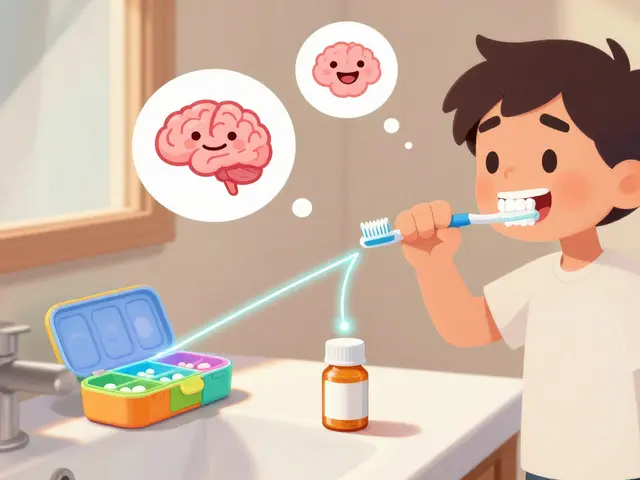
Every pill. Every test. Every handwash. These aren’t restrictions. They’re acts of love-for yourself, for your family, for the donor who gave you a second chance. Don’t just survive. Honor it.