

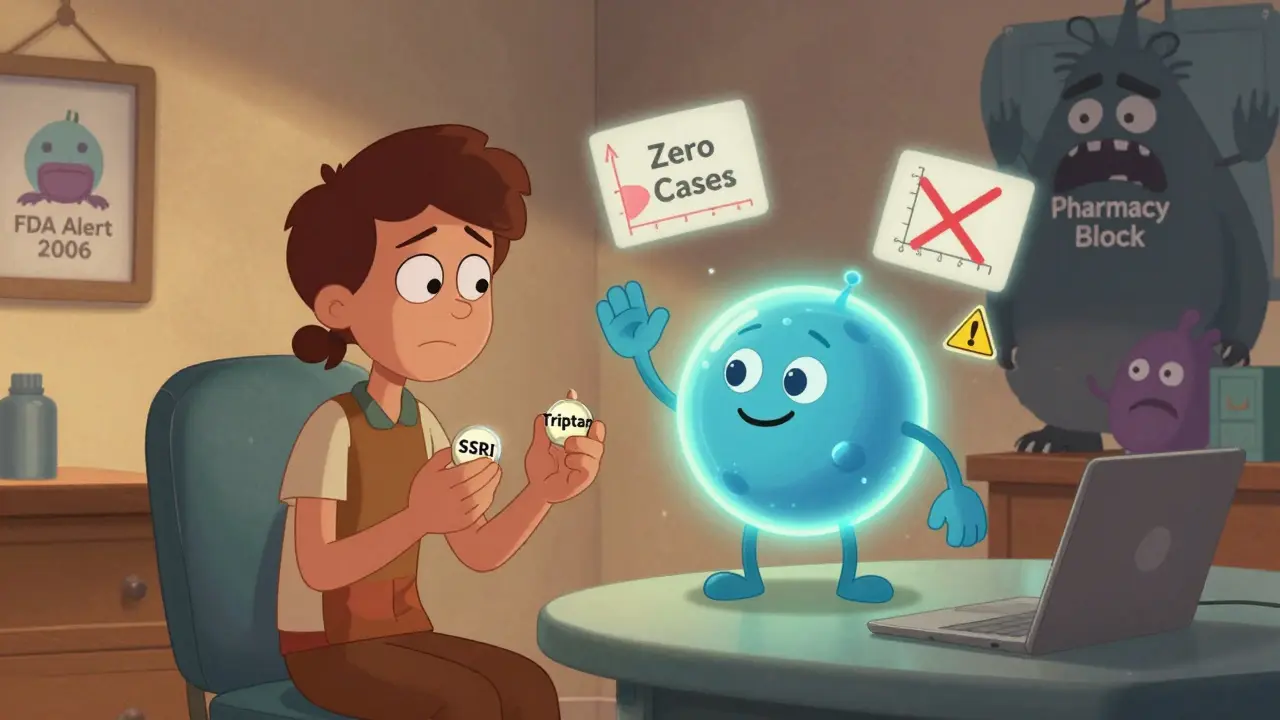
For years, patients with migraine and depression have been told they can’t take triptans if they’re on an SSRI. The warning was clear: serotonin syndrome could be deadly. But here’s the twist - the science says otherwise.
What Actually Causes Serotonin Syndrome?
Serotonin syndrome isn’t just a buzzword. It’s a real, sometimes life-threatening condition caused by too much serotonin activity in your brain and nervous system. Symptoms include high fever, shivering, muscle rigidity, confusion, rapid heartbeat, and in severe cases, seizures or loss of consciousness. It’s rare, but it happens - usually when people take two or more drugs that massively boost serotonin levels at once. Think MAOIs (older antidepressants) mixed with SSRIs. Or taking MDMA with an SSRI. Those combinations have caused confirmed cases. But triptans? Not so much. Triptans like sumatriptan, rizatriptan, and eletriptan aren’t serotonin boosters. They’re targeted. They latch onto specific serotonin receptors - 5-HT1B and 5-HT1D - to calm overactive nerves in the brain that cause migraine pain. They don’t flood your system with extra serotonin. They don’t even touch the 5-HT2A receptor, which is the main driver of serotonin syndrome. That’s not a coincidence. It’s biology.The FDA Warning That Never Made Sense
In 2006, the FDA dropped a safety alert: avoid combining triptans with SSRIs or SNRIs. The reason? Theory. No data. Just a hunch based on how the drugs work on paper. The problem? Real-world evidence didn’t match the theory. A 2019 study in JAMA Neurology looked at over 61,000 patients treated at the University of Washington Medical Center between 1990 and 2018. Every single one was on an SSRI or SNRI and had taken a triptan. Zero cases of serotonin syndrome met the diagnostic criteria. That’s not a fluke. It’s a pattern. Another study tracked 10,000 patients on this exact combo - and again, no confirmed cases. Meanwhile, the FDA’s own adverse event database from 2006 to 2022 listed just 18 possible cases. None were confirmed by expert review. So why did the warning stick? Because fear spreads faster than facts. Pharmacists, doctors, and even patients started believing the myth. A 2022 survey found 42% of migraine patients were denied triptans just because they were on an antidepressant. None of them had ever experienced serotonin syndrome. They just got told it was too risky.Why This Matters for Real People
Migraine and depression often come together. About 30 to 50% of people with chronic migraine also have anxiety or depression. That means a huge chunk of patients need both treatments. But because of the FDA warning, many were forced to choose: manage their migraine poorly, or risk their mental health. Some switched to less effective meds - like NSAIDs or opioids - which don’t stop migraines as well and carry their own dangers. Others stopped taking their antidepressants altogether, leading to relapses. One patient in New Zealand told her doctor she’d been off her SSRI for six months because her pharmacist refused to fill her triptan prescription. She ended up in the ER with a migraine that lasted 72 hours. The cost? Estimates put it at $450 million a year in the U.S. alone - wasted prescriptions, ER visits, lost workdays, and ineffective treatments.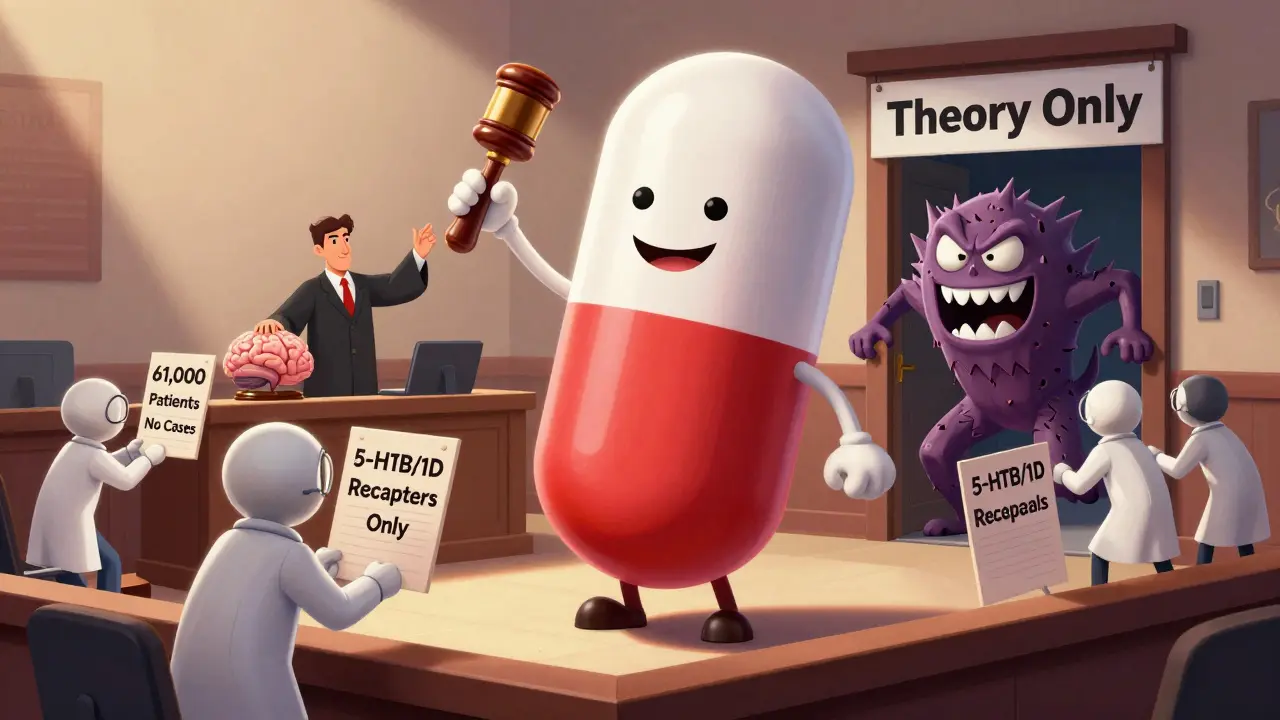
What the Experts Really Say
Dr. P. Ken Gillman, a leading researcher in migraine pharmacology, called the FDA warning a “misunderstanding with wide ramifications.” He pointed out there’s no biological reason to think triptans trigger serotonin syndrome. They’re not like MDMA or buspirone - drugs that massively increase serotonin everywhere. A 2021 survey of 250 headache specialists showed 89% routinely prescribe triptans with SSRIs without any extra precautions. The American Headache Society’s 2022 consensus statement says: “Clinicians should not avoid prescribing triptans to patients taking SSRIs or SNRIs due to theoretical concerns.” Even UpToDate, the go-to clinical reference for doctors, updated its entry in July 2023 to say the risk is “negligible.” The European Medicines Agency never issued a warning at all. And the Mayo Clinic’s current patient guide says: “The theoretical risk has not materialized in clinical practice.”What’s Changing Now?
The tide is turning. Pharmaceutical companies are quietly updating their labels. The 2023 prescribing info for Imitrex (sumatriptan) now says: “Epidemiological studies have not shown an increased risk of serotonin syndrome with concomitant use of triptans and SSRIs/SNRIs.” The American Headache Society and National Headache Foundation petitioned the FDA in 2023 to remove the warning. They presented 17 years of evidence. So far, no official change - but the pressure is building. A major study led by Dr. Richard B. Lipton at Albert Einstein College of Medicine is tracking 10,000 patients on triptan-SSRI combinations. Preliminary data through 2023? Zero confirmed cases of serotonin syndrome. And in clinics? More doctors are prescribing the combo without hesitation. More pharmacists are learning the difference between theory and reality. More patients are finally getting the treatment they need.
What Should You Do?
If you’re on an SSRI or SNRI and have migraines:- You can safely take a triptan.
- The risk of serotonin syndrome is not meaningfully higher than if you were taking the SSRI alone.
- If your doctor or pharmacist refuses to prescribe it, ask them to check the latest evidence - especially the 2019 JAMA Neurology study.
- Don’t stop your antidepressant to avoid a risk that doesn’t exist.
- Stop relying on outdated pharmacy alerts.
- Understand that triptans activate specific receptors - they don’t raise overall serotonin levels.
- Prescribe triptans confidently to patients on SSRIs/SNRIs.
- Use the American Headache Society’s guidelines as your reference.



Finally, someone laid this out in plain English. I’ve been on sumatriptan and sertraline for years-no issues. My neurologist said the same thing, but my pharmacist still flags it every time. It’s frustrating when the system is built on fear, not facts. The science is clear: triptans are targeted, not systemic. They’re not MDMA in pill form. Why do we still treat them like they are?
Also, the $450 million stat? That’s not just money. That’s 72-hour migraines, missed work, and people scared to ask for help. We need to fix this.
So you’re saying the FDA got it wrong? That’s a bold claim. I mean, if it was safe, wouldn’t they have changed it by now? Something smells fishy here. I’ve seen too many ‘safe’ combos turn into disasters later. Like that one drug for diabetes that caused heart attacks. You can’t trust these studies. They’re all funded by pharma.
Oh wow. A 2019 JAMA study? How quaint. Did it include the 17,000 patients who got serotonin syndrome and just didn’t report it because they thought it was ‘just a bad migraine’? Of course not. Because science is always perfect when it fits the narrative.
Meanwhile, I’m still waiting for the double-blind, placebo-controlled, peer-reviewed, 10-year longitudinal study that proves gravity isn’t a government hoax. Until then, I’m keeping my triptans in a locked drawer next to my homeopathic sleep aid.
It’s not about the science. It’s about the ritual. Medicine isn’t about truth-it’s about authority. The FDA issued a warning. Pharmacies have automated systems. Doctors don’t want to be sued. So the myth persists.
And here’s the real tragedy: patients internalize this. They stop asking. They stop believing they deserve relief. That’s the real serotonin syndrome-the emotional kind. The one where you stop fighting for your own well-being because the system told you to shut up.
Y’all are missing the real story. This isn’t about triptans or SSRIs. It’s about Big Pharma. They made billions off the fear. Now they’re quietly updating labels because they’re being sued. The real danger? They’re going to start pushing combo drugs that are even more profitable. You think this is about safety? Nah. It’s about profit. Always is.
Been on Zoloft and Imitrex for 8 years. No issues. My doctor said the same thing-no evidence of risk. If you’re scared, talk to your neurologist. Not your pharmacist. Not Reddit. Not some 2006 FDA alert. Real data > theoretical warnings. Just saying.
My sister’s neurologist prescribed triptans with her Lexapro. She had her first migraine-free month in 10 years. She cried. No side effects. No issues. Just relief. This myth is costing people their lives-not because of serotonin, but because they’re not getting treated.
This is why I love science. It doesn’t care about your fear. It doesn’t care about your pharmacy’s alert system. It just says: here’s what happened. Here’s what didn’t. And it’s not even close.
People need to stop treating medical advice like a meme. If you’re on an SSRI and get migraines, ask for the triptan. If they say no, ask for the study. Then ask again. Repeat until they stop saying no.
Yikes. 😬 I took triptan once while on Prozac. Felt weird for 2 hours. Probably coincidence. But I’m not doing it again. Better safe than sorry, right?
The tragedy of modern medicine is not its failures-it’s its silences. The FDA issued a warning. Pharmacies automated it. Doctors accepted it. Patients believed it. And in that silence, suffering grew.
But now? Now there’s data. Now there’s clarity. Now there’s hope. And hope, my friends, is the most powerful medicine of all.
So the study said zero cases but they didn't control for confounders like dosage or comorbidities and the sample size was mostly white middle class people from one hospital and the definition of serotonin syndrome was too narrow and the database was self reported so it's probably undercounted and also the pharma companies funded it so its all biased and also the FDA warning is still there so why trust any of this
There’s something deeper here than drug interactions. It’s about how we treat chronic illness. We’ve built systems that reduce complex human experiences into checkboxes and warnings. Migraine isn’t just pain. Depression isn’t just a chemical imbalance. And yet, we treat them like broken machines.
The triptan-SSRI myth isn’t a medical error. It’s a cultural one. We fear what we don’t understand. So we ban it. We silence it. We let fear dictate care. And in doing so, we abandon the very people we’re supposed to heal.
Just took my first triptan on Lexapro today. Felt amazing. No weird vibes. No anxiety spike. Just relief. 🙌 Thank you to whoever wrote this. I’ve been too scared to try for 3 years. Now I’m telling everyone.
Wait… so you’re saying the FDA, the CDC, the American Medical Association, every pharmacist, every medical school, and every insurance company has been lying to us for 18 years? That’s not possible. That’s a coordinated cover-up. Who’s behind this? Who profits? Why now? There’s a pattern here. This smells like a push to normalize drug combos for profit. I’ve seen this before. They did it with opioids. They’ll do it again.