

Cold & Allergy Medication Interaction Checker
Enter the medications you're currently taking to check for dangerous interactions with cold and allergy products. This tool is for informational purposes only and does not replace professional medical advice.
Important Note: This tool provides general information and is not a substitute for professional medical advice. Always consult with your healthcare provider or pharmacist before taking any new medications.
Every year, millions of people reach for combination cold and allergy medications because they promise quick relief from runny noses, headaches, coughs, and congestion-all in one pill. But here’s the truth: combination medications are convenient, yes-but they’re also one of the most common causes of accidental overdose and dangerous drug interactions. You might not realize you’re doubling up on acetaminophen. You might not know that the decongestant in your cold tablet could spike your blood pressure if you’re already on an antidepressant. And you definitely won’t find those risks clearly spelled out on the front of the box.
What’s Actually in Your Cold Medicine?
Most over-the-counter cold and allergy products don’t contain just one active ingredient. They usually have two, three, or even four. That’s because manufacturers package them to target multiple symptoms at once. But that convenience hides a serious risk. Here’s what you’re likely getting in a single tablet or liquid:- Acetaminophen (APAP) - for pain and fever. Found in Tylenol, DayQuil, NyQuil, and dozens of other brands.
- Pseudoephedrine - a decongestant. Found in Sudafed. More effective than phenylephrine, but harder to get because it’s kept behind the pharmacy counter.
- Phenylephrine - another decongestant. Found in Sudafed PE, Tylenol Sinus, and most store brands. New research says it might not even work at standard doses.
- Dextromethorphan (DM) - a cough suppressant. Common in Robitussin DM, Delsym, and many multi-symptom formulas.
- Chlorpheniramine or Diphenhydramine - antihistamines. These cause drowsiness. Found in Benadryl, NyQuil, and Zyrtec-D.
Why Some Ingredients Are More Dangerous Together
Not all combinations are equal. Some pairings are outright risky. Here are the top three dangerous interactions you need to watch for:1. Acetaminophen + Phenylephrine
This combo is everywhere. Tylenol Sinus, Vicks DayQuil, and store-brand versions all mix them. But research from the Journal of Clinical Pharmacology shows something alarming: when phenylephrine is taken with acetaminophen, the blood levels of phenylephrine jump up to four times higher than when taken alone. That means your body is getting a much stronger dose than the label says. Result? Increased risk of high blood pressure, dizziness, tremors, and rapid heartbeat. A 2014 study from New Zealand found this combination led to 4.1 times more hypertension-related side effects than acetaminophen alone. If you have any history of high blood pressure, heart disease, or even just feel jittery after taking it-stop.2. Dextromethorphan + Antidepressants
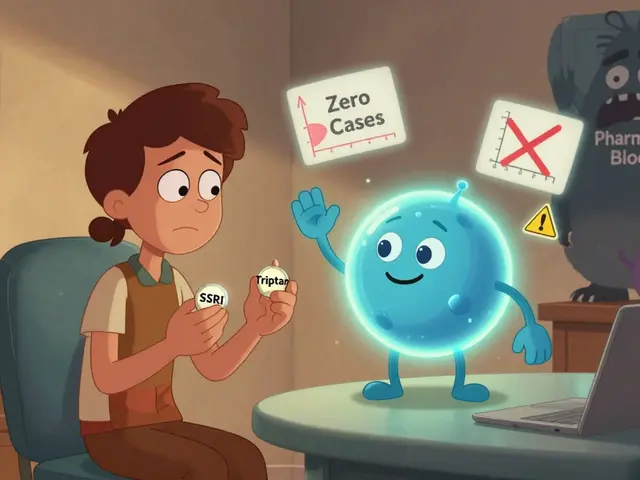
Dextromethorphan (DM) is a cough suppressant, but it also affects brain chemicals. When taken with SSRIs (like sertraline or fluoxetine) or SNRIs (like venlafaxine), it can trigger serotonin syndrome-a rare but life-threatening condition. Symptoms include:- Agitation or confusion
- Rapid heart rate
- High body temperature
- Muscle rigidity
- Seizures
3. Pseudoephedrine + MAO Inhibitors
Pseudoephedrine is a stronger decongestant than phenylephrine. But if you’re taking an MAOI (like phenelzine or selegiline) for depression or Parkinson’s, mixing them can cause a sudden, dangerous spike in blood pressure. This isn’t a theoretical risk-it’s been documented in emergency rooms. The FDA warns you must wait at least 14 days after stopping an MAOI before using pseudoephedrine. Even then, check with your doctor. Some people don’t even realize they’re on an MAOI because it’s prescribed for nerve pain or migraines, not just depression.Why You’re More Likely to Overdose Than You Think
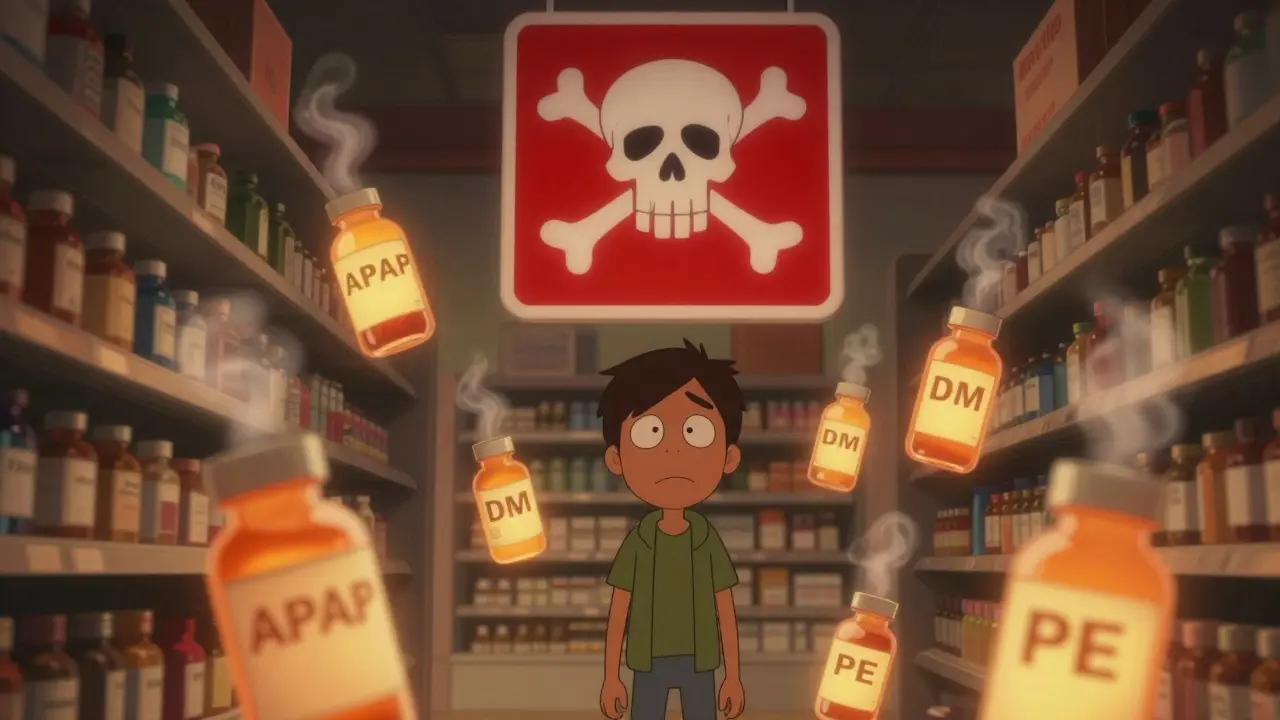
The CDC estimates that 6.7 million Americans accidentally overdose on acetaminophen every year-mostly from combining cold medicines with painkillers. Why? Because labels are confusing. You might not realize:- “APAP” on a label means acetaminophen.
- “DM” means dextromethorphan.
- “PE” stands for phenylephrine.
- “PSE” means pseudoephedrine.
What to Do Instead: A Safer Way to Choose
You don’t need a multi-symptom pill to feel better. In fact, you’re safer with fewer ingredients. Here’s how to choose wisely:- Identify your main symptoms. Do you have a fever and body aches? Then you only need acetaminophen or ibuprofen. No need for decongestants or cough suppressants.
- Choose single-ingredient products. Buy acetaminophen separately. Buy a decongestant separately. Buy a cough suppressant separately. It costs more? Maybe. But it’s safer.
- Check every bottle. Even if you’ve used a brand before, ingredients change. Always read the Drug Facts label.
- Use a drug checker. Apps like Medisafe or WebMD’s Drug Interaction Checker can scan your pills and warn you of duplicates or dangerous combos. WebMD processes over a million checks every day.
- Ask your pharmacist. Pharmacists are trained to catch these mistakes. If you’re unsure, take your bottles to the counter. They’ll check for you.
What’s Changing in 2026? The FDA’s Push for Safer Labels
The FDA is finally stepping in. In March 2023, they announced new rules for OTC cold and allergy products, effective by December 2024:- Ingredient lists must be in high-contrast fonts (black on white, no light gray).
- Duplicate ingredient warnings must be bolded and placed right under the product name.
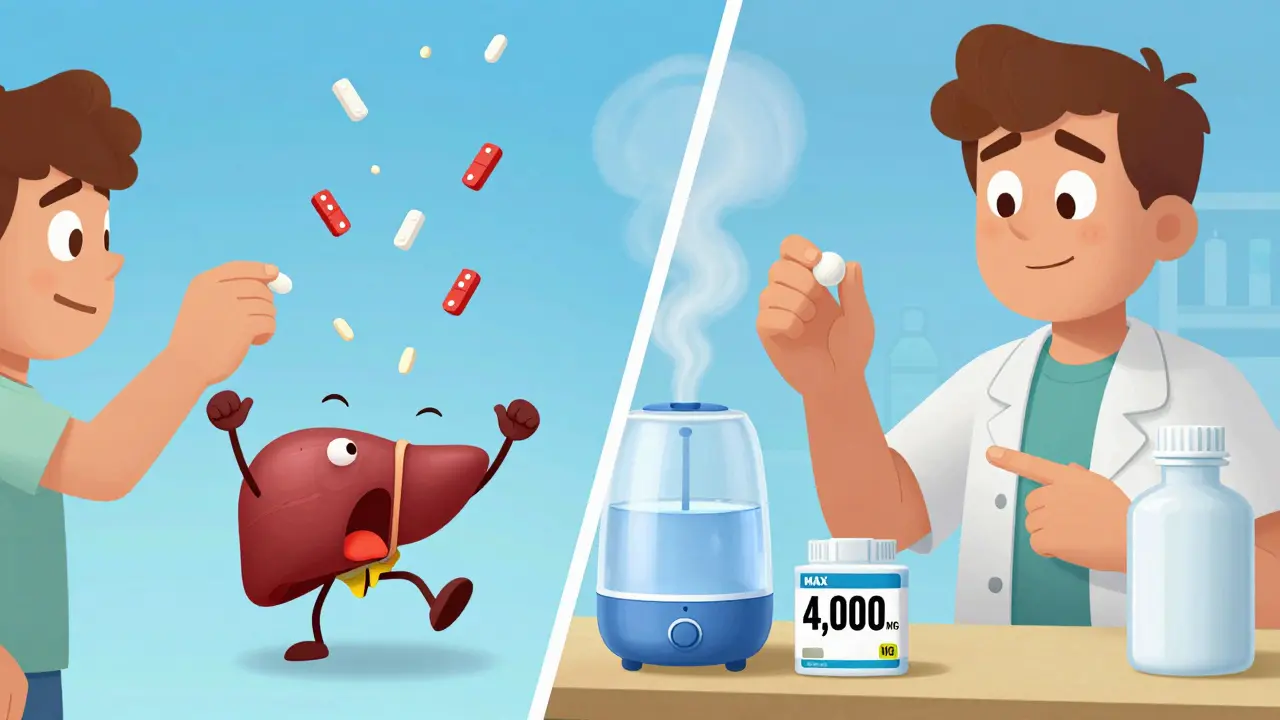
- Acetaminophen doses must be clearly labeled with “maximum daily limit: 4,000 mg.”
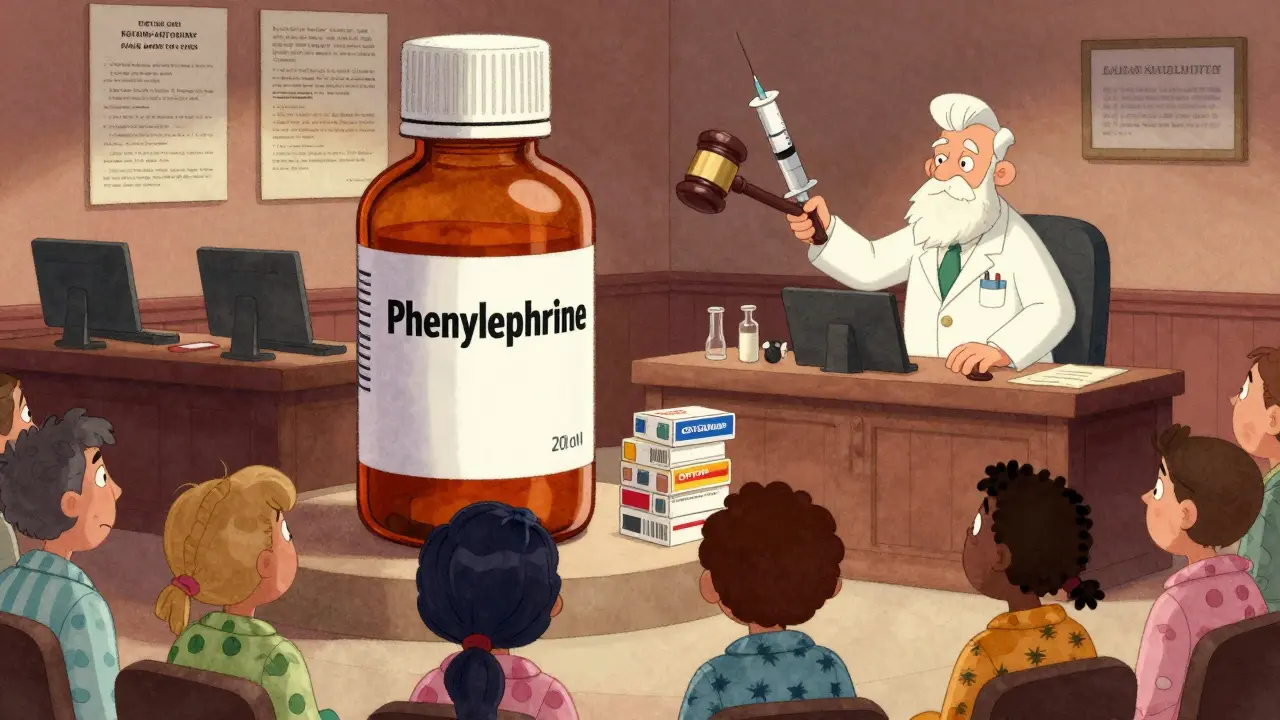
- Decongestants like phenylephrine may be removed from the market if the FDA confirms they’re ineffective at standard doses.
When to Skip OTC Cold Medicine Altogether
Some people should never use combination cold meds:- Anyone with uncontrolled high blood pressure (over 180/110).
- People taking MAOIs, SSRIs, or SNRIs.
- Those with liver disease or who drink alcohol regularly.
- Anyone over 65-older adults metabolize drugs slower and are more sensitive to side effects.
- Pregnant women-many decongestants and antihistamines aren’t proven safe.
Real Stories, Real Consequences
On Reddit, a user wrote: “Took DayQuil for my cold, then took Tylenol for my headache. Didn’t realize both had acetaminophen. Woke up vomiting, dizzy, and my liver enzymes were through the roof.” A Walgreens review from October 2023 said: “Took two different cold meds thinking they were different-ended up in ER with high blood pressure.” Desert Hope Treatment Center reports that 15% of OTC-related ER visits involve people combining cold meds with antidepressants. These aren’t rare cases. They’re predictable.Final Rule: Less Is More
The best cold medicine is the one you don’t need. But if you do need one, choose the simplest option. Don’t assume more ingredients means better relief. In fact, the opposite is true. More ingredients mean more chances for something to go wrong. Read labels. Check for duplicates. Talk to your pharmacist. And if you’re on prescription meds-especially for mental health or heart conditions-ask before you take anything new. Your body doesn’t care if the pill says “Cold & Flu Relief.” It only cares about what’s in it.Can I take a cold medicine with my blood pressure medication?
It depends on the ingredients. Cold medicines with pseudoephedrine or phenylephrine can raise blood pressure and interfere with your medication. Even if your blood pressure is controlled, these decongestants can cause sudden spikes. Always check with your doctor or pharmacist before taking any OTC cold medicine if you’re on blood pressure meds.
Is it safe to take acetaminophen with allergy medicine?
Only if the allergy medicine doesn’t already contain acetaminophen. Many allergy-cold combos (like Claritin-D or Zyrtec-D) include acetaminophen. If you’re also taking Tylenol or a generic pain reliever, you could easily overdose. Always check the Drug Facts label for “acetaminophen” or “APAP.”
What’s the safest decongestant?
For most people, pseudoephedrine is more effective than phenylephrine. But it’s kept behind the counter and requires ID. If you can’t get pseudoephedrine, saline nasal sprays are the safest alternative. They have no systemic effects and won’t interact with other medications.
Can I use OTC cold medicine if I’m on antidepressants?
Avoid any product with dextromethorphan (DM). It can trigger serotonin syndrome when combined with SSRIs or SNRIs. Also avoid decongestants like pseudoephedrine if you’re on MAOIs. Always check with your doctor before taking anything new. Sometimes, rest and fluids are safer than medication.
How do I know if I’ve taken too much acetaminophen?
Early signs include nausea, vomiting, loss of appetite, and sweating. These can appear within hours. Liver damage may not show symptoms for a day or two. If you’ve taken more than 4,000 mg in 24 hours-or if you’re unsure-call Poison Control (1-800-222-1222) or go to the ER immediately. Don’t wait for symptoms.



I used to take those combo pills like candy until I ended up in the ER with elevated liver enzymes. Seriously, read the label. APAP = acetaminophen. If you're taking Tylenol AND DayQuil, you're playing Russian roulette with your liver. I now only buy single-ingredient stuff. Costs a bit more, but I'd rather pay $3 than $3000 in hospital bills. Your body doesn't care how fancy the box looks.
Wow. So you're telling me people are dumb enough to take two different cold meds without reading the labels? I mean, come on. This isn't rocket science. If you can't read 'acetaminophen' and 'APAP' as the same thing, maybe you shouldn't be allowed to buy medicine at all. I'm not being mean-I'm just saying. My grandma reads labels better than most millennials.
The FDA's proposed labeling changes are long overdue. In my work as a public health educator across multiple states, I've seen how confusing OTC labels are, especially for non-native English speakers and older adults. Clear typography, bolded warnings, and standardized abbreviations would reduce ER visits significantly. This isn't about regulation-it's about basic human safety design.
There's a deeper cultural issue here. We've been trained to believe that more ingredients = better results. But health isn't a product to be optimized. It's a process to be respected. A single pill with three active compounds promises convenience, but it also erodes our personal responsibility. The real solution isn't better labels-it's relearning how to listen to our bodies instead of trusting marketing claims. Sometimes, rest, water, and silence are the most potent medicines we have.
I don't understand why anyone would ever trust a drug company to tell them what's safe. They profit from people being confused. They bury warnings in tiny font. They use 'PE' and 'DM' like some kind of code to keep the uneducated from understanding. And now they're saying phenylephrine doesn't even work? So we've been paying for placebo decongestants for years? This is corporate negligence dressed up as innovation.
I just want to say thank you for writing this. I'm on an SSRI and I had no idea dextromethorphan could cause serotonin syndrome. I used to take Robitussin DM all the time because it 'helped me sleep.' I had no idea I was risking my life. I just went to my pharmacist and got a saline spray and some honey lozenges. She gave me a little pamphlet and even drew me a chart. I'm so glad I read this. I feel like I was almost tricked into poisoning myself. Please keep sharing stuff like this. We need more people like you.
I live in America and I still can't believe we let this happen. Big Pharma writes the labels. The FDA just rubber stamps it. And now we're supposed to be grateful they're finally 'considering' changes? My cousin died from an acetaminophen overdose after taking NyQuil and Extra Strength Tylenol. She was 29. This isn't a 'public health issue.' It's a crime.
Single ingredients. Always. And check with your pharmacist. Seriously. It takes two minutes and saves your liver.