

Switching from a brand-name drug to a generic feels like a smart move-cheaper, same active ingredient, approved by the FDA. But for many people, something doesn’t feel right. The pills look different. The packaging is plain. And suddenly, the medication doesn’t seem to work as well. You’re not imagining it. The problem isn’t chemistry-it’s psychology.
Why Your Brain Believes Brand Names Work Better
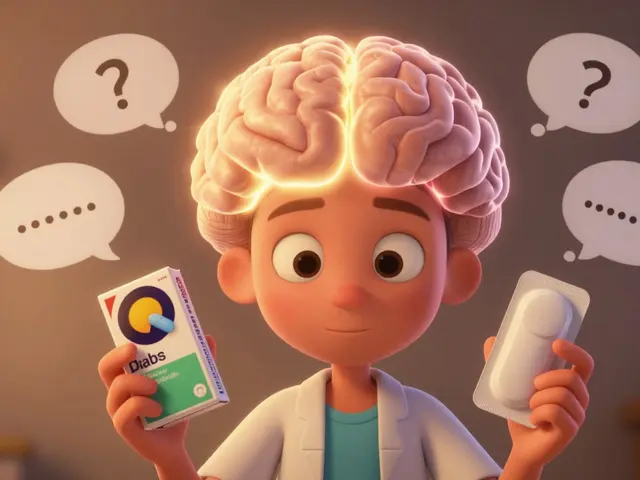
Your brain doesn’t judge medicine by its chemical formula. It judges it by what it sees, hears, and expects. In a 2014 study, researchers gave people identical sugar pills-same size, same color, same ingredients-but labeled one as a brand-name painkiller and the other as a generic. The brand-labeled pills reduced pain just as much as real ibuprofen. The generic-labeled ones? Half as effective. The pills were the same. The results weren’t. Your expectations change your biology. fMRI scans show something even more striking: when people believe they’re taking a brand-name drug, their dorsolateral prefrontal cortex lights up 27% more than when they think they’re taking a generic. That’s the part of the brain that handles belief, prediction, and pain control. It’s not magic. It’s your nervous system responding to what you think is happening. This isn’t just about painkillers. In antidepressant trials, patients on generic sertraline were 22% more likely to quit treatment because they felt it “wasn’t working.” The chemical makeup was identical to the brand. But the label changed everything.The Cost Illusion: More Expensive = More Effective?
There’s a powerful myth: if it costs more, it must be better. In one experiment, researchers gave healthy volunteers electric shocks and then gave them placebo pills. One group was told the pill cost $2.50. The other was told it cost $0.10. The $2.50 pill reduced pain by 64% more than the cheap one. Same pill. Same dose. Same person. Just different price tags. This isn’t just about money-it’s about trust. People associate brand names with quality, research, and reliability. Generics are seen as “the cheap version.” Even though the FDA requires generics to be bioequivalent-meaning they deliver the same amount of drug into your bloodstream within 80-125% of the brand-many still don’t believe it. A 2022 FDA survey found that 70% of people know generics are chemically the same. But 30% still think they’re inferior. That 30%? They’re the ones stopping their meds, skipping doses, or asking to switch back-often without telling their doctor.When the Nocebo Effect Hurts More Than the Disease
The placebo effect isn’t the only problem. There’s also the nocebo effect-the opposite. When you expect something to cause side effects, your body often delivers them-even if it’s a sugar pill. In statin trials, when patients were told they were taking a generic cholesterol drug, 8.7-11.2% reported muscle pain. When they were told they were taking a brand-name version, only 1.9-3.4% did. The pill was the same. The only difference? What they were told. And it gets worse. In one case, a patient stopped taking generic escitalopram because they felt “worse anxiety.” Blood tests showed their drug levels were identical to when they took the brand. Their brain had convinced their body something was wrong-even though nothing had changed. This isn’t rare. On Drugs.com, 78% of users who switched to generics reported reduced effectiveness. On Reddit, threads like “Generic sertraline feels weaker” get hundreds of upvotes. These aren’t just anecdotes-they’re predictable outcomes of how the mind interacts with medicine.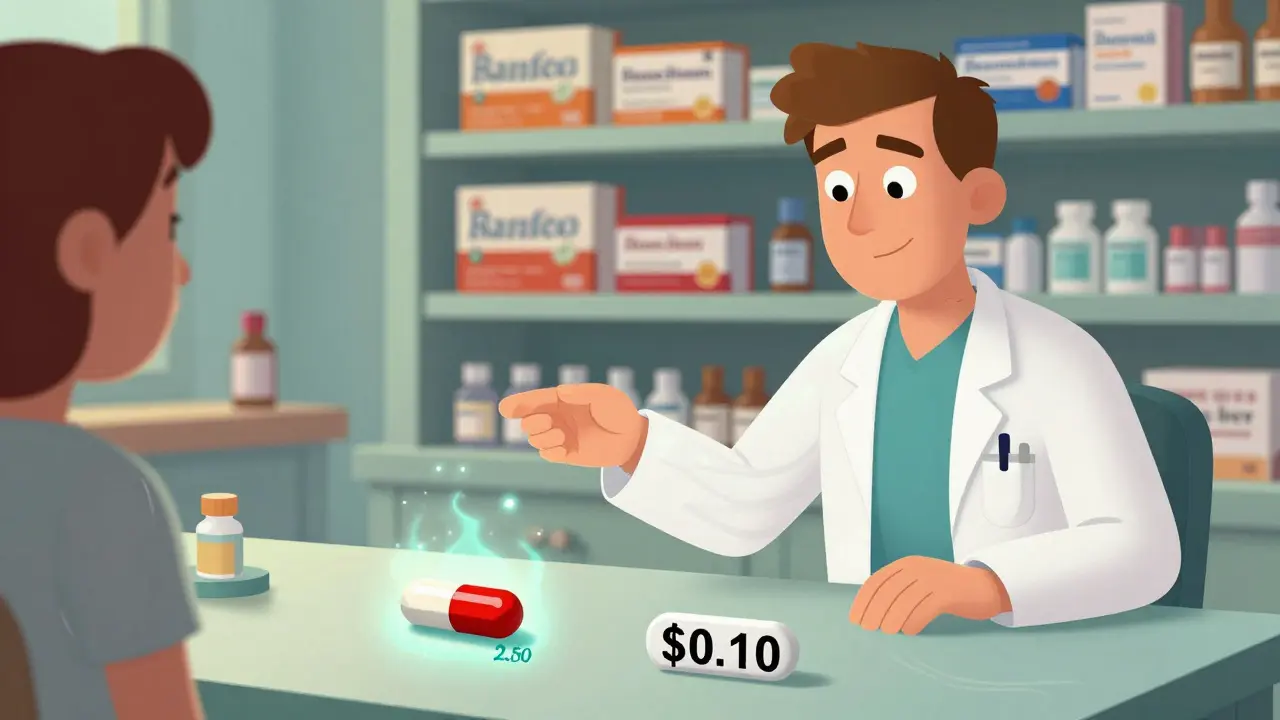
Doctors Are Starting to Fight Back-With Words
Some doctors are learning how to talk about generics so patients don’t quit. A 2021 study in JAMA Internal Medicine tested a simple 3-minute conversation:- “Generics have to meet the same strict standards as brand-name drugs. The FDA checks them for purity, strength, and how your body absorbs them.”
- “Some people say they feel different on generics-not because the medicine changed, but because their brain expects it to feel different.”
- “Give it two weeks. If you still feel off, we’ll talk. But don’t stop without checking in first.”
Appearance Matters More Than You Think
The shape, color, and size of a pill aren’t just for branding-they’re psychological triggers. In 2019, the FDA found that changing the appearance of a generic drug-say, from a blue oval to a white round tablet-increased nocebo responses by 29%. Patients thought the new pill was weaker, even when it was chemically identical. That’s why the FDA’s 2023 guidance now recommends manufacturers keep generic pills looking as close as possible to the brand. Not to deceive. But to prevent unnecessary fear. In Europe, a €2.4 million study is underway to create standardized patient education materials. In the U.S., Medicare Part D plans now include “expectation management” protocols for high-risk drugs like antidepressants and statins. They’re not just covering the cost-they’re covering the mindset.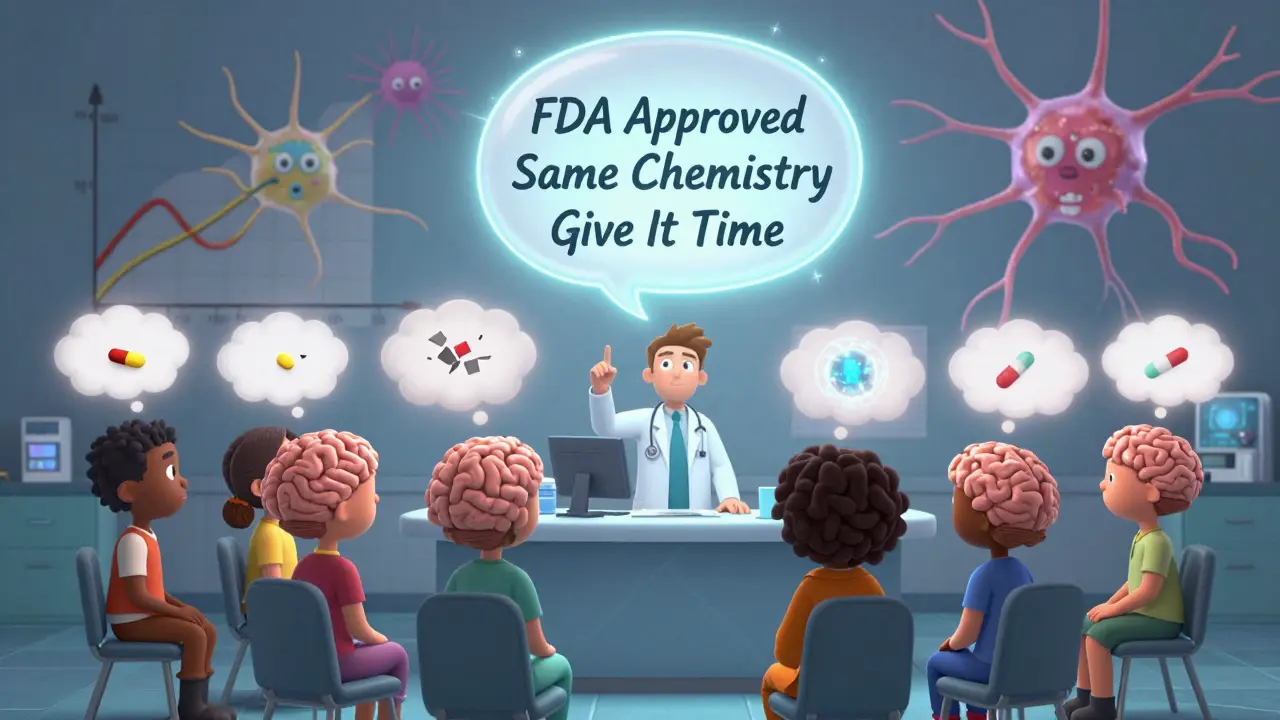
What You Can Do: A Practical Guide
If you’re switching to a generic-or already have-here’s what actually helps:- Don’t assume it’s weaker. The FDA’s bioequivalence rules mean your body gets the same amount of drug, within a tiny margin of error. That’s not guesswork-it’s science.
- Give it time. Your brain needs to adjust. If you feel different in the first week, wait two weeks. Many perceived issues fade with time.
- Talk to your pharmacist or doctor. Ask: “Is this the same as my old pill? Why does it look different?” Knowledge kills fear.
- Track your symptoms. Write down how you feel before and after the switch. Numbers help you separate real changes from psychological noise.
- Don’t quit without talking to your provider. Stopping meds suddenly can be dangerous-even if you think they’re not working.


The science here is rock solid, but the real challenge isn’t the pill-it’s the narrative we’ve been sold for decades. Brand names = trust. Generics = bargain bin. That’s not biology, that’s marketing. I’ve seen patients switch and panic because the pill changed color. Telling them the FDA requires bioequivalence doesn’t help until they hear it from someone they trust. Doctors need to say this like it’s common sense, not a lecture.
my doc switched me to generic sertraline and i thought i was gonna die for a week 😅 turned out i just needed to stop thinking about it. now i feel better than when i was on brand. mind is wild.
This is fascinating because it mirrors how we react to everything from coffee to wine. People swear the $20 bottle tastes better than the $5 one-even when it’s the same liquid poured from the same bottle. The placebo effect isn’t just medical, it’s cultural. In India, we have a phrase: ‘dawa ka naam, dawa ka hissa’-the name of the medicine is part of the medicine. Turns out, science backs it up. The brain doesn’t care about patents, it cares about signals.
And honestly, the FDA’s new guidance on pill appearance? Long overdue. If you change the shape of a pill, you’re not just changing aesthetics-you’re triggering a psychological reset in someone already anxious about their health. That’s not trivial. That’s clinical.
I wonder if this applies to supplements too. People pay $50 for ‘premium’ magnesium because it’s in a fancy bottle with a gold seal. But the capsule inside? Same as the $5 version. The body can’t tell the difference. The mind? It screams.
And yet, we still let branding dictate our trust in medicine. It’s like believing a car runs better because it has a logo on the hood. We know it’s nonsense. But when your anxiety is high, your brain grabs at any cue-even a color.
What’s next? Will we start seeing branded generics? Or will we just have to rebrand the entire conversation around cost and care?
Also, the 12-minute digital module under FDA review? That’s the future. Not more pills. More education. More reframing. That’s the real treatment.
I hope this becomes standard in med school. Not just ‘here’s the drug dosage,’ but ‘here’s how to talk to your patient about their expectations.’ Because sometimes, the most powerful medicine is the right words.
Same pill. Different color. Different results. Brain is weird. Give it time. Talk to your doc.
They’re lying. The FDA doesn’t test generics the same way. The 80-125% range? That’s a loophole. I’ve seen people crash after switching. The active ingredient might be the same, but the fillers? Different. Those fillers can change absorption rates. And the manufacturers? They’re cutting corners to make more profit. This whole thing is a corporate scam to push cheaper drugs on the public. The ‘placebo effect’ is just a cover for bad science.
Why do you think the brand-name companies are fighting so hard to keep generics off the market? It’s not about trust. It’s about money. And now they’re using psychology to guilt you into paying more. Wake up.
Thank you for this deeply thoughtful piece 🙏 The intersection of science and human psychology here is profound. I’ve witnessed elderly patients in my community refuse generics out of fear, even when they can’t afford the brand. Your suggestion about doctor-patient dialogue is not just practical-it’s compassionate. May we all learn to speak to each other with both accuracy and kindness. 🌿
Actually, the bioequivalence range of 80–125% is statistically valid under FDA guidelines, but it’s worth noting that for narrow-therapeutic-index drugs like warfarin or levothyroxine, the variance can be clinically significant. That’s why pharmacists are trained to monitor therapeutic drug levels in those cases. This article oversimplifies by implying all generics are interchangeable across all drug classes. The placebo effect is real, but it doesn’t negate pharmacokinetic variability in certain compounds. Also, the 2022 FDA survey cited? It’s from a non-peer-reviewed internal poll-methodology questionable. Let’s not confuse anecdotal perception with population-level data.
I switched to generic Adderall and I swear I turned into a zombie. My husband said I was ‘duller,’ like my soul got replaced. I cried for three days. I thought I was losing my mind. Then I read online that other people felt the same and I realized-I wasn’t broken. The pill just didn’t feel like ‘me’ anymore. I went back to brand. I don’t care if it costs more. My mental health isn’t a budget line item. And if you tell me it’s ‘all in my head,’ I’m gonna scream. It’s not in my head-it’s in my life.
Bro, I was skeptical too. Switched to generic metformin. First week felt weird. Second week? Same energy, same digestion. No drama. Just saved $80/month. Your brain lies. Don’t let it win.
This is such an important conversation. I work with seniors who are terrified of generics because they’ve been told ‘cheap means bad’ for years. It’s heartbreaking. But when we sit down, show them the FDA charts, and say, ‘This is the same medicine, just without the marketing,’ something shifts. It’s not about convincing them. It’s about listening first. Then guiding. Small moments, big impact.