

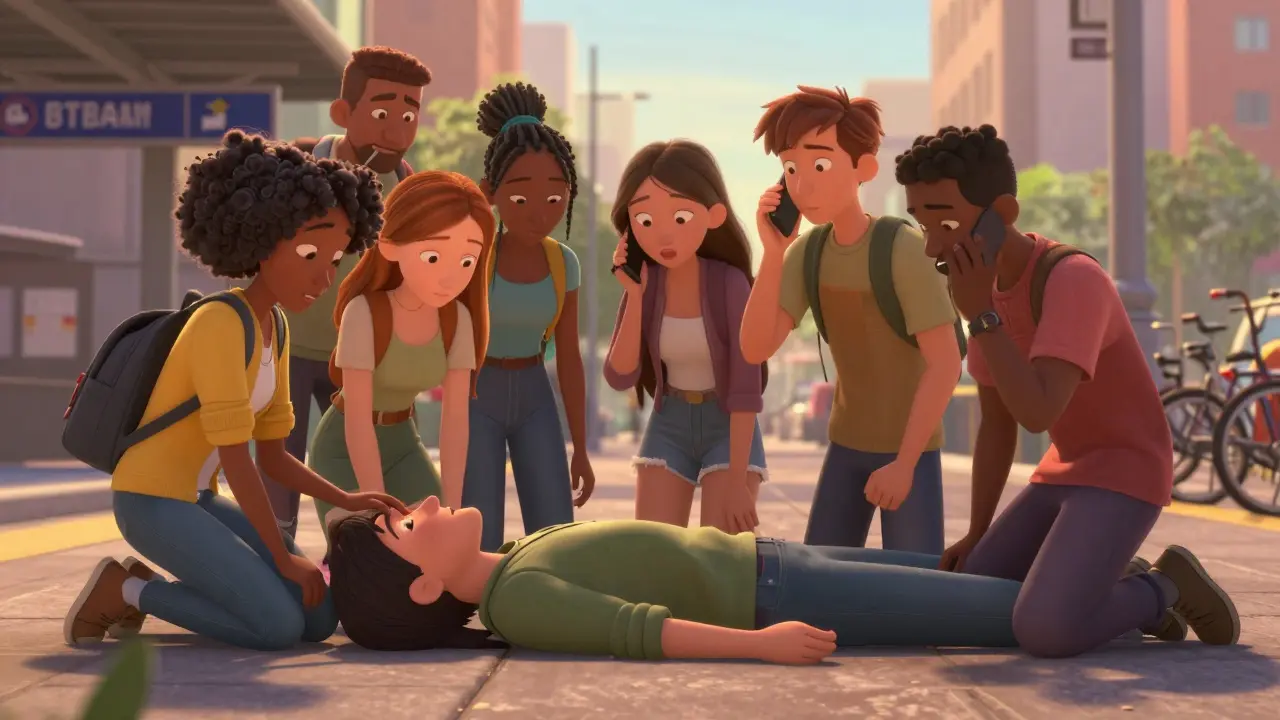
When someone overdoses, every second counts. You might be the only person between them and death. It doesn’t matter if you’re a friend, a family member, or a stranger on the street-what you do in the next few minutes can save a life. You don’t need to be a doctor. You don’t need to know every drug on the street. You just need to know what to do right now.
Check for Responsiveness and Breathing
The first thing you do is check if the person is responsive. Don’t shake them or yell in their face. That delays help. Instead, tap their shoulder firmly and shout, “Are you okay?” If there’s no response, check their breathing immediately. Look at their chest. Listen near their mouth. Feel for air on your cheek. You have 10 seconds to decide.Here’s what to watch for: normal breathing means steady, quiet breaths. Gasping, snoring, or irregular breaths? That’s not breathing. That’s a sign of overdose. Many people mistake gasping for normal breathing. It’s not. It’s the body fighting for air. If they’re not breathing normally-or not breathing at all-move to the next step immediately.
Call for Emergency Help
Call 911 or your local emergency number. Don’t wait. Don’t think, “Maybe they’ll wake up.” Don’t assume someone else has already called. Do it yourself. Tell the operator: “Someone has overdosed. They’re not breathing.” Give your location clearly. If you’re in Melbourne, say “South Melbourne, near the train station” instead of just “near here.”Stay on the line. The dispatcher will guide you through what to do next. They’ve heard this before. They know what to say. Don’t hang up until they tell you to. Even if you think you’ve got this under control, EMS still needs to come. The brain can start dying after four minutes without oxygen. Emergency responders can reverse what you can’t.
Give Rescue Breaths
If they’re not breathing, start rescue breathing. Tilt their head back slightly and lift their chin. This opens the airway. Pinch their nose shut. Seal your mouth over theirs. Give one breath every 5 to 6 seconds-about 10 to 12 breaths per minute. Each breath should last about one second and make their chest rise. Don’t blow too hard. You’re not trying to inflate their stomach. If their belly swells, you’re doing it wrong.Keep going. Even if you’re tired. Even if you’re scared. Keep giving breaths until they start breathing on their own or help arrives. Studies show that rescue breathing alone can keep someone alive long enough for naloxone or EMS to arrive. In opioid overdoses, the heart often keeps beating-but the lungs stop. Breathing for them gives their body time.
Use Naloxone If Available
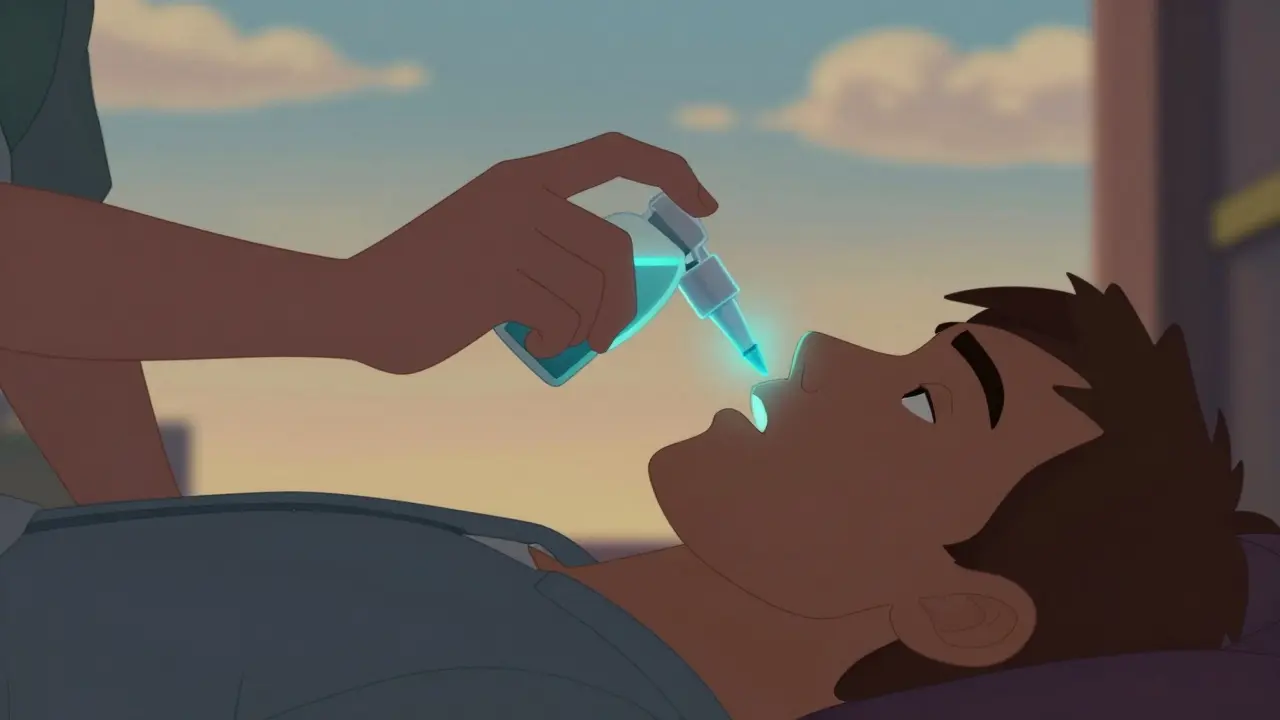
If you have naloxone, use it. Naloxone reverses opioid overdoses-heroin, fentanyl, oxycodone, morphine. It doesn’t work on alcohol, benzodiazepines, cocaine, or meth. But if you’re not sure what they took, give it anyway. Most overdoses today involve opioids, even if other drugs are mixed in.Most naloxone today comes in nasal spray. Remove the cap. Insert the nozzle into one nostril. Press the plunger firmly until you hear a click. That’s it. No need to spray both nostrils. Wait 2-3 minutes. If there’s no response, give a second dose in the other nostril. Don’t wait longer. Don’t hope it’ll work on its own. Naloxone wears off in 30 to 90 minutes. The drug they took might last longer. That’s why you still need to call 911-even if they wake up.
Place Them in the Recovery Position
If they’re breathing but unconscious, roll them onto their side. This is called the recovery position. It keeps their airway open and prevents choking if they vomit.Here’s how: Kneel beside them. Straighten their legs. Bend their nearest arm at 90 degrees, palm up. Place their far arm across their chest. Bend their far leg at the knee. Gently roll them toward you, using the bent leg as a pivot. Tilt their head back slightly so the chin points up. Make sure their mouth is facing downward so fluids can drain. Stay with them. Monitor their breathing every 2-3 minutes.
Don’t leave them lying on their back. Don’t put them in a cold shower. Don’t try to make them walk it off. These are myths that kill. Cold water can trigger heart rhythm problems, especially with stimulants like MDMA. Walking? They’re unconscious. They can’t walk.
What Not to Do
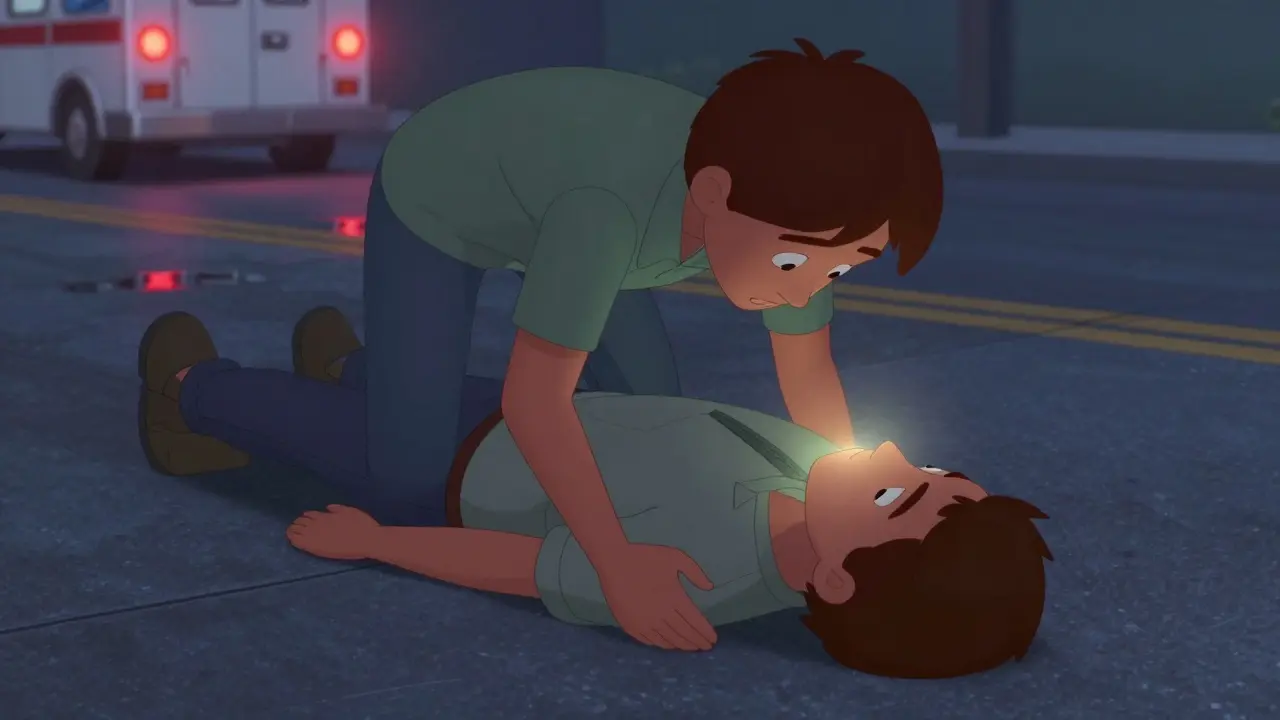
There are a lot of bad ideas out there. Don’t inject them with salt water, milk, or anything else. Don’t slap them or pour water on them. Don’t give them coffee or let them “sleep it off.” Don’t assume they’re just drunk. Overdose looks like deep sleep-but it’s not. Their breathing is shallow. Their lips may be blue. Their skin may be cold and clammy.Don’t wait for them to wake up on their own. That’s how people die. The average time from overdose to death is 15 to 30 minutes. If you’re waiting, you’re losing time.
After Help Arrives
When paramedics show up, tell them everything you did. When you called. What you gave them. How they responded. Did they vomit? Did their pupils change? Did they move after naloxone? Write it down if you can. This information saves lives.Even if they seem fine, they still need to go to the hospital. Naloxone wears off. The overdose can come back. Some opioids, like fentanyl, are so strong that one dose of naloxone isn’t enough. They might need more treatment, monitoring, or even ventilation.
Don’t feel guilty if they don’t survive. You did everything right. You acted. You didn’t look away. That matters more than you know.
Be Ready Next Time
If you live in a place where overdoses happen-even once a year-get trained. Learn how to use naloxone. Practice the recovery position. Know the signs. Many community centers in Melbourne offer free overdose response training. The Australian Drug Foundation and Better Health Channel have free videos and guides online.Keep a naloxone kit in your bag, car, or home. It’s not just for drug users. It’s for anyone who might be around someone who uses. Fentanyl is in pills that look like prescription meds. It’s in counterfeit Adderall. It’s in cocaine. You don’t have to know who’s using. You just have to be ready.
Overdose isn’t a moral failure. It’s a medical emergency. And you don’t need to be brave to help. You just need to act.
This is the most important shit I've read all year. I used to think overdoses were just junkies being dumb. Now I know it's a medical emergency. I'm getting a naloxone kit for my car. No more ignoring it.
Also why is everyone so calm about this? Like we're talking about people dying in alleys while we scroll TikTok.
Thank you for this comprehensive and meticulously detailed guide. I am profoundly moved by the clarity and compassion embedded within each instruction. As a healthcare advocate in Ontario, I have distributed this resource to three community centres and two local libraries. The inclusion of precise anatomical guidance-such as the chin tilt and nasal spray administration-is exemplary. One minor typographical observation: 'breathing' was misspelled as 'breathing' in paragraph three. A small error, but one that may hinder accessibility for those with visual impairments using screen readers.
Let me just say-this whole thing is a glorified PSA for the state to hand out free narcan like candy. You don’t need to know how to give rescue breaths if you’re just gonna rely on a spray. And why are we pretending this isn’t a policy failure? People overdose because they’re desperate, not because they forgot to breathe.
Also, who the hell is teaching recovery position in 2024? If you’re not trained, don’t touch them. Call 911 and walk away. Liability is real.
bro i saw a dude pass out in the subway last week and i was too scared to do anything. i just stood there like a dumbass. now i feel like shit. i printed this out and taped it to my fridge. no more freezing up.
I’m so tired of society treating addiction like a character flaw. People don’t overdose because they’re weak-they overdose because they’re in pain and the system failed them. This guide is good, but it’s just a bandaid on a gunshot wound. We need decriminalization, safe supply, housing, therapy-not just rescue breaths and nasal sprays.
Also, why is everyone so eager to be heroes? You don’t need to be brave. You just need to stop looking away.
i just got my first naloxone kit today and i’m already scared i’ll mess it up. like what if i press the wrong thing?? what if i break the seal?? omg what if i do it wrong and they die??
this is so important 💔 i shared it with my whole family. my cousin’s boyfriend OD’d last year and they didn’t know what to do. he’s fine now but... i cried reading this. thank you for not making it feel like a lecture. 🙏
Why do we waste time teaching rescue breathing when naloxone exists? In India we don’t even have naloxone. People die because they can’t afford it. This is a rich country problem. You want to save lives? Make naloxone free everywhere. Not just in Melbourne.
So let me get this straight-you’re telling me I should give someone mouth-to-mouth while their lips are blue? Cool. I’ll do that right after I wash my hands and take a selfie for the gram. 🤡
I appreciate the clinical precision of this guide. However, I must respectfully note that the emotional tone, while well-intentioned, may inadvertently induce panic in untrained individuals. A more measured, stepwise approach-perhaps accompanied by a printable flowchart-would enhance retention and reduce hesitation during crisis moments. I have drafted a revised version for distribution through our hospital’s community outreach program.
Interesting. This reads like a government pamphlet designed to absolve systemic neglect. You’re telling people to act, but not why this crisis exists. Who funds these naloxone kits? Who decides who gets trained? Who’s responsible when the person wakes up and still has nowhere to go?
And let’s be honest-how many of these ‘heroes’ who give rescue breaths are the same people who voted against harm reduction programs? Performative compassion is still compassion, but it’s not justice.
i used to think overdoses were dramatic and loud. turns out they’re quiet. just... still. like a candle that went out and no one noticed until the smoke smelled weird. this post made me cry in public. i’m getting trained next week. 🌱
I’m sorry, but this is just enabling. If people knew the consequences of using, they wouldn’t do it. Why are we rewarding bad choices with free nasal spray and CPR training? Maybe if we stopped treating addiction like a medical issue and started treating it like a moral failure, fewer people would die. This isn’t compassion. It’s coddling.