

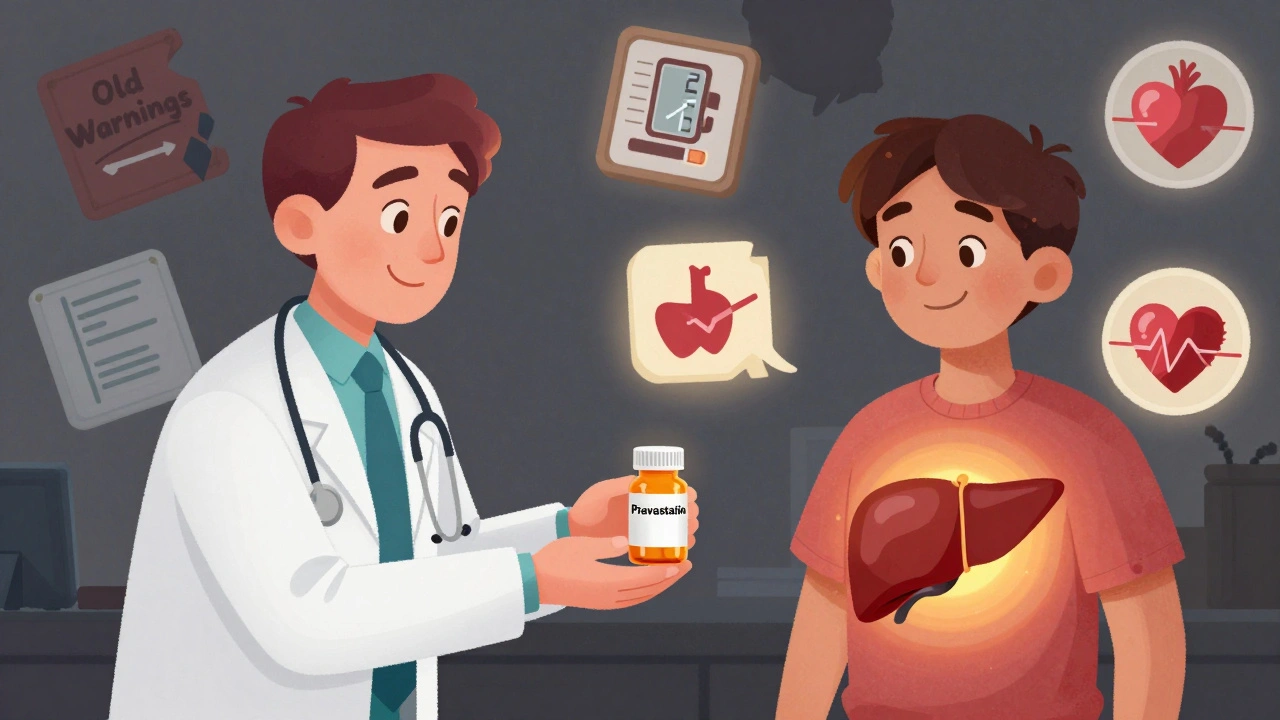
For years, doctors avoided prescribing statins to patients with liver disease. The fear? That these cholesterol-lowering drugs might damage an already fragile liver. But the truth has changed. Today, evidence shows statins aren’t just safe for people with chronic liver disease-they may actually protect the liver while saving hearts.
Why Statins Were Once Avoided
Back in the 1990s, statins were labeled as potentially harmful to the liver because they’re processed by the liver. Early warnings on labels said to avoid them if liver enzymes were elevated. That made sense on paper: if the liver is sick, don’t give it more work to do. But real-world data told a different story.A 1994 trial called EXCEL followed 8,000 people on lovastatin. Not a single case of serious liver injury occurred. A decade later, the JUPITER trial with 18,000 patients on rosuvastatin showed no difference in liver problems between those taking statins and those on placebo. These weren’t small studies. These were massive, long-term trials involving tens of thousands of people.
Yet many doctors still hesitate. Why? Because old habits die hard. A 2023 survey found that nearly 30% of patients with cirrhosis had to push their doctors to prescribe statins. Patients reported being told, “Your liver is too damaged,” even when their disease was stable. That’s not based on current science. It’s based on outdated warnings.
How Statins Actually Work
Statins block an enzyme called HMG-CoA reductase. That’s the key step your body uses to make cholesterol. When that enzyme is slowed down, your liver pulls more LDL (“bad”) cholesterol out of your blood. That’s the basic effect-lowering cholesterol by 25% to 60%, depending on the dose and type of statin.But that’s not all. Statins also have anti-inflammatory effects. They reduce C-reactive protein, a marker of inflammation linked to heart attacks and strokes. They improve how blood vessels work by boosting nitric oxide, which helps them relax. In the liver, this means better blood flow and less pressure in the portal vein-the main blood vessel going into the liver.
A 2013 study in cirrhotic rats showed simvastatin increased KLF2, a protein that protects blood vessels. In a small human trial with 30 cirrhotic patients, a single 40 mg dose of simvastatin dropped liver blood pressure by 14% within 30 minutes. That’s not just a lab curiosity. It’s a real, measurable benefit for people with advanced liver disease.
Statins and Liver Disease: The Real Risks
The biggest myth is that statins cause liver damage. They don’t. Severe liver injury from statins happens in about 1 in 100,000 patients per year. That’s rarer than being struck by lightning. Most liver enzyme rises seen on blood tests are mild, temporary, and don’t mean anything dangerous.The American Heart Association says routine liver tests aren’t needed for people on statins-not even for those with liver disease. Why? Because monitoring doesn’t prevent harm. It just creates anxiety. If a patient’s liver enzymes go up by 2 or 3 times the normal level, that’s not a reason to stop statins. It’s often just a sign of underlying liver inflammation, not drug toxicity.
Compare that to other drugs. Fibrates, used for triglycerides, carry a higher risk of liver damage. Even common painkillers like acetaminophen can cause liver injury at high doses. Statins? They’re among the safest drugs in long-term use.
Cardiovascular Benefits in Liver Disease
People with chronic liver disease-especially cirrhosis-are at higher risk of heart disease. Why? Because liver damage causes inflammation, changes in fat metabolism, and increased clotting risk. Many die from heart attacks or strokes, not liver failure.A 2023 study in Gastroenterology Research followed over 1,200 patients with cirrhosis. Those on statins had:
- 22% lower risk of liver decompensation
- 38% lower risk of variceal bleeding
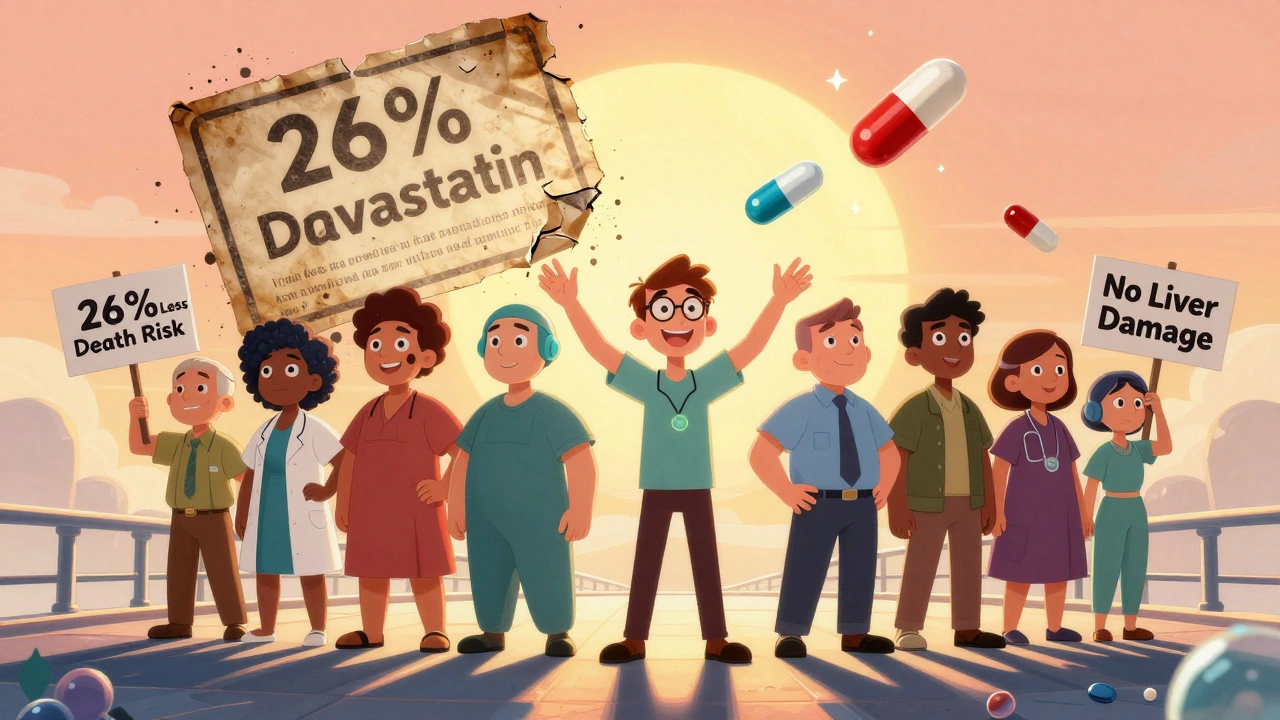
- 26% lower risk of death
These weren’t small effects. These were strong, consistent results across multiple studies. Another 2023 study in JAMA Network Open looked at nearly 49,000 patients with liver disease. Those on high-intensity statins (like atorvastatin 40-80 mg or rosuvastatin 20-40 mg) had a 17% lower risk of dying from any cause compared to those on low or moderate doses.
And here’s the kicker: statins reduced liver-related deaths by 28% in compensated cirrhosis. That’s not a side effect. That’s a direct benefit. Lower liver pressure. Less inflammation. Fewer bleeding events. Better survival.
Which Statins Are Best for Liver Disease?
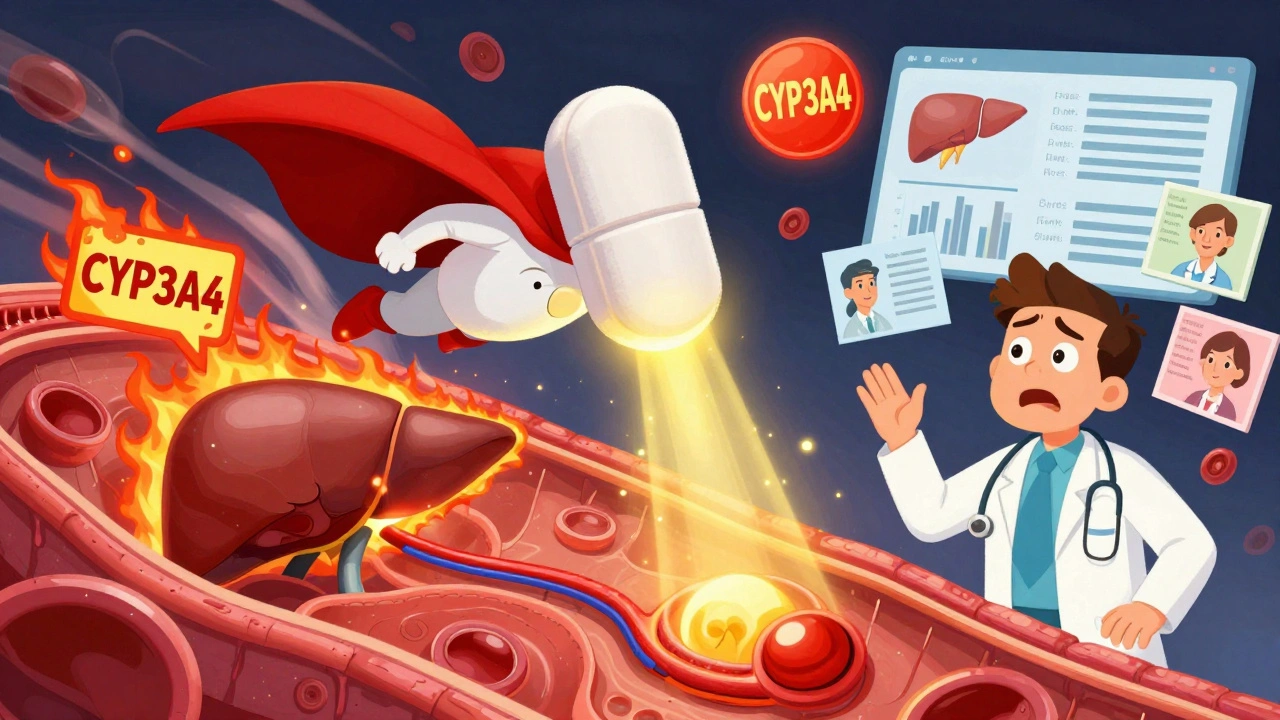
Not all statins are the same. Some rely heavily on liver enzymes (CYP450) to break down. That’s a problem if the liver is already struggling. Others don’t. Here’s what matters:- Pravastatin and rosuvastatin: Minimal liver metabolism. First choice for cirrhosis.
- Atorvastatin: Mostly safe. Metabolized a bit by CYP3A4, but still well-tolerated.
- Simvastatin and lovastatin: Heavily processed by CYP3A4. Avoid in advanced disease or if taking other CYP3A4-interacting drugs.
- Fluvastatin: Metabolized by CYP2C9. Use with caution if on warfarin.
Start low. For patients with cirrhosis, begin with pravastatin 20 mg or rosuvastatin 5-10 mg. Reassess after 6-8 weeks. If tolerated and cholesterol is still high, increase gradually. No need to check liver enzymes every month. Just monitor for muscle pain or weakness.
What About Side Effects?
The most common side effect of statins? Muscle aches. About 1 in 10 people report this. But it’s rarely serious. In liver disease patients, studies show muscle symptoms occur at the same rate as in healthy people. It’s not the liver causing it-it’s the statin itself.One 2022 Japanese study suggested a slightly higher risk of muscle injury in advanced cirrhosis. But out of 2,145 patients, only 0.3% had this issue. That’s less than 1 in 300. And in every case, stopping the statin fixed it. No permanent damage.
Another concern? Drug interactions. Many liver disease patients take multiple meds-diuretics, beta-blockers, antibiotics, antivirals. That’s where choosing the right statin matters. Pravastatin and rosuvastatin have the fewest interactions. Avoid grapefruit juice entirely-it blocks the enzymes that break down some statins and can raise their levels dangerously.
What Patients Are Saying
Online patient communities tell a clear story. On the American Liver Foundation’s forum, 87% of 142 users with liver disease reported no liver-related side effects from statins. On Reddit’s r/liverdisease, 84% of 58 cirrhosis patients said they had no liver issues after starting statins.One patient wrote: “My liver enzymes actually improved on atorvastatin.” Another: “After starting rosuvastatin, my portal hypertension symptoms decreased significantly.” These aren’t isolated anecdotes. They’re consistent with clinical findings.
The biggest complaint? Doctors won’t prescribe them. One patient said, “I had to fight for six months just to get a statin. My doctor said, ‘Your liver is too damaged.’ But I’m not dying of liver failure-I’m dying of a heart attack if I don’t take this.”
Guidelines Are Changing
The European Association for the Study of the Liver (EASL) now says statins are safe in non-alcoholic fatty liver disease (NAFLD) and should be considered for cardiovascular protection. The American Association for the Study of Liver Diseases (AASLD) recommends starting statins in stable liver disease, even in cirrhosis, as long as there’s a clear cardiovascular reason.The FDA still lists liver disease as a caution-but experts agree this label is outdated. The European Medicines Agency updated its guidelines in 2021 to reflect that statins can be used safely in stable chronic liver disease. The real barrier isn’t science. It’s awareness.
What’s Next?
A major trial called STATIN-CIRRHOSIS (NCT04567891) is currently recruiting patients with decompensated cirrhosis. Results are expected in late 2025. This could be the final nail in the coffin for outdated fears.Meanwhile, the market is shifting. In 2015, only 12% of statin prescriptions included patients with liver disease. By 2023, that number jumped to 25%. Hepatologists are prescribing statins to 68% of eligible patients-up from 42% in 2015.
The economic impact? A 2023 report estimated statins save $1,200 to $3,500 per patient per year by preventing hospitalizations for liver decompensation, bleeding, and heart events. That’s not just better health. That’s lower healthcare costs.
Bottom Line
If you have chronic liver disease and are at risk for heart disease, statins are not something to avoid. They’re something to consider-seriously.They lower cholesterol. They reduce inflammation. They improve blood flow in the liver. They cut the risk of bleeding, liver failure, and death. And they’re safer than most people think.
Start with pravastatin or rosuvastatin. Don’t panic over mild liver enzyme changes. Don’t let outdated warnings stop you from protecting your heart. The evidence is clear: statins don’t harm the liver. They help it.
Are statins safe for people with cirrhosis?
Yes, statins are safe for people with compensated cirrhosis. Multiple large studies and guidelines from the American Heart Association and European Association for the Study of the Liver confirm that statins do not cause liver injury and may reduce complications like bleeding and liver failure. Start with low doses of pravastatin or rosuvastatin, and avoid high doses of statins metabolized by CYP3A4, like simvastatin.
Do statins raise liver enzymes?
Statins can cause mild, temporary increases in liver enzymes in a small number of people, but this is not a sign of liver damage. In fact, studies show that in patients with fatty liver disease, statins often lead to lower enzyme levels over time. Routine liver testing is not recommended unless symptoms like jaundice or severe fatigue appear.
Can statins help with fatty liver disease?
Yes. Statins reduce inflammation and fat buildup in the liver in patients with non-alcoholic fatty liver disease (NAFLD). They improve liver enzyme levels and reduce fibrosis progression. The European Association for the Study of the Liver recommends statins for NAFLD patients with cardiovascular risk, as they offer dual benefits for the heart and liver.
Which statin is safest for liver disease?
Pravastatin and rosuvastatin are the safest choices because they are minimally processed by liver enzymes. They have the lowest risk of drug interactions and are less likely to build up in the body if liver function is reduced. Avoid simvastatin and lovastatin in advanced liver disease due to their reliance on CYP3A4 metabolism.
Should I stop statins if my liver enzymes are high?
No, not unless levels are more than three times the upper limit of normal and accompanied by symptoms like jaundice, dark urine, or severe fatigue. Mild elevations are common in liver disease and often reflect the disease itself-not the statin. Stopping statins in this situation increases heart attack and stroke risk without improving liver health.
Do statins reduce the risk of liver cancer?
Some observational studies suggest statins may lower the risk of hepatocellular carcinoma (liver cancer) in patients with cirrhosis, likely due to reduced inflammation and improved blood flow. However, this is not yet proven in randomized trials. The strongest evidence remains for cardiovascular and liver complication reduction, not cancer prevention.
Can I take statins if I’m on hepatitis C treatment?
Yes, but choose carefully. Direct-acting antivirals for hepatitis C are generally safe with statins. Avoid simvastatin and lovastatin due to potential interactions. Pravastatin and rosuvastatin are preferred. Always check with your doctor to review all medications, as some antivirals can affect how statins are processed.



statins are safe for liver patiens i swear its true my uncle was on it for 2 yrs his enzymes went down not up lol
my doc was scared to prescribe it too. i had to bring him the study. now he recommends it to everyone with fatty liver. 🙌
The evidence is overwhelming, and yet the inertia in medical practice remains stubbornly entrenched. This is a textbook case of guideline lag-where science outpaces clinical habit. It’s not malpractice; it’s simply outdated training. The data from JUPITER, EXCEL, and the 2023 Gastroenterology Research cohort are not outliers. They’re the new standard.
What’s more troubling is that patients are being denied a life-saving intervention based on fear, not evidence. That’s not just inefficient-it’s ethically questionable.
OMG YES!!! 😭 I’ve been telling my hepatologist for 2 years that statins are the only thing keeping me alive-my portal pressure dropped 20% after 3 months on rosuvastatin, and my cardiologist said I’m now ‘low risk’ for the first time since diagnosis. Why do doctors still act like statins are poison?! I had to beg, cry, and send them 5 research papers just to get a prescription. And now I’m alive, breathing, walking my dog… all thanks to a pill that was supposed to ‘hurt my liver.’ 😤
Also, grapefruit juice is a no-go, FYI. I learned that the hard way after a smoothie and a 40mg atorvastatin. Not fun. 🍊🚫
I cried when my doctor finally prescribed it. After 7 years of being told ‘your liver is too damaged,’ I was told ‘you’re at risk of a heart attack before cirrhosis kills you.’ I’m 48. I have two kids. I didn’t want to die before seeing them graduate. Thank you for writing this. I’m not alone.
So let me get this straight: the same doctors who’ll prescribe 10 different blood pressure meds, 3 antidepressants, and a bottle of Tylenol to a cirrhotic patient will look at a statin like it’s radioactive? 🤡
Meanwhile, acetaminophen is the #1 cause of acute liver failure in the US-and we hand it out like candy. But statins? ‘Too risky.’ Sure, doc. I’ll just die of a heart attack while you wait for the FDA to update their 1997 warning label.
Statins are not just safe-they’re transformative. In NAFLD, they reduce steatosis, lower ALT/AST, and slow fibrosis progression. In cirrhosis, they reduce portal hypertension, prevent variceal bleeding, and improve survival. The data isn’t just ‘promising’-it’s practice-changing.
And yet, only 25% of eligible patients are on them? That’s not a knowledge gap. That’s a systemic failure. We need mandatory CME modules for hepatologists and cardiologists. Statins aren’t a ‘maybe.’ They’re a ‘must’-for the right patients.
Pravastatin 20mg or rosuvastatin 5-10mg. Start low. Don’t panic over mild transaminitis. Monitor for myopathy. That’s it. Why is this so hard?
It’s funny how medicine works. We’re terrified of a drug that kills 1 in 100,000 people, but we’re fine giving people daily doses of something that kills 1 in 1,000. I’ve seen more liver damage from NSAIDs than statins. The fear is irrational. The data isn’t.
My dad had NASH and was on pravastatin for five years. His liver biopsy improved. His cholesterol dropped. His heart stayed strong. He’s 72 and still hiking. Statins didn’t hurt him. They saved him.
I’ve worked in liver clinics for 18 years. I used to avoid statins too. Then I saw what happened when patients didn’t get them. Heart attacks. Strokes. Deaths. All preventable. I started prescribing them. Slowly. Carefully. And the outcomes? Better than I expected.
One patient, 64, cirrhosis from hepatitis C, on rosuvastatin 10mg-his MELD score dropped. His BP improved. He stopped getting variceal bleeds. He told me, ‘I thought I was going to die. Now I’m planning my granddaughter’s wedding.’
Don’t let fear be your guide. Let data be your compass.
Let’s be real: this is just Big Pharma’s latest narrative. Statins are overprescribed. The cardiovascular benefit in liver disease is correlation, not causation. And who funded these studies? AstraZeneca. J&J. Pfizer. The same companies that pushed opioids and Vioxx.
Also, ‘low liver enzyme elevation’? That’s a red flag. The liver is a silent organ. You don’t want to ignore it. And ‘no need for monitoring’? That’s dangerous. I’ve seen patients with AST >500 and no symptoms. Statins are not benign. They’re a chemical intervention with systemic consequences.
Just because it’s ‘trendy’ doesn’t make it right.
As someone who has watched two family members die from liver complications while being denied statins, I want to say: this isn’t just academic. It’s personal. The myth that statins harm the liver is a quiet killer. It’s not the drug-it’s the silence of the medical establishment that’s lethal.
I’ve read every guideline. I’ve reviewed every trial. And I can tell you this: if you have chronic liver disease and cardiovascular risk, and your doctor says ‘no’-ask for a second opinion. Demand the evidence. Don’t let outdated dogma steal your life.
Pravastatin. Rosuvastatin. Low dose. No panic over enzymes. Just… take it.
Statins good for liver. End.
It’s worth noting that Joykrishna’s skepticism, while rooted in a legitimate concern about industry influence, ignores the sheer volume and consistency of the data. The same studies showing statin safety in liver disease have also been replicated across independent cohorts in Europe, Asia, and North America. This isn’t a single sponsor’s spin-it’s a global consensus.
And yes, industry funding exists. But so does peer review. And replication. And meta-analyses. And real-world outcomes. The evidence stands on its own.
It’s not about trusting pharma. It’s about trusting science.