

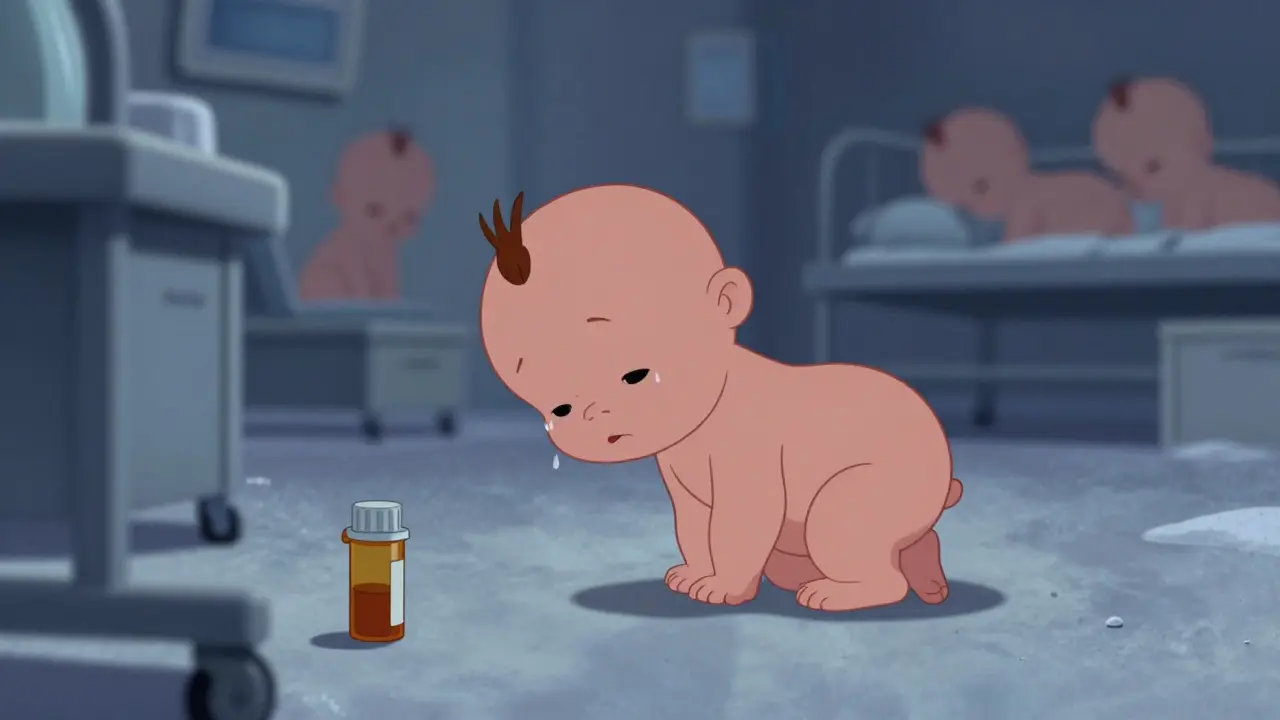
On a cold morning in December 1956, a baby was born in Germany with arms so short they seemed to grow directly from the shoulders. No one knew why. That baby was the first of thousands. Within five years, over 10,000 children worldwide would be born with missing limbs, deformed organs, or facial paralysis-all because their mothers took a pill meant to ease morning sickness. The drug was thalidomide.
What Thalidomide Was Supposed to Do
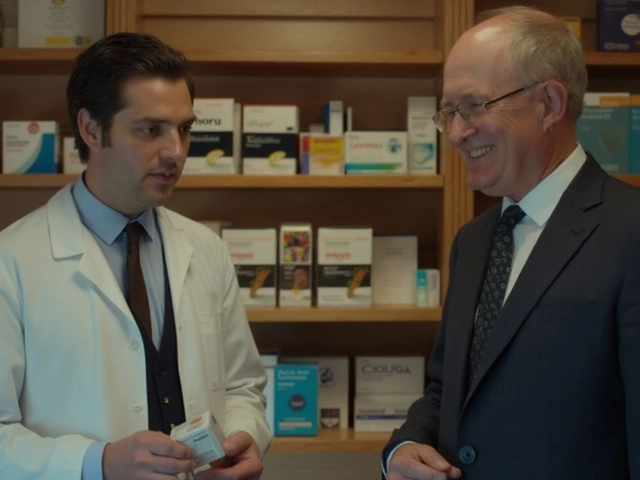
Thalidomide was created in 1954 by a German pharmaceutical company as a safe, non-addictive sedative. It was marketed as a cure for anxiety, insomnia, and-most dangerously-nausea during pregnancy. By 1958, it was sold in over 46 countries under brand names like Contergan and Distaval. Doctors prescribed it freely. Pharmacies stocked it like aspirin. Pregnant women took it without a second thought.
It worked. It calmed nerves. It reduced vomiting. But no one tested it properly for harm to unborn babies. Animal tests at the time didn’t show clear risks. The assumption? If it was safe for adults, it was safe for fetuses. That assumption killed.
The Hidden Danger: A Narrow Window of Destruction
The truth was worse than anyone imagined. Thalidomide didn’t cause birth defects randomly. It struck during a tiny window: between 34 and 49 days after the last menstrual period. That’s roughly weeks 5 to 7 of pregnancy-often before a woman even knows she’s pregnant.
During those weeks, a baby’s limbs, eyes, ears, heart, and internal organs are forming. Thalidomide didn’t just cause missing arms or legs-it disrupted the entire blueprint. Babies were born with phocomelia: hands or feet attached directly to the torso. Others had no ears, no eyes, no esophagus, no appendix. Some had heart defects so severe they died within days.
Even one dose during that window was enough. There was no safe amount. No safe time. Just pure, brutal biology.
The First Warnings: Two Doctors Who Saw the Pattern
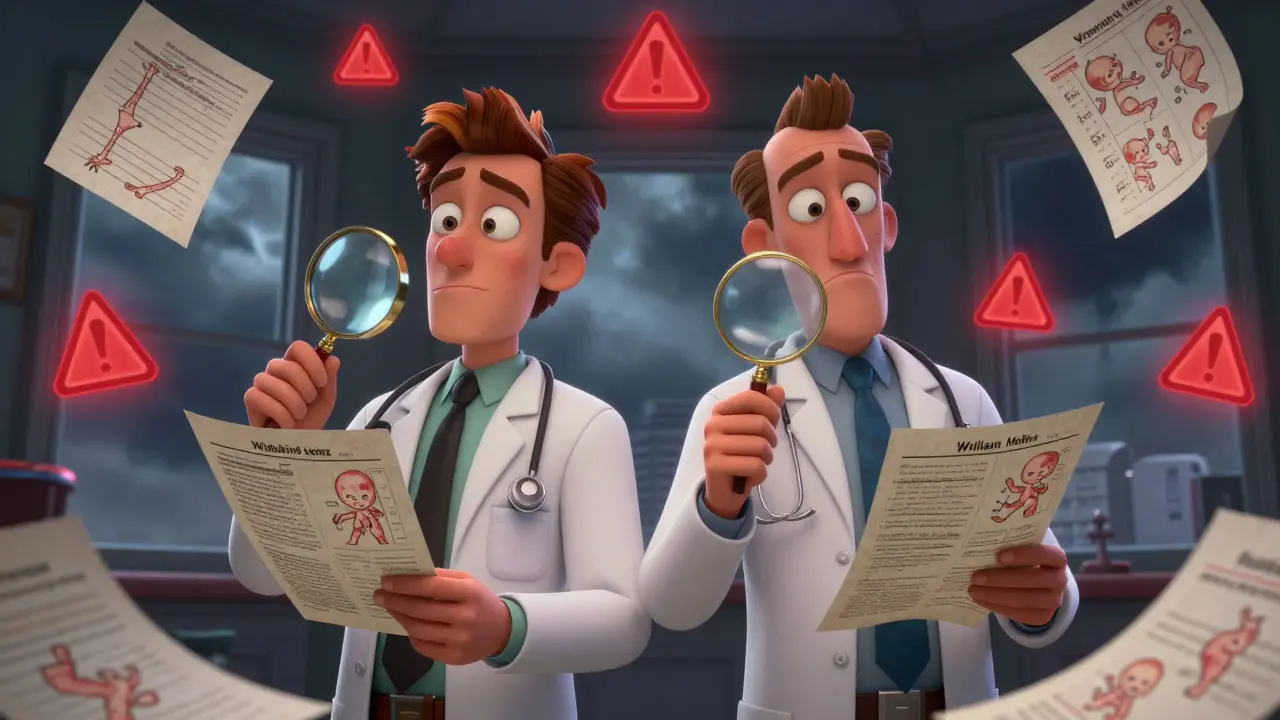
In 1961, two doctors independently connected the dots. In Germany, pediatrician Widukind Lenz noticed a spike in limb deformities in his clinic. He traced them all back to thalidomide use. In Australia, obstetrician William McBride saw the same pattern in Sydney. He wrote a letter to The Lancet in June 1961: “I believe thalidomide is responsible.”
McBride tried to get animal tests done at the University of Sydney. He was denied. No one wanted to believe it. But by November 1961, Lenz called Grünenthal directly. Within days, the drug was pulled from the German market. The UK followed in December. The U.S.? It never approved the drug in the first place.
Why the U.S. Was Spared
Frances Oldham Kelsey, a medical officer at the FDA, refused to approve thalidomide. She asked for more data. The company pushed back. She held firm. She cited incomplete studies on nerve damage and fetal risk. Her skepticism saved thousands of American babies. She became a hero. And she changed how drugs are tested forever.
By the time the U.S. government finally issued a warning in 1962, the damage was already done overseas. Kelsey’s stand forced Congress to pass the Kefauver-Harris Amendments. For the first time, drug makers had to prove both safety and effectiveness before selling a medicine. Clinical trials became mandatory. Post-market monitoring began.
Thalidomide’s Dark Comeback
After being banned, thalidomide vanished-for a while. Then, in 1964, a doctor in Miami tried it on a leprosy patient with severe skin sores. The lesions disappeared. Thalidomide was suddenly useful again. It turned out to be a powerful anti-inflammatory and immune modulator.
In the 1980s, researchers discovered why: thalidomide blocks blood vessel growth. That’s why it harms developing limbs-it starves them of oxygen. But that same trick can kill tumors. In 1998, the FDA approved it for leprosy-related skin sores. In 2006, it was approved for multiple myeloma, a deadly blood cancer.
Today, it’s one of the most prescribed drugs for myeloma. In clinical trials, patients on thalidomide lived longer. More than 40% survived without disease progression at three years, compared to 23% without it. But the side effects are brutal. Up to 60% of patients develop nerve damage-numbness, tingling, loss of balance. Some stop taking it because they can’t walk.
How It Works: A Molecular Mystery Solved
For decades, scientists didn’t know how thalidomide caused birth defects. In 2018, 60 years after the first tragedy, researchers finally found the answer. Thalidomide binds to a protein called cereblon. This protein normally helps control the growth of limbs and organs in embryos. When thalidomide latches on, it forces cereblon to break down key proteins needed for development. The result? Limbs don’t form. Eyes don’t develop. Organs stall.
That same mechanism explains why it kills cancer cells. Tumors need new blood vessels. Thalidomide cuts off that supply. It’s a double-edged sword: a lifesaver for cancer patients, a destroyer for unborn babies.
Today’s Rules: Zero Tolerance for Risk
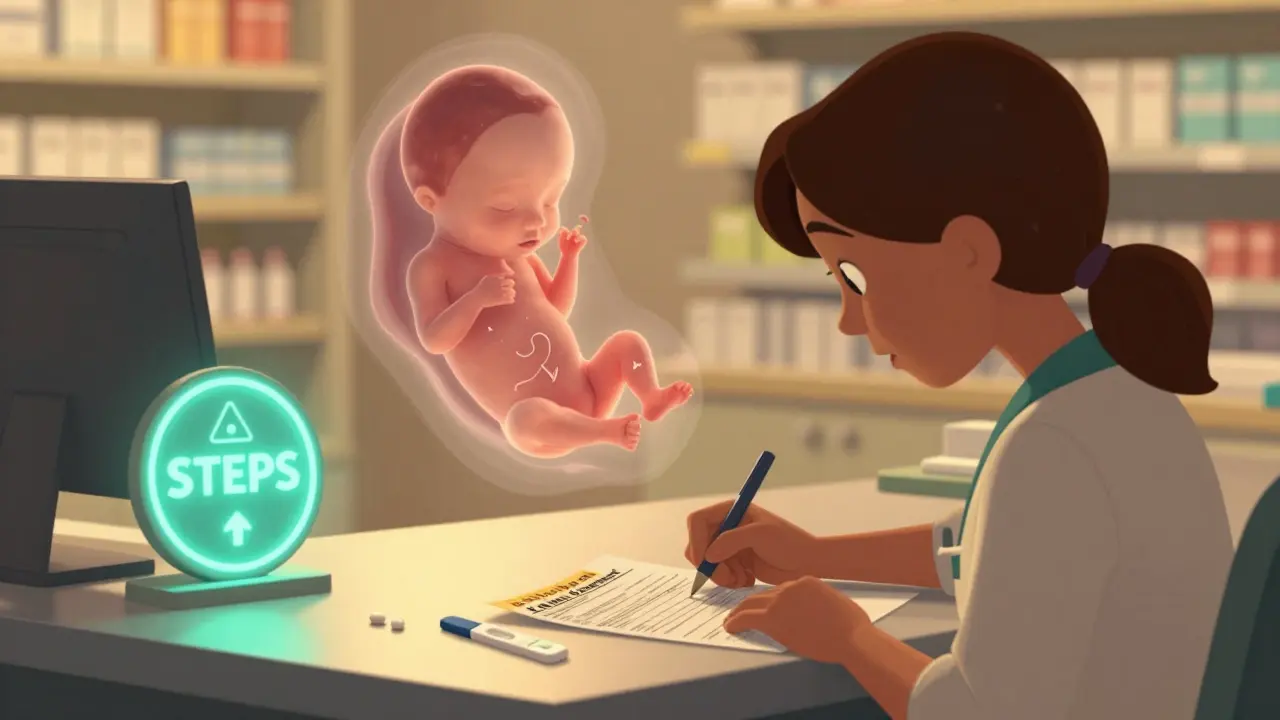
Thalidomide is still sold. But you can’t just walk into a pharmacy and buy it. In the U.S., Canada, Australia, and Europe, it’s only available through the System for Thalidomide Education and Prescribing Safety (STEPS).
Here’s what it requires:
- Two forms of birth control for women of childbearing age
- Monthly pregnancy tests
- Signed agreements acknowledging the risks
- No prescriptions for men unless they use condoms and their partners are on birth control
- Pharmacies must track every pill
It’s extreme. But necessary. Thalidomide remains one of the most potent human teratogens ever known. A single pill, taken at the wrong time, can change a life forever.
The Lessons That Still Matter
The thalidomide tragedy didn’t just change drug laws. It changed how we think about medicine.
- Just because a drug works in adults doesn’t mean it’s safe in pregnancy.
- Animal tests aren’t enough. Human biology is different.
- Regulators must be skeptical, not trusting.
- Patients must be informed-not just told, but educated.
- One doctor’s observation can save thousands.
Today, every drug intended for women of childbearing age must undergo strict teratogenicity testing. The FDA, EMA, and TGA (Australia’s Therapeutic Goods Administration) all require specific studies on fetal risk before approval. We have pregnancy risk categories (A, B, C, D, X)-a system born from the ashes of thalidomide.
And yet, the risk hasn’t disappeared. In 2021, a woman in Australia took a medication for acne-retinoids-and later gave birth to a child with severe defects. The drug was labeled dangerous. She hadn’t read the warning. She didn’t know.
Thalidomide taught us that ignorance kills. Education saves.
What We Carry Forward
Thalidomide is now used to save lives. But its legacy is a warning. Every time a pregnant woman is prescribed a drug, we must ask: What if this is the one?
That’s why the Science Museum in London has a permanent exhibit on thalidomide. Why medical students worldwide study it. Why pharmacists still double-check prescriptions. Why every bottle carries a warning: Do not use if pregnant.
It’s not just history. It’s a rule written in blood: When it comes to pregnancy, safety isn’t optional. It’s everything.
Can thalidomide still be used today?
Yes, but only under strict controls. It’s approved for treating leprosy-related skin sores and multiple myeloma. Doctors must enroll patients in programs like STEPS, which require pregnancy testing, contraception, and signed risk acknowledgments. It’s never prescribed casually.
Is thalidomide dangerous during breastfeeding?
Yes. Thalidomide passes into breast milk. Even small amounts can harm a nursing infant. Women taking thalidomide are advised not to breastfeed. The drug remains in the body for days, so stopping it before breastfeeding isn’t enough-timing doesn’t eliminate the risk.
Were there any survivors of thalidomide birth defects?
Yes, but many didn’t survive infancy. About 40% of affected babies died within the first year. Those who lived often faced lifelong challenges: mobility issues, chronic pain, vision or hearing loss, and social stigma. Today, survivors advocate for better support, medical care, and compensation.
Why didn’t animal testing catch the danger?
Different species metabolize drugs differently. The animals tested-mice, rats, rabbits-didn’t show the same birth defects as humans. This gap in science led to false confidence. Today, we test drugs on multiple species and use human cell models to catch these differences early.
Are there other teratogenic drugs still in use?
Yes. Retinoids (like isotretinoin for acne), certain antiseizure drugs (valproate), and some cancer chemotherapies are known teratogens. They’re tightly controlled, but mistakes still happen. Education and clear labeling are critical. No drug should be taken during pregnancy without medical supervision.
What changed after the thalidomide tragedy?
Drug approval became far more rigorous. Companies now must prove both safety and effectiveness before marketing. Teratogenicity testing became mandatory. Regulatory agencies like the FDA, EMA, and TGA gained real power. The concept of post-market surveillance-monitoring drugs after they’re sold-was born. These changes prevent future tragedies.
Just read this whole thing and honestly? I’m shook. I knew thalidomide was bad, but I had no idea how precise and brutal the timing was. One pill. One window. That’s it. No second chances. Makes you wonder how many other drugs out there are quietly doing the same thing right now.
THEY SAID IT WAS SAFE. THEY SAID IT WAS NON-ADDICTIVE. THEY SAID IT WAS FOR MORNING SICKNESS. AND WOMEN TOOK IT BECAUSE THEY TRUSTED DOCTORS. AND THEN KIDS CAME OUT WITHOUT ARMS. AND THE COMPANY STILL MADE MONEY. THIS ISN’T A TRAGEDY. IT’S A CRIME.
Let’s be real-thalidomide is the ultimate ‘double-edged sword’ story. It’s a miracle drug for cancer patients… and a baby-destroyer if you’re not careful. The fact that we now have STEPS and mandatory pregnancy tests shows we learned something. But also-why is it still sold? Why not just ban it forever? Because profit > precaution. And yes, I’m being sarcastic. Or am I?
Can we just take a moment to appreciate Frances Kelsey? Like, imagine being the only person in the entire FDA who said NO. No data? No approval. No pressure. No corporate lobbying. Just pure, stubborn, brilliant skepticism. And then-boom-she single-handedly changed the entire drug approval system in America. She didn’t just save babies. She changed the culture of medicine. And now? We barely even know her name. That’s the real tragedy.
So we have a drug that causes deformities… but also cures cancer. So we treat it like a nuclear bomb with a prescription pad. And we’re proud of ourselves for having a program called STEPS. Like, wow. We’re so advanced. Meanwhile, people are still taking isotretinoin and not reading the warnings. We’re not smarter. We’re just better at paperwork.
As someone raised in a household where medical authority was never questioned, this story haunts me. The idea that a drug could be marketed as harmless to pregnant women, simply because it worked for adults… it reflects a deeper flaw in our relationship with science. We want easy answers. We don’t want to sit with uncertainty. And that’s what got people killed.
Okay but can we talk about how wild it is that thalidomide works by binding to cereblon? Like, we didn’t even know how it did this for 60 YEARS?! And now we’re using it to treat cancer because we finally understood the mechanism? That’s both terrifying and beautiful. Science moves slow… but sometimes, it moves in ways that rewrite history. 🤯
USA didn't get hit because one lady said no. Meanwhile Europe let it go wild. That's why we're #1. No more drugs like this. We got rules. We got forms. We got lawyers. We got it. 💪🇺🇸