

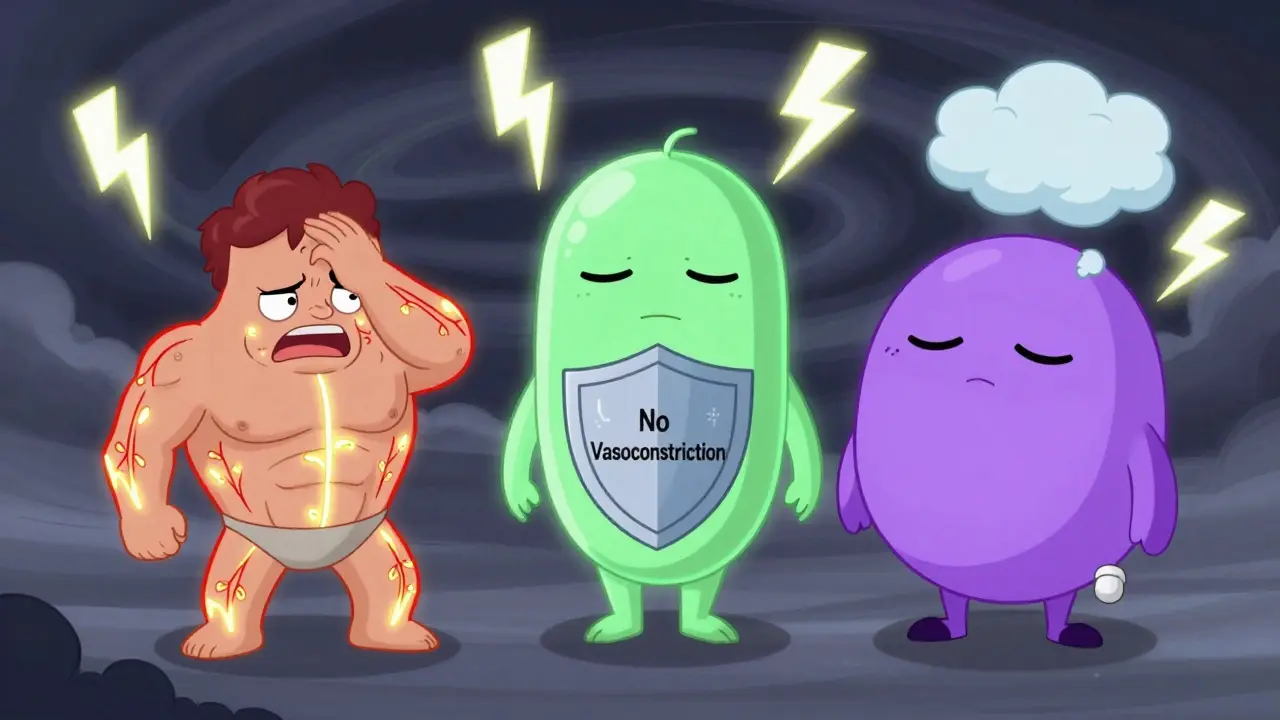
When migraine hits, you need fast relief-but not at the cost of your safety.
Triptans, gepants, and ditans are the three main classes of acute migraine meds used today. Each works differently, and each comes with its own set of risks. If you’ve ever felt chest tightness after taking sumatriptan, or spent six hours dizzy after trying lasmiditan, you’re not alone. These aren’t rare side effects-they’re common enough to change who gets prescribed what.
The biggest question isn’t just which one works fastest. It’s: which one can you safely take again and again? The answer depends on your health history, your lifestyle, and what kind of side effects you’re willing to live with.
Triptans: The old standard with a known risk
Triptans like sumatriptan, rizatriptan, and almotriptan have been around since the 1990s. They’re the most prescribed migraine meds for a reason: they often work in under 30 minutes. But they come with a red flag: vasoconstriction.
Because triptans activate 5-HT1B receptors, they narrow blood vessels. That’s how they stop migraine pain. But it’s also why they’re off-limits for people with heart disease, uncontrolled high blood pressure, or a history of stroke. Even if you feel fine, your doctor needs to check your cardiovascular health before prescribing them.
Side effects are common-and not always scary, but often annoying. About 8-15% of users report tingling or numbness. Dizziness hits 7-14%. Fatigue and drowsiness show up in 5-10%. And then there’s the chest tightness: 3-8% of people feel pressure or squeezing in their chest. It’s not a heart attack. It’s a side effect. But it’s enough to scare people off. One Reddit user wrote: "Experienced severe chest pressure with first dose of Imitrex-never using it again."
Some triptans are safer than others. Almotriptan and frovatriptan have fewer side effects overall. Subcutaneous injections cause injection-site pain in 40% of users. Nasal sprays leave a bitter aftertaste in about a quarter of people. And you can’t take them within 24 hours of dihydroergotamine-it’s a dangerous combo.
Gepants: The quiet alternative with fewer risks
Gepants like ubrogepant (Ubrelvy) and rimegepant (Nurtec ODT) are newer. They block CGRP, a molecule involved in migraine pain, without touching blood vessels. That’s why they’re the go-to for people with heart risks.
They don’t cause vasoconstriction. No chest tightness. No warning for people with high blood pressure or history of heart attack. That’s huge. In 2023, the American Headache Society gave gepants a Level B recommendation over triptans for patients with cardiovascular concerns.
Side effects? Mild. Nausea affects 4-6% of users. Drowsiness? Only 2-4%. One rare but serious risk: hypersensitivity reactions. Rimegepant caused these in 0.1% of users-so rare it’s almost a footnote. But if you get a rash, swelling, or trouble breathing after taking it, stop and call your doctor.
They’re slower than triptans. Most people feel relief in 1-2 hours, not 30 minutes. But they last longer. Ubrogepant stays in your system for 5-7 hours. Rimegepant lasts 10-12 hours. That means fewer rebound headaches and better relief at 24-48 hours.
There’s a catch: drug interactions. Rimegepant shouldn’t be taken with strong CYP3A4 inhibitors like ketoconazole or grapefruit juice-it can raise levels too high. And long-term data? Only rimegepant has two years of safety info from the PROGRESS trial. For everyone else, we’re still watching.
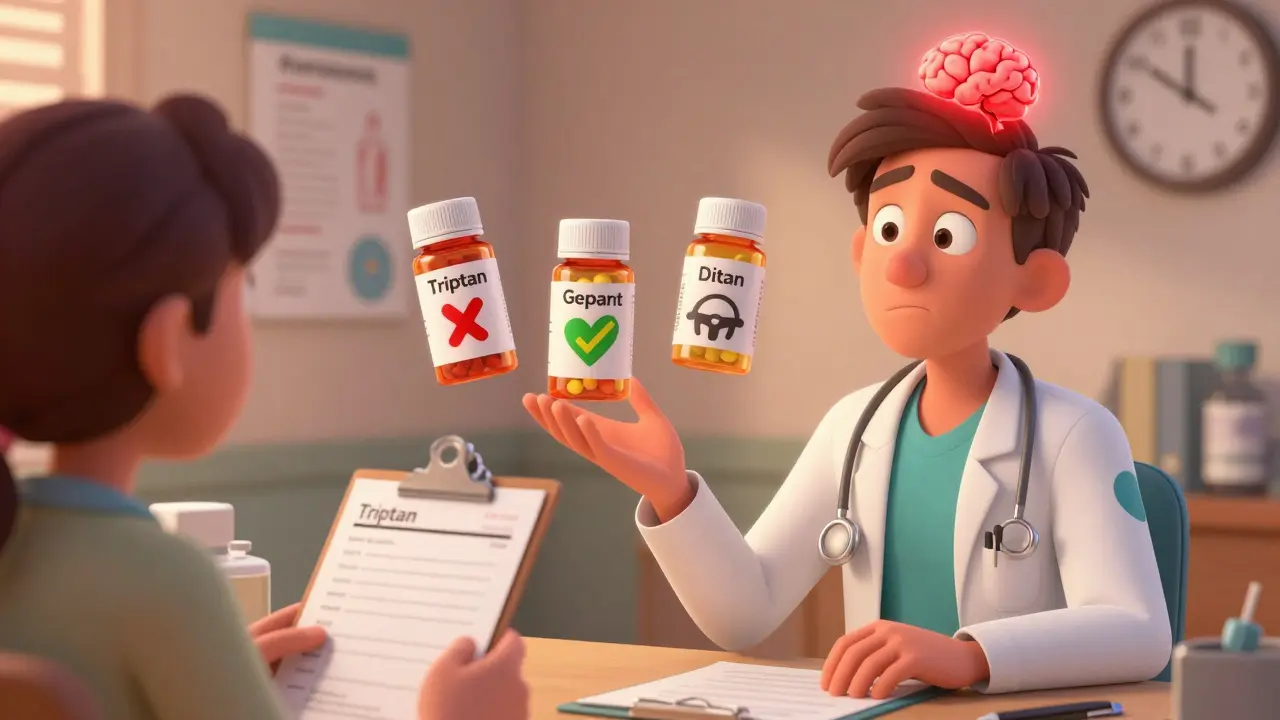
Ditans: Effective-but not for everyone
Lasmiditan (Reyvow) is the only ditan on the market. It targets 5-HT1F receptors, so it doesn’t constrict blood vessels. That makes it safe for people who can’t take triptans. But it hits the brain harder.
In clinical trials, 18.8% of people on lasmiditan 100mg felt dizzy. Compare that to 8.5% on placebo. Paresthesia? 9.4%. Sedation? 7.8%. Vertigo? 5.6%. Muscle weakness? 2.8%. And 2.8% reported cognitive changes-like brain fog or trouble thinking clearly.
That’s why the FDA requires a warning: Do not drive or operate machinery for at least 8 hours after taking Reyvow. A 2021 study showed driving impairment lasted up to 5 hours. One user on Drugs.com wrote: "Felt completely out of it for 6 hours after taking Reyvow-can’t function at work."
It’s not just dizziness. Fatigue hit 8.5% of users. Nausea was 5%. Palpitations? 1.7%. And while there’s no solid proof yet, experts warn against using it if you have a history of seizures or are on meds that lower your seizure threshold.
It’s effective. But it’s not practical for daily life. If you need to be sharp at work, drive kids to school, or care for someone, lasmiditan might not be worth it. Dr. Rami Burstein from Harvard put it bluntly: "The CNS side effect profile of lasmiditan limits its utility as a first-line agent."
Which one is safest? The numbers don’t lie
A 2021 analysis of 64 trials with over 46,000 people gives us the clearest picture yet.
Ditans had the highest risk of any adverse event-almost three times more than placebo. Triptans were in the middle. Gepants were the safest.
Here’s how they stack up:
| Medication Class | Adverse Event Risk (OR) | Common Side Effects | Cardiovascular Risk |
|---|---|---|---|
| Ditans (lasmiditan) | 2.87 | Dizziness, sedation, paresthesia, cognitive changes | None |
| Triptans | 1.52 | Chest tightness, tingling, fatigue, flushing | High-contraindicated in heart disease |
| Gepants | 1.18 | Nausea, drowsiness (rare) | None-safe for heart patients |
Triptans are still the most prescribed-62% of the market in Q3 2023. But gepants are catching up fast. They went from 2% in 2020 to 28% in 2023. Ditans? Just 3%. Why? Because safety matters. People stop triptans because of side effects. 55-81% discontinue them over time.
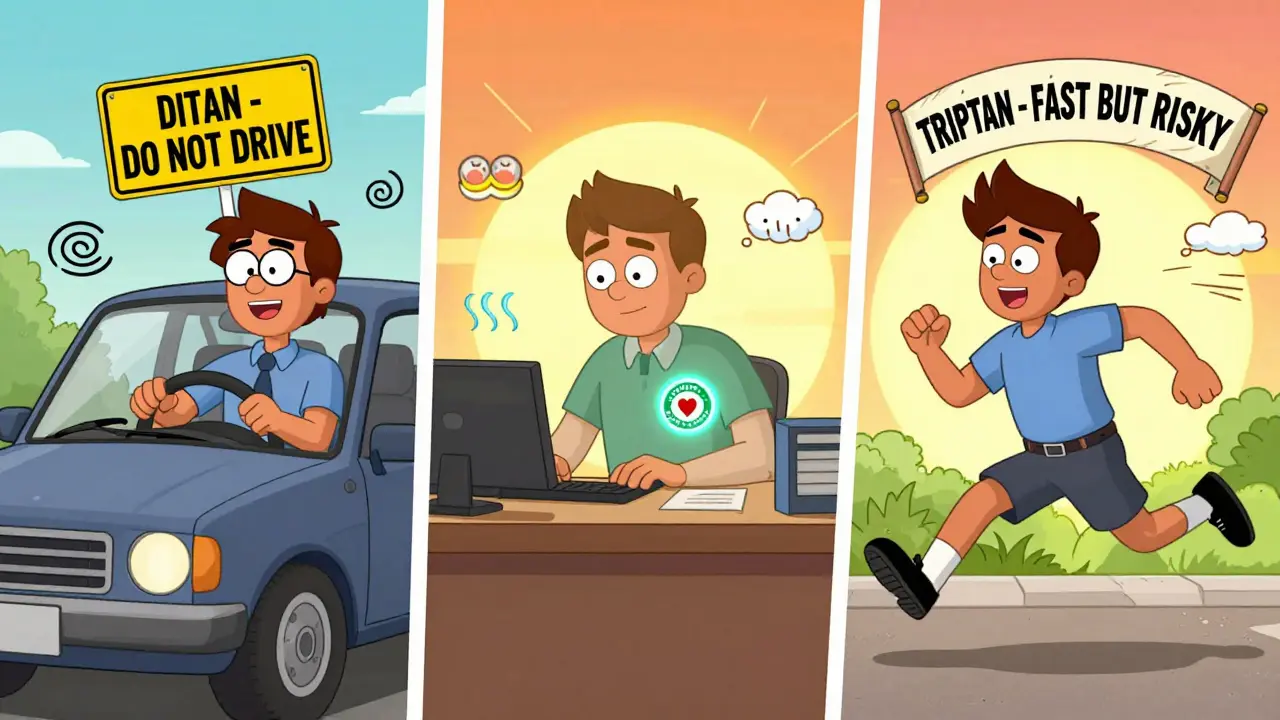
Real-world choices: Who gets what?
Here’s how doctors decide in practice:
- If you have heart disease, high blood pressure, or stroke risk → gepants only. Triptans are off the table. Ditans are an option, but sedation may be too much.
- If you need fast relief and have no heart issues → triptans still win. Sumatriptan or rizatriptan can get you back on your feet in 30 minutes.
- If you’ve tried triptans and hated the chest tightness → gepants are your best bet. No vasoconstriction. Fewer side effects.
- If you’ve tried everything and still get attacks → lasmiditan might help-but only if you can afford to be out of commission for 8 hours after taking it.
And don’t forget: some symptoms you think are side effects? They might be the migraine itself. Dizziness, fatigue, nausea-those can be part of the attack. That’s why doctors ask: "Did this start before or after the pill?" It changes everything.
What’s next?
There’s new stuff coming. Zavegepant, an intranasal gepant, finished phase 3 trials in August 2023. It works fast-within 15 minutes-and has a side effect rate of just 12.3%, compared to 7.8% for placebo. No vasoconstriction. No sedation. Just a nasal spray that works.
Long-term data for gepants is still limited. Only rimegepant has two years of safety info. The 12-month extension of the ADVANCE trial for atogepant will finish in Q2 2024. We’ll know more then.
For now, the message is clear: not all migraine meds are created equal in safety. What works for your friend might not be right for you. Talk to your doctor. Know your heart health. Track your side effects. And remember-faster isn’t always better if it leaves you too dizzy to function.
Are triptans safe if I have high blood pressure?
No. Triptans cause blood vessels to narrow, which can raise blood pressure and increase the risk of heart attack or stroke in people with uncontrolled hypertension. If you have high blood pressure, especially if it’s not well-managed, triptans are generally avoided. Gepants are the safer alternative.
Can I drive after taking lasmiditan?
No. The FDA requires a black-box warning: do not drive or operate heavy machinery for at least 8 hours after taking lasmiditan (Reyvow). Studies show impairment in reaction time and coordination lasts up to 5 hours, and drowsiness can linger longer. Plan ahead-take it when you can rest.
Do gepants cause weight gain or liver damage?
No. Unlike some older migraine preventives (like topiramate or amitriptyline), gepants have not been linked to weight gain or liver injury in clinical trials. The most common side effects are mild nausea and drowsiness. Long-term data beyond two years is still limited, but so far, no major organ toxicity has been reported.
Why do some people say triptans stop working over time?
It’s not that the drug stops working-it’s that migraines change. As attacks become more frequent, the brain becomes more sensitive. What worked once may not work as well later. This is called medication-overuse headache. If you’re taking triptans more than 10 days a month, talk to your doctor. Switching to gepants or adding a preventive may help break the cycle.
Is it safe to take gepants and triptans together?
No. There’s no data supporting this combination, and it’s not recommended. Triptans and gepants work through different pathways, but combining them increases the risk of unknown side effects. If one doesn’t work, wait at least 24 hours before trying another class. Always check with your doctor before mixing.
Can I use these meds if I’m pregnant?
There isn’t enough data to say any of these are safe during pregnancy. Triptans are Category C-meaning risk can’t be ruled out. Gepants and ditans have even less data. If you’re pregnant or planning to be, talk to your neurologist. Acetaminophen, rest, and hydration are still first-line. Some doctors may use low-dose triptans cautiously in severe cases, but only after careful discussion.





I switched to rimegepant last year after the chest tightness with sumatriptan nearly sent me to the ER. No more scary feelings. Just a little sleepy. Worth it.
Now I can actually work after taking it.
Gepants changed my life 😊 I used to cancel plans every other week. Now I can take my kid to school after a migraine. No dizziness. No chest pressure. Just peace.
The pharmacokinetic profile of gepants, particularly rimegepant, demonstrates a favorable safety margin in patients with cardiovascular comorbidities due to CGRP receptor antagonism without vasoactive effects. This mechanistic distinction from triptans, which are 5-HT1B/1D agonists, underpins their classification as a preferred acute therapy in high-risk populations per AHS guidelines. Long-term data remains limited but promising.
It’s funny how we treat migraines like a race to the fastest pill, but the real question is: how much of your life are you willing to lose to get relief? If you’re too dizzy to hold a conversation, or too sedated to drive, did you really win? Or did you just trade one kind of suffering for another? The brain doesn’t care if the pain is gone-it remembers the fog. And it holds onto it.
Lasmiditan is a joke. They market it as "safe for heart patients" but you’re basically getting a chemical sedative that turns you into a zombie for half a day. If your doctor prescribes this to you without warning you about the 8-hour blackout, they’re not helping-they’re just passing the buck. Stop pretending this is a solution. It’s a temporary escape with a side of incompetence.
For those asking about gepants and pregnancy the data is too limited to recommend use. Acetaminophen and nonpharmacological interventions remain first line. Always consult your neurologist before making changes during pregnancy.
I’ve been on triptans for 12 years. Last year I tried ubrogepant. No chest pressure. No tingling. Just relief. I didn’t even notice how much I’d been dreading the side effects until they were gone. Sometimes the best upgrade isn’t faster-it’s quieter.
In Nigeria we don't have access to gepants or ditans. Triptans are all we have. So I take them with caution and always after checking BP. Not ideal but it's what works. Hope things change soon.
Thank you for this comprehensive overview. As a neurology nurse, I’ve seen patients discontinue triptans due to chest tightness and then successfully transition to gepants with remarkable improvement in quality of life. The key is patient education and shared decision-making. Always validate their experience-even if the chest pressure isn’t cardiac, it’s still real to them.