

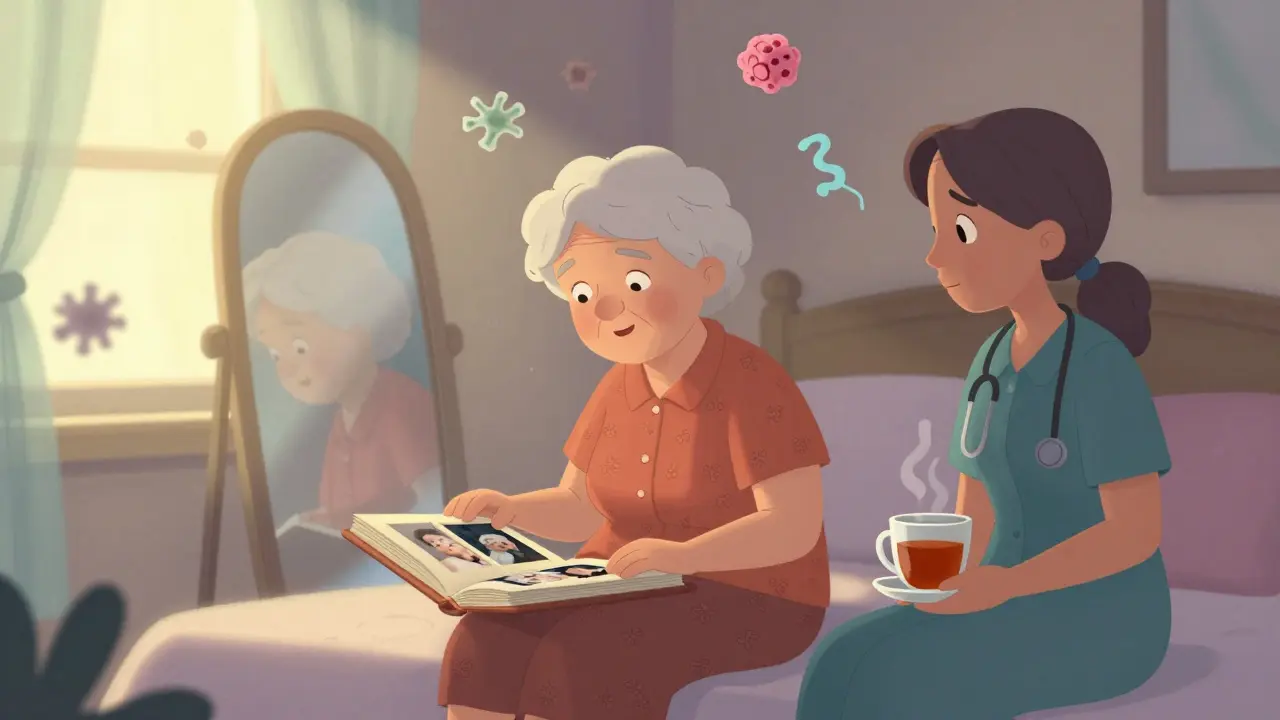
Alzheimer’s disease doesn’t start with someone forgetting where they put their keys. It begins quietly-maybe with a missed appointment, a repeated question, or a familiar face that suddenly feels strange. By the time families notice, the disease has already been silently rewiring the brain for years. This isn’t just about memory loss. It’s about losing the ability to recognize your own life, to speak, to move, and eventually, to be understood. And for every person living with Alzheimer’s, there’s a caregiver-often a spouse, child, or friend-holding on as everything slips away.
What Happens in the Brain?
Alzheimer’s isn’t normal aging. It’s a biological storm inside the brain. Two toxic proteins build up: amyloid-beta forms clumps between nerve cells, and tau twists into tangled threads inside them. These messengers of destruction choke communication between brain cells, especially in the hippocampus-the area responsible for turning short-term memories into long-term ones. Over time, entire regions shrink. The brain literally wastes away. By the time someone shows symptoms, up to 20 years of damage may have already occurred. That’s why researchers now say Alzheimer’s starts long before memory fails. Blood tests are being developed to detect these proteins years earlier, but for now, diagnosis still relies on observing changes in thinking, behavior, and daily function.How Memory Declines: A Predictable Pattern
Memory loss in Alzheimer’s follows a clear path, though the speed varies. Early on, it’s not about forgetting your childhood home-it’s about forgetting what you had for breakfast. People repeat questions, misplace things constantly, and struggle to find the right word in conversation. They might get lost driving to a store they’ve visited for 30 years. This isn’t just forgetfulness. It’s a failure to form new memories. Someone can still recognize their daughter’s face, but won’t remember she visited yesterday. Formal tests show this clearly: patients struggle to recall a list of words after a few minutes, even when given hints. That’s because the brain can’t store the information properly. As the disease moves into the middle stage, memory gaps widen. Long-term memories start to fade-names of children, addresses, even how to use a phone. People forget they’ve eaten, ask for meals repeatedly, or think they’re still working. They may accuse loved ones of stealing, hide objects, or wander off, confused about where they are. The brain is losing its map. In the late stage, memory collapses entirely. Patients no longer recognize family. They stop speaking or respond only with sounds. They don’t remember pain, hunger, or the name of the person holding their hand. The brain no longer processes new input. What remains is reflex, habit, and emotion.The Five Stages of Alzheimer’s
Doctors use stages to help families prepare. While no two journeys are the same, these stages outline what to expect:- Preclinical: No symptoms yet, but brain changes are happening. Biomarkers like amyloid in spinal fluid or PET scans can detect this, but it’s not routine.
- Mild Cognitive Impairment (MCI): Noticeable memory lapses. Someone forgets appointments, loses track of conversations, or struggles with planning. They may still drive and manage money, but family members worry.
- Mild Dementia: Memory loss worsens. People get lost in familiar places, repeat stories, have trouble handling money, and may become anxious or withdrawn. They need reminders for medications and daily tasks.
- Moderate Dementia: This is often the longest and most demanding stage. People forget personal history, need help dressing and bathing, may have hallucinations or delusions, and wander. They can’t be left alone. Behavioral changes like aggression, pacing, or hoarding are common.
- Severe Dementia: Loss of speech, mobility, and control over bodily functions. Patients are bedbound, unable to swallow safely, and require full-time care. They may not recognize anyone-even their own reflection.
What Caregivers Face-And How to Cope
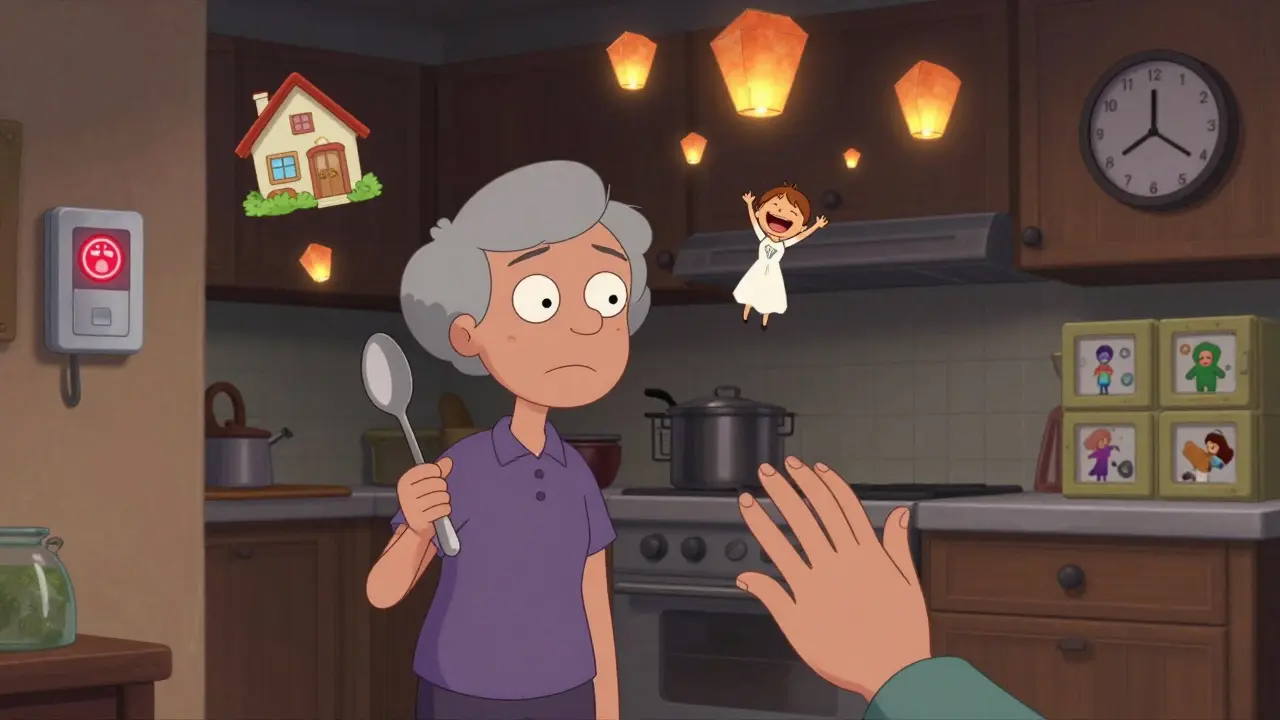
Caring for someone with Alzheimer’s isn’t a job. It’s a full-time, emotionally exhausting, physically draining life shift. In 2023, the average caregiver spent 27 hours a week providing unpaid care. Nearly 4 in 10 said their emotional stress was high or very high. One in three reported physical strain from lifting, transferring, or managing nighttime wandering. The hardest part? The middle stage. That’s when personality changes hit hardest. A once-kind parent becomes suspicious, yelling that you’re stealing their money. A calm spouse starts pacing at 3 a.m., insisting they need to go to work. The repetition is crushing-same question, 20 times an hour. The guilt is worse: Did I do enough? Am I being patient enough? Successful caregivers use simple strategies:- Validation, not correction: If they think they’re in 1985, don’t say, “No, it’s 2025.” Say, “Tell me about your job back then.”
- Routine is safety: Same meals, same walk, same bedtime. Predictability reduces confusion.
- Safety first: Remove rugs, install door alarms, lock away knives and pills. Wandering is the leading cause of injury.
- Use nonverbal cues: In late stage, touch, music, and tone matter more than words. A familiar song can bring back calm when nothing else does.
When to Seek Help
No one should do this alone. Respite care isn’t a luxury-it’s a necessity. Medicare covers up to five days of inpatient respite care per benefit period for those in hospice. Adult day programs give caregivers a few hours to breathe. Home health aides can help with bathing and toileting, reducing physical strain. If you’re feeling overwhelmed, depressed, or angry, you’re not failing. You’re human. Talk to a counselor, join a support group, or reach out to the Alzheimer’s Association. You’re not alone.
New Treatments, New Hope
For decades, treatment options were limited to drugs like donepezil and memantine-medications that might slow symptoms slightly but didn’t change the course of the disease. That changed in 2023 with the FDA approval of lecanemab (Leqembi), the first drug shown to slow cognitive decline by targeting amyloid plaques. In trials, it reduced decline by 27% over 18 months. But it’s not a cure. It requires monthly IV infusions, regular brain scans to check for dangerous swelling (ARIA), and costs tens of thousands per year. It’s also only for early-stage patients with confirmed amyloid buildup. Another drug, donanemab, is expected for approval in 2024. Researchers are now testing drugs that target tau protein, reduce brain inflammation, and even boost brain metabolism. Blood tests to detect Alzheimer’s before symptoms appear are on the horizon. But access remains unequal. These tests cost $3,000-$5,000-out of reach for most globally.What Comes Next?
Alzheimer’s is not just a medical issue. It’s a societal one. Over 6 million Americans live with it. By 2060, that number could double. Globally, dementia costs over $1 trillion a year. Most deaths aren’t from Alzheimer’s itself, but from complications-pneumonia, infections, falls-because the body can’t fight back when the brain can’t communicate. The real breakthrough won’t come from a pill. It’ll come from communities that support caregivers, policies that fund home care, and systems that treat dementia not as a personal tragedy, but as a public health priority. If you’re caring for someone with Alzheimer’s, know this: Your presence matters. Even when they don’t recognize your face, they feel your calm. Even when they can’t speak, they hear your voice. You are their anchor. And you deserve support, rest, and compassion too.Can Alzheimer’s be prevented?
There’s no guaranteed way to prevent Alzheimer’s, but evidence suggests lifestyle choices can lower risk. Regular physical activity, heart-healthy eating (like the Mediterranean diet), managing blood pressure and diabetes, staying socially active, and challenging your brain with puzzles or learning new skills may delay onset. Smoking and heavy drinking increase risk. The earlier you start, the better.
How long do people live after an Alzheimer’s diagnosis?
On average, people live 4 to 8 years after diagnosis, but some live as long as 20 years. Life expectancy depends on age at diagnosis, overall health, and access to care. Those diagnosed in their 60s or 70s often live longer than those diagnosed in their 80s or 90s. Late-stage complications like pneumonia are the most common cause of death.
Is Alzheimer’s the same as dementia?
No. Dementia is a general term for memory loss and cognitive decline severe enough to interfere with daily life. Alzheimer’s is the most common cause-making up 60-80% of cases. Other types include vascular dementia, Lewy body dementia, and frontotemporal dementia. Each affects different parts of the brain and has unique symptoms. For example, early frontotemporal dementia often affects personality and behavior before memory.
What should I do if I suspect a loved one has Alzheimer’s?
Start by seeing a doctor-preferably a neurologist or geriatrician. Keep a journal of symptoms: when they started, how often they happen, and how they affect daily life. Don’t wait for a crisis. Early diagnosis gives you time to plan care, explore treatment options, and access support services. Rule out other causes like vitamin deficiencies, thyroid issues, or depression, which can mimic dementia.
How can I make my home safer for someone with Alzheimer’s?
Remove tripping hazards like loose rugs. Install grab bars in the bathroom. Use locks on cabinets with cleaning supplies or medications. Put door alarms on exits to prevent wandering. Label drawers with pictures (e.g., a shirt for clothes, a toothbrush for bathroom). Keep the environment calm and clutter-free. Consider motion-sensor night lights for nighttime safety.
Are there medications that help with Alzheimer’s symptoms?
Yes. Cholinesterase inhibitors like donepezil, rivastigmine, and galantamine help with memory and thinking in early to middle stages. Memantine is used in moderate to severe stages to regulate glutamate, a brain chemical involved in learning. These don’t stop progression but can improve quality of life temporarily. Lecanemab is a newer drug that slows decline in early-stage patients by targeting amyloid plaques, but it requires strict monitoring.
How do I handle aggressive behavior in someone with Alzheimer’s?
Aggression is usually a response to fear, confusion, or discomfort. Look for triggers: pain, loud noises, rushed care, or being corrected. Stay calm. Don’t argue. Use a soothing tone. Offer simple choices: “Would you like to sit down or walk?” Redirect attention with music, a walk, or a favorite snack. If aggression is frequent, talk to a doctor-medications or behavioral therapy may help.
What happens in the final stages of Alzheimer’s?
In the final stage, the person becomes completely dependent. They lose the ability to speak, swallow, walk, or control bladder and bowel functions. They may sleep most of the day and not respond to voices. Pain is hard to detect-watch for grimacing, restlessness, or changes in breathing. Comfort care becomes the focus: gentle touch, soft music, keeping skin clean and dry, and preventing pressure sores. Hospice care can provide support during this time.






Look, I’ve been watching my mother spiral for six years now. It’s not the forgetting that breaks you-it’s the way she smiles at the TV like her dead husband is still alive, and you can’t bring yourself to correct her because the lie is kinder. I used to cry in the shower. Now I just hum. The silence between us is the loudest thing in the house. I don’t know if I’m grieving her or the ghost of who she was. But I still kiss her forehead every night. Even when she doesn’t know my name anymore. She still knows the warmth.
So let me get this straight-you’re romanticizing dementia like it’s some poetic tragedy when the real horror is the $800/month diapers and the fact that your mom tried to flush the cat last week because she thought it was a toaster? Yeah, the brain’s wasting away, great. But the system? It’s a dumpster fire with no fire extinguisher. And you’re out here writing essays while the rest of us are cleaning up vomit at 3 a.m.
My grandma had Alzheimer’s. I used to play her favorite jazz records and just sit with her. She’d tap her foot. Sometimes she’d smile. Didn’t say a word for months. But that tap? That was her saying ‘I’m still here.’ 🎶❤️
Oh wow, another feel-good narrative about caregivers being saints. Let’s not ignore the fact that most of these ‘loving’ families are just waiting for the insurance to cover nursing homes so they can go on vacation. The guilt is performative. The real tragedy? Society lets this happen because we’d rather cry over a poem than fund home care.
While I appreciate the emotional depth of this piece, it is imperative to emphasize that the only sustainable solution lies in federal policy reform. The U.S. must allocate 10% of the healthcare budget to dementia care infrastructure. Without systemic intervention, individual resilience is a Band-Aid on a hemorrhage.
One must consider the phenomenological rupture inherent in Alzheimer’s-the Cartesian collapse of the self. The patient no longer occupies the locus of intentionality; their consciousness becomes a fragmented echo chamber of synaptic decay. The caregiver, in turn, is forced into the role of the ontological witness, a spectral guardian of a mind that has ceased to be. This is not illness. It is the slow, bureaucratic unraveling of personhood under late-stage capitalism’s indifference.
Let’s be real-this whole ‘Alzheimer’s is a silent thief’ narrative is just a sanitized version of what’s really happening: a slow, humiliating collapse of autonomy, monetized by pharma and glorified by Instagram caregivers posting #gratefulforthisjourney while their parents are medicated into oblivion. Lecanemab? More like lecanemab-bleh. It slows decline by 27%? Cool. So now we’re just extending the torture with a 50k/year IV drip? We’re not curing dementia. We’re just making it more expensive.
My sister says she’s ‘learning patience’ through this. Meanwhile she’s been in therapy for 18 months and still calls me at 2 a.m. screaming because Dad called her ‘the maid.’ You know what’s not therapeutic? Being gaslit by your own family while you clean up his urine-soaked pants. This isn’t a journey. It’s a hostage situation with a side of emotional labor.
Man, I’ve seen this in my uncle’s village in Punjab-no meds, no scans, just family sitting with him, feeding him by hand, singing old songs. No one talks about ‘stages’ or ‘biomarkers.’ They just… stay. The brain may fade, but the soul? It remembers love. Maybe we’re overcomplicating this. Maybe the answer isn’t in the lab-it’s in the lap.
My aunt’s in stage 5. She hasn’t spoken in 10 months. But she still laughs when I tickle her feet. That’s it. That’s the whole story.
Oh please. You think this is tragic? Try being the 42-year-old daughter who has to sign DNR papers because your mom’s body is failing but her brain can’t even process that she’s dying. And then your brother says ‘we should’ve put her in hospice sooner’ like it’s a Yelp review. You’re not a caregiver. You’re a trauma survivor with a 401(k) and a therapist on speed dial.
What I’ve learned from sitting with my father during his last months: the words don’t matter anymore. The way you hold his hand-slow, steady, warm-that’s the language he still understands. No drug, no scan, no policy will ever replace that. We don’t need more innovation. We need more presence.
It is scientifically inaccurate to assert that Alzheimer’s disease begins silently. The pathological process is detectable via cerebrospinal fluid biomarkers as early as 15–20 years prior to symptom onset. To suggest otherwise is to propagate misinformation. Furthermore, the term ‘caregiver’ is not a romantic archetype-it is a professional role requiring standardized training, compensation, and legal recognition. This article, while emotionally compelling, lacks empirical rigor.