

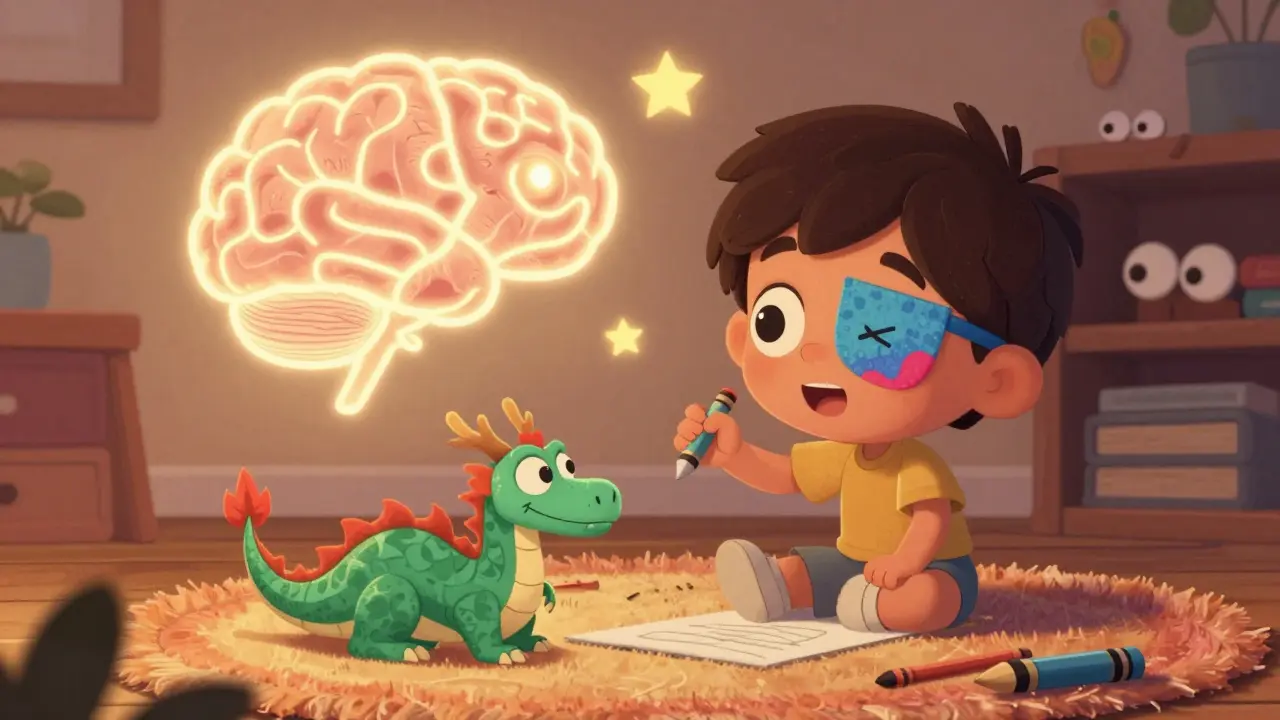
When a child squints, tilts their head, or closes one eye to see better, it’s not just a habit-it could be a sign of amblyopia, the most common cause of preventable vision loss in kids. Affecting 2% to 4% of children, amblyopia isn’t about blurry glasses or dirty lenses. It’s a brain problem. The eye may look perfectly normal, but the brain ignores input from one eye because it never learned how to use it properly during early development. Left untreated, this can lead to permanent vision loss in that eye. The good news? With the right treatment, most kids can regain clear, balanced vision-if caught early.
What Causes Amblyopia?
Amblyopia doesn’t happen overnight. It develops during the critical window of visual development, from birth to about age 7. During this time, the brain is wiring itself to process what the eyes see. If something interferes with that process, the brain starts to favor one eye and suppress the other. There are three main reasons this happens.Strabismic amblyopia is the most common type, making up about half of all cases. It occurs when one eye turns inward, outward, up, or down. Because the eyes aren’t aligned, the brain gets conflicting images. To avoid double vision, it simply shuts off the input from the turned eye. Over time, that eye loses its ability to see clearly-even with glasses.
Anisometropic amblyopia happens when there’s a big difference in refractive error between the two eyes. One eye might be very nearsighted, farsighted, or astigmatic, while the other is close to normal. The brain prefers the clearer image from the better eye and ignores the blurry one. Even if the child doesn’t complain about vision, the brain has already made its choice.
Deprivation amblyopia is the rarest but most serious. It occurs when something physically blocks light from entering the eye-like a congenital cataract, droopy eyelid (ptosis), or corneal scar. If the eye doesn’t get clear visual input during those early months, the brain never learns to see through it. This type needs urgent treatment.
Bilateral amblyopia can also occur when both eyes have high, uncorrected refractive errors. These kids often don’t show obvious signs, which is why routine eye exams are so important.
Who’s at Risk?
Some children are more likely to develop amblyopia. Premature birth increases the risk by 2.3 times. Babies weighing less than 2,500 grams at birth are also more vulnerable. A family history of amblyopia raises the risk by 30-40%. Children with developmental delays or neurological conditions are at higher risk too.Many parents assume their child’s vision is fine if they don’t complain or if they pass a school screening. But school screenings often miss subtle cases. The American Academy of Pediatrics recommends a full eye exam by age 3, and again before kindergarten. If a child has any risk factors, an exam should happen even earlier-by 6 to 12 months.
How Is It Diagnosed?
Diagnosing amblyopia isn’t as simple as reading an eye chart. Pediatric eye exams include several key tests:- Visual acuity testing using pictures or shapes for young kids
- Refraction to check for nearsightedness, farsightedness, or astigmatism
- Eye alignment checks to detect strabismus
- Fundus examination to rule out cataracts or other eye diseases
These tests are non-invasive and usually quick. For infants, doctors may use light reflex tests or preferential looking tests. For toddlers, they use matching games or picture charts. The goal is to find any imbalance between the eyes-even if the child doesn’t realize there’s a problem.
Patching Therapy: The Gold Standard
For decades, patching therapy has been the most proven treatment for amblyopia. The idea is simple: cover the stronger eye to force the brain to use the weaker one. This rewires the visual pathways and helps the lazy eye regain strength.How long should a child wear the patch? It depends on the severity and age. The landmark Amblyopia Treatment Study (ATS) found that for moderate amblyopia (vision between 20/40 and 20/100), just 2 hours of daily patching worked just as well as 6 hours. That’s a game-changer for families. Less time wearing the patch means fewer tantrums and better compliance.
For severe cases, doctors may still recommend 6 hours daily. For younger kids, treatment often starts with shorter sessions-30 minutes to an hour-and gradually increases. The patch is usually worn during waking hours, especially during activities that require focus: reading, drawing, playing tablet games, or watching TV.
But here’s the hard truth: only 40-60% of kids stick with patching as prescribed. Parents report social stigma, skin irritation, and daily battles as major barriers. That’s why successful treatment isn’t just about the patch-it’s about support.
How to Make Patching Work
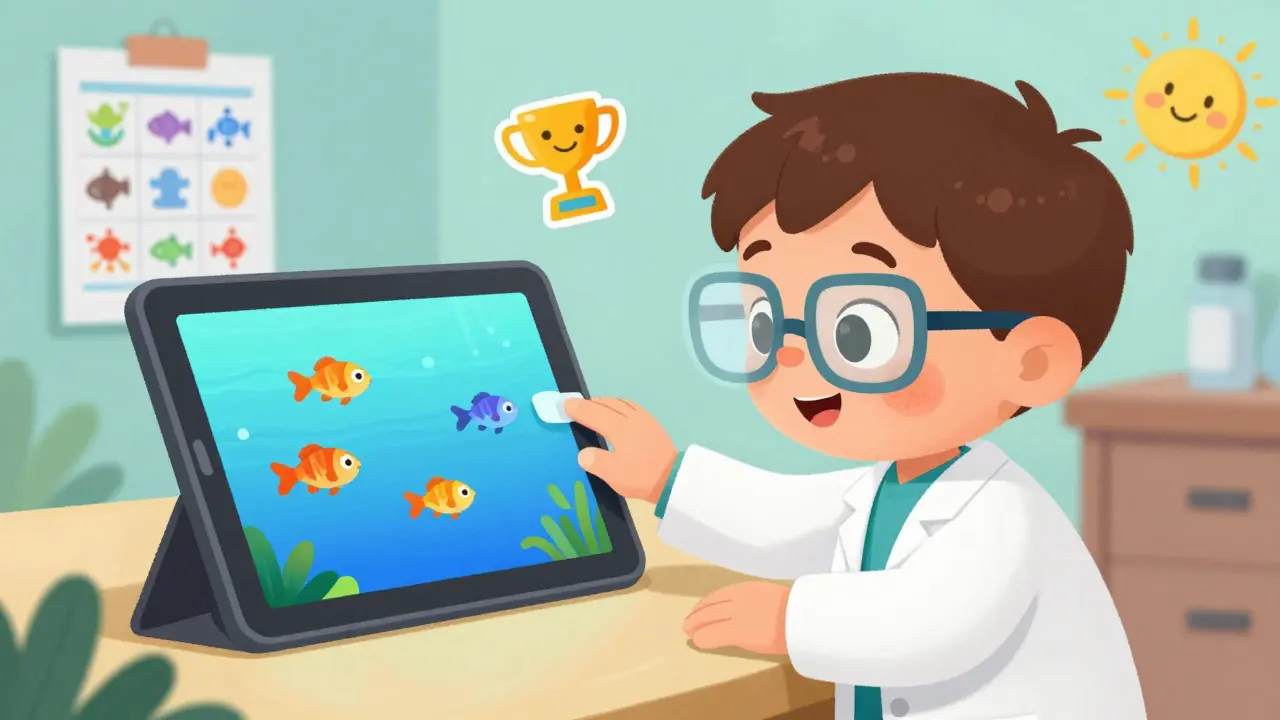
Compliance is the biggest hurdle in amblyopia treatment. Here’s what works:- Start slow. Begin with 30-minute sessions and build up over days. Don’t overwhelm the child.
- Make it fun. Turn patching into a game. Let the child decorate the patch with stickers. Host “patching parties” with siblings or friends who also wear patches.
- Use rewards. A sticker chart, small treats, or extra screen time can motivate young kids.
- Use apps. Tools like LazyEye Tracker help parents log hours and get reminders. About 22% of pediatric eye clinics now recommend them.
- Involve the school. Teachers can help by allowing patching during quiet activities and reducing stigma.
Parent education makes a huge difference. Clinics that spend 20-30 minutes explaining the science-how the brain can rewire itself-see adherence rates jump from 45% to 89%. When parents understand this isn’t just about vision, but brain development, they’re more committed.
Alternatives to Patching
Not every child tolerates patching. That’s why doctors have other tools:Atropine drops blur the vision in the stronger eye temporarily. One drop of 1% atropine sulfate in the good eye every day makes it harder to focus on close-up tasks-like reading or tablet use-so the brain turns to the weaker eye. Studies show this works just as well as patching for moderate cases, with 79% of kids reaching 20/30 vision or better after six months. It’s especially helpful for kids who hate patches or have skin reactions.
Bangerter filters are translucent stickers placed on the lens of glasses. They slightly blur the strong eye without being obvious. They’re often used in older children who resist patches, though they’re less effective than direct occlusion.
Digital therapy is the newest frontier. Platforms like AmblyoPlay use video games designed to stimulate both eyes together. The games require the brain to combine input from both eyes to score points-exactly what’s missing in amblyopia. FDA-cleared since 2021, these apps show 75% compliance rates-far higher than patches. They’re especially popular in Europe and are gaining ground in the U.S.
When Surgery Is Needed
If amblyopia is caused by strabismus, patching alone won’t fix the turned eye. Surgery to realign the eye muscles may be needed first. About 70-80% of children with strabismic amblyopia require surgery before vision therapy can fully work. After surgery, patching or atropine is still necessary to train the brain to use the eye properly.For deprivation amblyopia caused by cataracts, surgery to remove the cataract must happen as early as possible-sometimes within weeks of birth. Delaying it can permanently damage vision development.
How Long Does Treatment Last?
Amblyopia treatment isn’t a quick fix. Most children need at least 6-12 months of therapy. Some need it longer, especially if they start treatment after age 5. Follow-up visits every 4-8 weeks are critical. Doctors measure vision improvement with standardized tests and adjust patching time or switch treatments if progress stalls.Success rates are high: 97% of children show some improvement with treatment. But complete recovery-20/20 vision in both eyes-happens in only 65-75% of cases. The earlier treatment begins, the better the outcome. Kids treated before age 5 recover 85-90% of their vision. Between ages 5 and 7, that drops to 50-60%. After age 8, gains are much smaller, though not impossible.
Can Adults Be Treated?
For years, doctors believed amblyopia couldn’t be fixed after childhood. That’s changing. New research shows adults with amblyopia can improve their vision through intensive perceptual learning tasks-like identifying subtle patterns or tracking moving objects on a screen. These programs, often done with specialized software, can boost contrast sensitivity and depth perception. But results are modest compared to childhood treatment. The brain’s plasticity declines with age, so early intervention remains the best strategy.What’s Next in Amblyopia Treatment?
Science is pushing boundaries. A 2023 study in the British Journal of Ophthalmology found that combining patching with transcranial random noise stimulation (tRNS)-a gentle electrical current applied to the scalp-led to 40% greater vision gains than patching alone. It’s still experimental, but promising.Weekend-only atropine dosing is another breakthrough. Instead of daily drops, some kids get a stronger dose just on Saturdays and Sundays. This reduces side effects like light sensitivity and improves quality of life while maintaining results.
Market data shows the global amblyopia treatment device market is growing at 6.2% per year through 2028. Digital therapies, smart patches, and AI-driven progress trackers are becoming standard in forward-thinking clinics.
Key Takeaways
- Amblyopia is a brain-based vision problem, not an eye problem.
- It’s the #1 cause of childhood vision loss-but also the most treatable.
- Early detection before age 3 is critical for full recovery.
- Patching works, but compliance is low. Use games, rewards, and apps to help.
- Atropine drops and digital therapy are proven alternatives.
- Even older kids (ages 5-7) can still benefit significantly.
- Adults can improve vision too, but outcomes are limited.
Frequently Asked Questions
Is amblyopia the same as a lazy eye?
Yes, "lazy eye" is the common name for amblyopia. But it’s important to understand it’s not about the eye being weak or lazy. The eye is physically normal. The problem is that the brain isn’t using it properly. That’s why simply wearing glasses doesn’t fix it-therapy is needed to retrain the brain.
Can my child outgrow amblyopia without treatment?
No. Amblyopia does not go away on its own. Without treatment, the brain continues to ignore the weaker eye, and vision in that eye will permanently decline. The longer it goes untreated, the harder it becomes to recover vision later.
Does patching hurt or damage the good eye?
No. Patching temporarily reduces vision in the stronger eye to give the weaker eye a chance to work. This does not cause damage. In fact, the stronger eye usually regains full function once treatment ends. Temporary blurriness or light sensitivity is normal and fades quickly.
How often should my child have eye exams?
The American Academy of Pediatrics recommends a full eye exam by age 3 and again before kindergarten. If there’s a family history of amblyopia, strabismus, or other vision problems, an exam should happen as early as 6-12 months. Don’t wait for symptoms-many kids show none.
What if my child refuses to wear the patch?
This is common. Try shorter sessions at first, use fun patches, reward progress, and involve siblings or friends. Some clinics offer "patching buddies" programs where kids wear patches together. Digital apps like LazyEye Tracker or AmblyoPlay can also make the process feel more like play than punishment.
Will my child need glasses if they have amblyopia?
Often, yes. Many cases of amblyopia are caused by uncorrected refractive errors. Glasses are the first step in treatment-even before patching. They correct the blurry image so the brain has a better chance to use the weaker eye. Patching alone won’t work if the eye can’t see clearly through the glasses.
Can amblyopia come back after treatment?
Yes, in about 25% of cases, especially if treatment is stopped too soon. That’s why regular follow-ups are essential. Doctors may taper patching slowly and monitor vision for months after treatment ends. Relapse is more likely if the child stops wearing glasses or if there’s an underlying issue like strabismus that wasn’t fully corrected.


I never realized amblyopia was a brain thing and not just an eye problem. My cousin had it as a kid and they just gave her glasses. No patching. Guess we missed the boat.
Good to know early detection is the key.
So let me get this straight - the government is forcing kids to wear patches because Big Pharma wants us to buy more eye drops and apps? I’ve seen this before with ADHD meds. They make it seem like every kid needs fixing.
My kid squints sometimes - probably just watching too much TikTok.
This is so important. My niece got diagnosed at age 4 after her pediatrician pushed for a full exam. We started patching and within 3 months, her depth perception improved so much she could catch a ball for the first time.
Don’t wait. Get that eye exam.
It’s wild how much the brain can rewire itself if you give it the right chance. I used to think vision was just about the eyes, but this is more like neuroplasticity in action.
Parents who stick with patching - you’re doing the hardest kind of love work. Keep going.
And if you’re struggling? You’re not alone. Talk to other parents. There’s a whole community out there.
While the article presents a compelling narrative regarding amblyopia and its therapeutic interventions, one must critically evaluate the evidentiary basis of digital therapy platforms such as AmblyoPlay. The FDA clearance, while nominally reassuring, does not equate to longitudinal efficacy. Furthermore, the cited 75% compliance rate is likely inflated due to selection bias in clinical trials. In my professional capacity as a neuro-ophthalmologist with over 28 years of experience, I have observed that patching remains the only intervention with reproducible, peer-reviewed outcomes across diverse populations. The commercialization of pediatric vision therapy is a troubling trend, and parents must be cautioned against substituting evidence-based protocols with gamified digital products lacking robust long-term data.
So the brain ignores an eye because it’s lazy… wait no it’s because the brain made a choice… but we’re forcing it to change its mind by covering the good eye like some kind of visual hostage situation
And now we’re giving kids video games to fix it
What’s next a TikTok challenge for patching
At least we’re not using crystals yet
Atropine drops are a game changer for families who can’t manage patching - my daughter hated the adhesive and got rashes. The drops were a quiet win. But the real win was when the optometrist sat down with us for 25 minutes and explained the brain rewiring part. That’s when we stopped seeing it as a chore and started seeing it as training. It’s neuroscience, not punishment.
Also - yes, school screenings are useless. My kid passed one and still had severe anisometropia. Don’t trust them.
It’s fascinating to observe the neuroplasticity-mediated reorganization of the primary visual cortex (V1) and extrastriate areas (V2-V5) during occlusion therapy - particularly in the context of binocular rivalry suppression mechanisms. The ATS data, while robust, underrepresents the heterogeneity of refractive error profiles across ethnic populations, and the emerging tRNS paradigm, which modulates cortical excitability via stochastic resonance, represents a paradigm shift in non-invasive neuromodulatory adjuncts. Furthermore, the 6.2% CAGR in the amblyopia treatment device market reflects not only commercialization but also the increasing integration of machine learning algorithms for real-time adherence analytics and personalized therapy titration. Clinicians must now consider a multimodal, neurocognitively-informed framework rather than a binary occlusion paradigm. The future is adaptive, data-driven, and biologically targeted.