

What makes these three types of dementia different?
When people think of dementia, they often picture memory loss-forgetting names, repeating questions, getting lost in familiar places. But dementia isn’t one disease. It’s a group of conditions, each with its own cause, symptoms, and progression. Three of the most common types after Alzheimer’s are vascular dementia, frontotemporal dementia, and Lewy body dementia. They don’t look the same, they don’t act the same, and they certainly aren’t treated the same. Getting the diagnosis right isn’t just about labels-it changes everything from medication choices to how families care for their loved ones.
Vascular dementia: The silent damage from blood flow
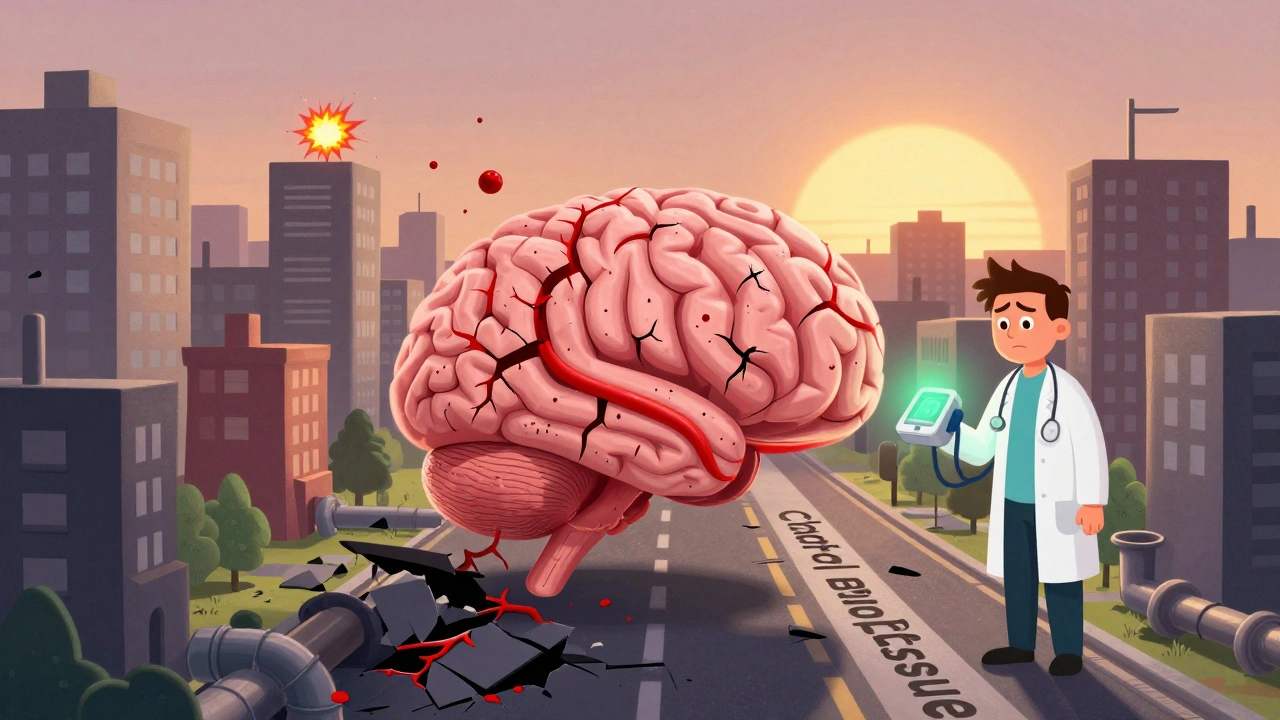
Vascular dementia happens when the brain doesn’t get enough blood. It’s not caused by dying brain cells the way Alzheimer’s is-it’s caused by blocked or burst blood vessels. Think of it like a plumbing problem in the brain. A stroke, a series of tiny mini-strokes (TIAs), or long-term high blood pressure can all cut off oxygen to parts of the brain. The damage shows up as dead spots on an MRI, called infarcts.
What makes vascular dementia stand out? The symptoms don’t creep in slowly. They come in steps. Someone might seem fine one month, then suddenly struggle to follow a conversation or forget how to pay bills after a stroke. Then they stabilize for a while-maybe even improve a little-before another event triggers another drop. This stepwise pattern is a key clue doctors look for.
Symptoms often include trouble planning, organizing, or making decisions. Memory loss happens too, but it’s usually not the first or most obvious sign. Instead, you might notice someone becoming clumsy, having trouble walking, losing bladder control, or showing emotional outbursts. They might not remember what they ate for lunch, but they’ll definitely know their spouse’s name. That’s different from Alzheimer’s, where memory goes first.
The good news? You can slow it down. Controlling blood pressure (keeping it under 130/80), managing diabetes, lowering cholesterol, and quitting smoking can reduce the risk of more damage. Medications like aspirin or statins are often used to prevent future clots. The SPRINT-MIND trial showed that intensive blood pressure control reduced the risk of mild cognitive decline by 19%-proof that what’s good for your heart is good for your brain.
Frontotemporal dementia: When personality changes before memory does
If someone in their 50s starts acting strangely-becoming rude, impulsive, emotionally flat, or losing all interest in hobbies-they might be told they’re just stressed or depressed. But it could be frontotemporal dementia, or FTD. This type attacks the front and side parts of the brain, the areas that control behavior, judgment, and language. And unlike Alzheimer’s, memory stays relatively sharp in the early stages.
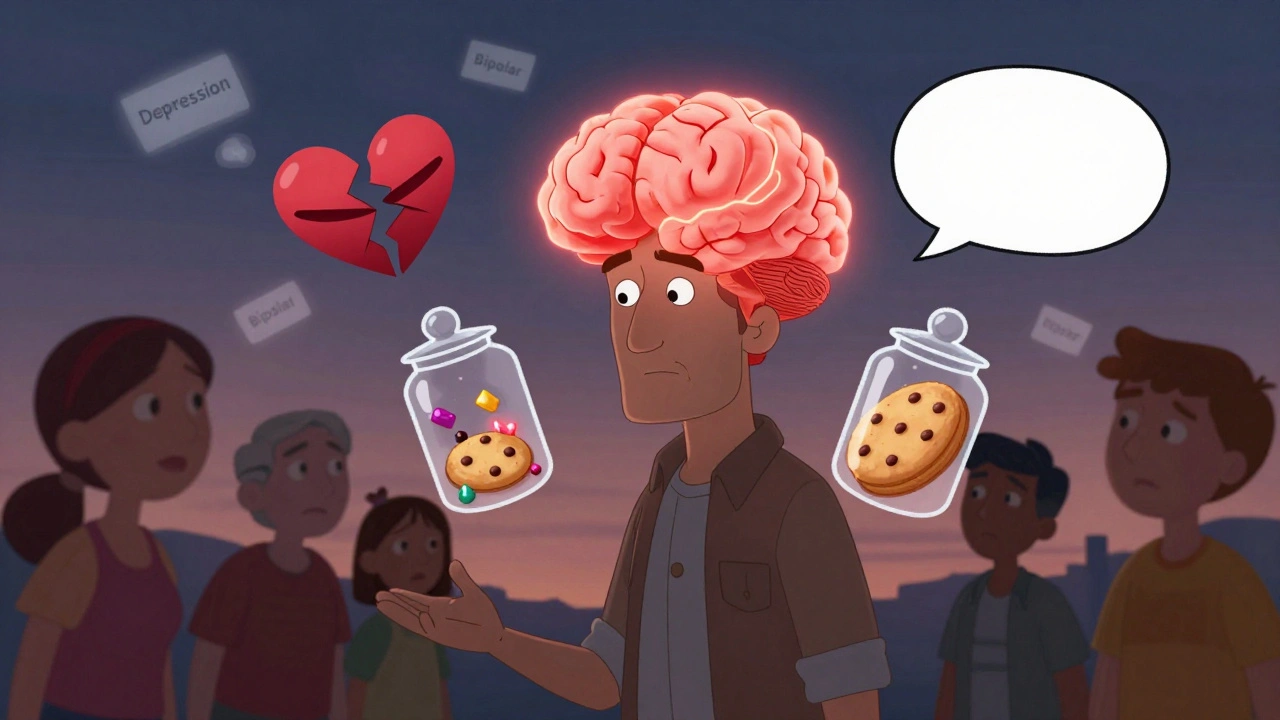
FTD is the most common form of dementia in people under 60. It’s not rare-it affects about 10% of all dementia cases. But because it hits younger people, it’s often mistaken for a psychiatric disorder. Up to half of FTD cases are initially misdiagnosed as depression, bipolar disorder, or even schizophrenia. That’s dangerous. Antidepressants or antipsychotics won’t help-and might make things worse.
There are three main ways FTD shows up:
- Behavioral variant: People become socially inappropriate, lose empathy, eat compulsively, or stop caring about hygiene. One patient I knew started giving away his savings to strangers. Another stopped speaking entirely but could still recognize his grandchildren.
- Language variant: Someone might struggle to find words, repeat phrases, or lose the ability to understand complex sentences. This is called primary progressive aphasia.
- Movement variant: Some develop muscle stiffness, tremors, or trouble walking-symptoms that overlap with Parkinson’s or ALS.
There’s no cure. No drugs can stop the brain from shrinking. But some symptoms can be managed. SSRIs may help with compulsive behaviors or mood swings. Speech therapy can support communication. The biggest challenge? Families don’t know how to respond when the person they loved seems to disappear-replaced by someone who doesn’t recognize social rules or emotional boundaries.
Lewy body dementia: The hallucinations, the fluctuations, the misdiagnosis
Lewy body dementia (LBD) is the third most common dementia, yet it’s the most misunderstood. It’s caused by abnormal clumps of a protein called alpha-synuclein-called Lewy bodies-that build up in brain areas responsible for thinking, movement, and sleep. These same clumps are found in Parkinson’s disease, which is why LBD includes two closely related forms: dementia with Lewy bodies (DLB) and Parkinson’s disease dementia (PDD).
The key difference between DLB and PDD is timing. If dementia shows up within a year of movement problems, it’s DLB. If movement problems come first and dementia appears later, it’s PDD. But in practice, the line blurs. Both share the same core symptoms:
- Fluctuating attention: One minute they’re alert and talking clearly; the next, they’re staring blankly, unresponsive, like they’re asleep with their eyes open.
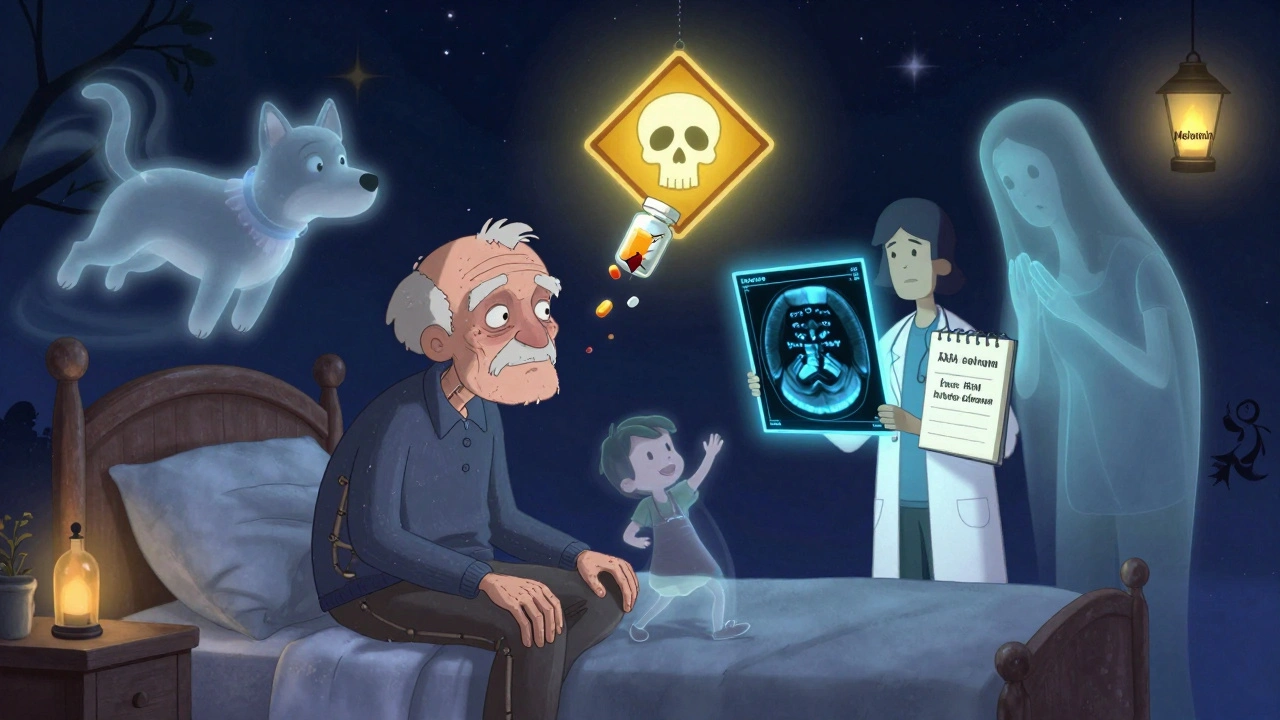
- Visual hallucinations: Seeing people, animals, or shadows that aren’t there. These aren’t random-they’re often detailed and vivid. A woman might describe her late husband sitting in the chair, or a child playing on the floor. Importantly, patients often don’t realize these aren’t real, which makes it harder for caregivers to know how to respond.
- REM sleep behavior disorder: Acting out dreams-kicking, shouting, even jumping out of bed. This often starts years before dementia appears.
- Parkinsonian movement: Shuffling walk, stiff muscles, reduced facial expression.
Here’s the critical part: standard Alzheimer’s drugs like donepezil can help with cognition in LBD. But antipsychotics? Dangerous. Up to 75% of people with LBD have severe, sometimes fatal reactions to these medications. They can become rigid, unable to move, fall into a coma, or develop neuroleptic malignant syndrome-a life-threatening condition. Yet, because LBD is so often misdiagnosed as Alzheimer’s, people are still being given these drugs. One study found that proper diagnosis of LBD reduced hospitalizations by 30% just by avoiding the wrong meds.
There’s hope on the horizon. New blood tests and brain scans (like DaTscan) are making diagnosis faster and more accurate. Clinical trials are testing drugs that target alpha-synuclein, the root cause. But for now, the best thing families can do is learn the signs-and never accept an antipsychotic without a second opinion.
Why diagnosis matters more than you think
Getting the right dementia diagnosis isn’t just academic. It’s life-or-death.
Take LBD again. A person misdiagnosed as Alzheimer’s might be given an antipsychotic for hallucinations. Within days, they could become rigid, unable to swallow, or slip into a coma. That’s not a side effect-it’s a medical emergency.
With vascular dementia, skipping blood pressure control means more strokes. More strokes mean faster decline. A person who could live 5-7 years with proper management might only survive 2-3 without it.
And FTD? If it’s labeled as depression, the person gets antidepressants that do nothing. Meanwhile, their behavior gets worse, their family feels helpless, and they lose years of potential support.
Diagnosis requires more than memory tests. It needs brain imaging (MRI or CT), neurological exams, and sometimes specialized scans like DaTscan for LBD or FDG-PET for FTD. Blood tests to rule out thyroid issues or vitamin B12 deficiency are also standard. A specialist-neurologist or geriatric psychiatrist-is essential.
What families need to know
Each type of dementia changes how you care for someone.
With vascular dementia, focus on prevention: monitor blood pressure, help with medication schedules, encourage walking, and watch for signs of another stroke-sudden weakness, slurred speech, confusion.
With FTD, structure and routine are key. Remove triggers for impulsive behavior. Use simple language. Don’t argue about hallucinations or irrational beliefs-they don’t understand they’re false. Support groups for caregivers are vital. This isn’t just hard-it’s isolating.
With Lewy body dementia, safety is the priority. Remove rugs, install nightlights, pad sharp corners. Don’t try to reason with hallucinations. Say, “I don’t see that, but I’m here with you.” Keep a sleep diary-REM sleep behavior disorder can be managed with melatonin or clonazepam under a doctor’s care. Never, ever give antipsychotics without a neurologist’s approval.
And always, always ask: Could this be something else? Too many people are told, “It’s dementia,” and left without a plan. But these aren’t the same disease. They need different care. Different meds. Different hope.
Where research is headed
For years, dementia research focused almost entirely on Alzheimer’s. But that’s changing. Scientists now know that many people have mixed dementia-Alzheimer’s plus vascular changes, or Lewy bodies on top of FTD. That’s why broad treatments won’t work.
Researchers are developing blood tests that can detect early signs of vascular damage, tau protein buildup in FTD, or alpha-synuclein in LBD. These could make diagnosis faster than waiting for brain scans. Clinical trials are testing drugs that target the root proteins-not just symptoms.
And prevention? The Lancet Commission found that controlling high blood pressure in midlife could prevent nearly 2% of all dementia cases-mostly vascular. That’s millions of people. Lifestyle matters: exercise, diet, sleep, social connection. It’s not magic, but it’s powerful.
Final thought: Don’t accept the label
Dementia isn’t a single diagnosis. It’s a collection of conditions with different causes, different symptoms, and different outcomes. If someone you love is diagnosed with dementia, ask: What kind? What’s the evidence? What are the next steps? Don’t let a vague label lead to the wrong treatment. The right diagnosis doesn’t mean a cure-but it means better care, fewer hospital visits, and more time with the person you know.
Is vascular dementia the same as Alzheimer’s?
No. Vascular dementia is caused by reduced blood flow to the brain, often from strokes or damaged blood vessels. Alzheimer’s is caused by amyloid plaques and tau tangles in brain tissue. Vascular dementia symptoms often appear suddenly after a stroke and worsen in steps, while Alzheimer’s progresses slowly with memory loss as the first sign. Treatment also differs: vascular dementia focuses on controlling blood pressure and preventing further strokes, while Alzheimer’s uses medications to support memory.
Can frontotemporal dementia be reversed?
No, there’s no cure or way to reverse the brain damage in frontotemporal dementia. The nerve cells that die don’t regenerate. But symptoms can be managed. Behavioral changes may improve with SSRIs or structured routines. Speech therapy helps with language loss. The goal isn’t to stop the disease-it’s to keep the person safe, comfortable, and connected for as long as possible.
Why are antipsychotics dangerous for Lewy body dementia?
People with Lewy body dementia are extremely sensitive to antipsychotic drugs because of how these medications interact with the brain’s dopamine system. Even low doses can cause severe side effects like extreme stiffness, inability to move, high fever, or even death from neuroleptic malignant syndrome. Up to 75% of LBD patients have dangerous reactions. That’s why doctors avoid these drugs unless absolutely necessary-and even then, only with extreme caution and close monitoring.
At what age does frontotemporal dementia usually start?
Frontotemporal dementia typically begins between ages 45 and 65, with an average onset around 58. That’s much younger than Alzheimer’s, which usually starts after 65. Because it affects people in their prime working years, it’s often mistaken for a mental health issue like depression or bipolar disorder. This delay in diagnosis can last years, leading to job loss, family strain, and missed support opportunities.
Can you have more than one type of dementia at once?
Yes. Mixed dementia is common-especially in older adults. About 40% of people with Alzheimer’s also have Lewy bodies or vascular changes in their brain. This means symptoms can be a mix: memory loss from Alzheimer’s, confusion from Lewy bodies, and walking problems from vascular damage. Diagnosis gets harder, but treatment becomes more tailored. For example, someone might get a cholinesterase inhibitor for Lewy body symptoms and aspirin for vascular protection.
How is Lewy body dementia diagnosed?
Lewy body dementia is diagnosed based on a pattern of symptoms, not one test. Doctors look for at least two of four core features: fluctuating cognition, recurrent visual hallucinations, REM sleep behavior disorder, and Parkinsonian movement. Brain scans like DaTscan can show dopamine loss in the brain, supporting the diagnosis. MRI or CT scans rule out strokes or tumors. Blood tests check for other causes like thyroid problems. A neurologist specializing in movement or dementia disorders is usually needed for accurate diagnosis.





So basically if your grandma starts talking to her dead husband and then falls over because she got antipsychotics... congrats you got LBD
bro i had my grandpa on risperidone for 3 months til the neurologist was like 'oh wow he has lbds why did u give him that' he was basically a statue for 2 weeks 😭
I work in geriatric care, and the most heartbreaking thing isn't the dementia-it's how often families are told 'it's just aging' until it's too late. Vascular dementia can be slowed, FTD needs behavioral support, and LBD? Never give antipsychotics. Yet I still see it happen. Education isn't optional-it's life-saving.
The assertion that vascular dementia manifests in a stepwise fashion is not universally applicable. While it is frequently observed in cases of multi-infarct dementia, the phenomenology may vary significantly depending on the vascular architecture affected. One must exercise caution in oversimplifying neurodegenerative pathology.
It’s astonishing how many clinicians still treat dementia as a monolith. This article is refreshingly precise, but I’m still baffled why primary care physicians are allowed to prescribe antipsychotics to elderly patients without consulting a neurologist. It’s malpractice dressed as protocol.
I’ve sat with families who watched their mother vanish-not from forgetting their name, but from suddenly becoming a stranger who laughed at funerals and ate toothpaste. FTD doesn’t steal memories. It steals the soul. And we’re still treating it like a mood disorder. We’re failing them.
There’s a quiet tragedy in how we pathologize personality change in the young. If a 52-year-old becomes impulsive, we call it bipolar. If a 75-year-old forgets his keys, we call it dementia. But what if the 52-year-old is losing the frontal lobe? We need to stop ageism in neurology-it’s not just bias, it’s lethal misdiagnosis.
I’m a caregiver for my father with mixed dementia-Alzheimer’s and vascular. We’ve learned to track his BP daily, keep his meds in a pill organizer, and never, ever let him walk alone after dark. The article’s right: diagnosis isn’t a label-it’s a roadmap. And we’re still driving blind in too many homes.
This article is basically a public service announcement disguised as medical writing. Why isn’t this required reading for every ER doctor? Why are we still letting psychiatrists prescribe antipsychotics to people who might have LBD? This isn’t negligence-it’s systemic failure. And it’s killing people.