

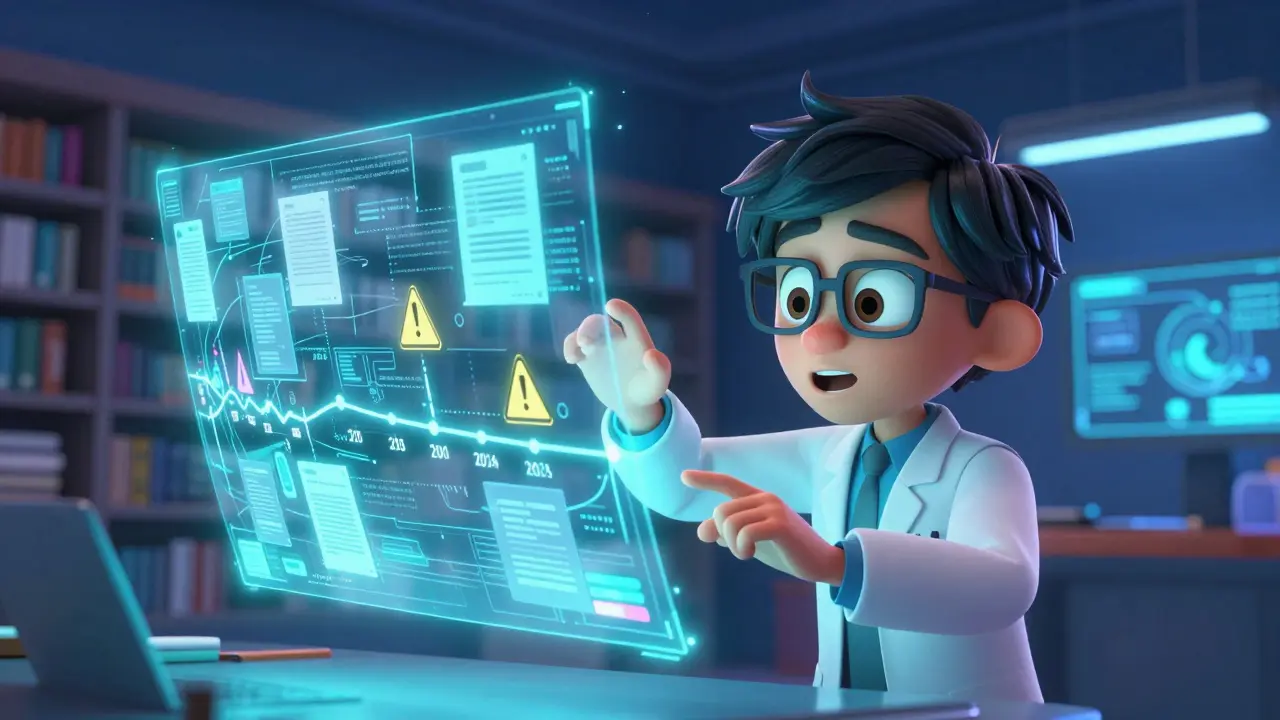
To get a handle on this system, you first need to understand that the FDA doesn't put everything in one giant bucket. Depending on what you are looking for-a drug, a biological product, or a pacemaker-you'll need to visit different parts of the archive. The modern system we use today is largely shaped by the 2007 FDA Amendments Act (FDAAA), which gave the agency more power to track and report safety evidence as it piles up after a product hits the market.
Navigating Drug Safety Communications (DSCs)
If you need to find a specific alert about a pharmaceutical, your first stop is the Drug Safety Communications (DSCs) section. These are organized by year, currently spanning from 2010 through 2024. It is a straightforward chronological setup, but there is a catch: if you find a communication from 2012 and it's marked as "archived," it usually means the FDA released a newer update that makes the old one obsolete. You should always check for the most recent version of a DSC to ensure you aren't relying on outdated medical advice.
These communications aren't just generic warnings. They often take the form of "Public Health Advisories" for the general public or "Dear Healthcare Provider" letters. The latter are critical because they are direct warnings sent to doctors and pharmacists, often containing more technical data than what the average consumer sees in a news headline. If you're researching how a risk was communicated to professionals versus the public, comparing these two formats is the way to go.
Tracking Labeling Changes via the SrLC Database
Sometimes a safety concern doesn't result in a flashy news alert but instead causes a quiet change in the fine print of a drug's packaging. This is where the SrLC Database (Drug Safety-related Labeling Changes) comes in. Launched in January 2016, this tool allows you to track specific updates to safety information without digging through thousands of pages of regulatory filings.
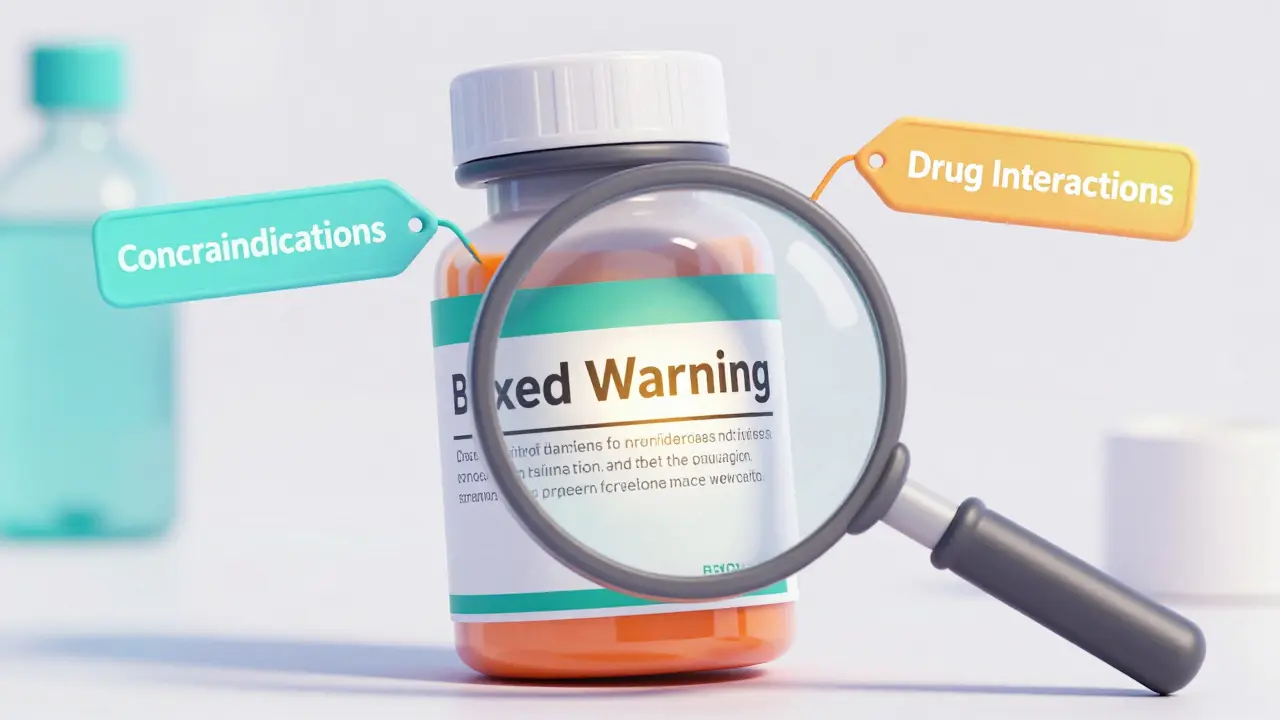
The SrLC Database focuses on high-impact areas of the label. Instead of searching the whole document, you can look specifically for changes in:
- BOXED WARNINGS: The most serious warnings that the FDA requires to be highlighted.
- CONTRAINDICATIONS: Situations where a drug should absolutely not be used.
- DRUG INTERACTIONS: New discoveries about how a medication reacts with other substances.
- USE IN SPECIFIC POPULATIONS: Updated warnings for children, elderly patients, or pregnant women.
Keep in mind that the SrLC Database only tracks changes from 2016 onward. If you need to see a labeling change from 2014, you'll have to move beyond the modern database and start using the broader web archives.
Researching Medical Device Safety and Early Alerts
Medical devices are handled differently than drugs. The Medical Device Safety Communications system provides a more clinical analysis of issues. One of the most important features here is the "Early Alert." These are reserved for the most serious types of recalls-the kind where the FDA believes immediate action is needed to prevent patient harm.
| Feature | Drug Safety (DSC/SrLC) | Medical Device Safety |
|---|---|---|
| Primary Goal | Labeling updates & risk alerts | Clinical recommendations & recalls |
| Key Tool | SrLC Database (since 2016) | Early Alerts for serious recalls |
| Structure | Chronological (by year) | Issue-based analysis |
| Integration | Connected to Drugs@FDA | Connected to CDRH Recall Program |
Digging Deeper: Pre-2010 and Historical Records
What happens if your research goes back further than 2010? Most of the current FDA website is optimized for modern browsing, meaning old pages often disappear. To find "lost" warnings, you have to use the FDA.gov Archive. This is essentially a time machine for the agency's web pages, allowing you to view versions of documents that are no longer live on the main site.
For those doing truly deep historical work-like academic researchers or legal historians-the digital archives aren't enough. You have to go to the National Archives. Specifically, Record Group 88 contains the records of the FDA from 1877 to 1978. If you want to see the actual correspondence and reports from the early 1900s, including the era of Dr. Harvey Washington Wiley and the 1906 Pure Food and Drug Act, this is where the physical paper trails live.
The FDA has recognized that this gap in historical data is a problem. In October 2023, they launched a new resource specifically designed to help external researchers collect historical information about drug approvals, making it slightly easier to bridge the gap between the National Archives' paper files and the modern digital database.

Common Pitfalls in Safety Research
Searching these archives can be frustrating if you don't know the limitations. One major issue is the "impact gap." A study published in PMC noted that while some FDA risk communications lead to immediate changes in how doctors prescribe a drug, others have almost no effect on healthcare behavior. This means that just because a warning exists in the archive doesn't mean it was effectively implemented in the real world at that time.
Another trap is the naming convention. A drug might be listed by its brand name in a 2010 DSC but by its generic name in the SrLC Database. To avoid missing data, always search for both the proprietary name and the active ingredient. Additionally, remember that the SrLC database only includes changes for drugs regulated under New Drug Applications (NDAs) or Biologics License Applications (BLAs). If you're looking for an over-the-counter supplement, the archive structure will be completely different.
How do I find a drug warning from before 2010?
Since the main Drug Safety Communications are archived from 2010 onwards, you will need to use the FDA.gov Archive to find older web pages. For records dating back to the early 20th century, you must contact the National Archives (Record Group 88).
What is the difference between a DSC and the SrLC Database?
A Drug Safety Communication (DSC) is an alert or advisory meant to warn the public or providers about a risk. The SrLC Database specifically tracks the actual changes made to the official drug labeling (the fine print), such as new boxed warnings or contraindications, starting from January 2016.
Where can I find 'Early Alerts' for medical devices?
Early Alerts are located within the Medical Device Safety Communications section of the FDA website. They are specifically designed for the most serious types of recalls to ensure rapid clinical response.
Are these archives free to access?
Yes, all FDA Safety Communications, the SrLC Database, and the general web archives are freely accessible to the public via the FDA website.
Who can I contact for specific help with drug information?
You can reach the Division of Drug Information (CDER) by calling (855) 543-3784 or (301) 796-3400, or by emailing [email protected].
Next Steps for Researchers
If you're just starting your search, don't try to boil the ocean. Start with the Drugs@FDA portal to get the basic approval history of your product, then cross-reference that with the DSC archives by year. If you find a gap in the timeline around 2016, jump over to the SrLC Database to see if the risk was handled through a label change rather than a public alert.
For those conducting academic or legal research, your next step should be to explore the October 2023 historical resource for drug approvals. It's designed to make the transition from digital archives to the National Archives' physical records much smoother. If you encounter a "dead link" while browsing older communications, remember that the FDA.gov Archive (Wayback Machine style) is your best bet for recovering that lost data.


Write a comment