

Vegan Medication Checker
Check Your Medication for Animal Ingredients
Most people assume their medications are just chemicals and water. But what if your pill contained pig fat, sheep wool, or horse urine? For vegans and vegetarians, this isn’t a hypothetical question-it’s a daily reality. Many common medications contain hidden animal-derived ingredients, and unless you ask, you’ll never know. The truth is, gelatin is in about 90% of capsules, lanolin hides in most Vitamin D3 supplements, and even your everyday antibiotic might be packed with animal fat. This isn’t about being picky-it’s about aligning your medicine with your values.
What Exactly Is in Your Pills?
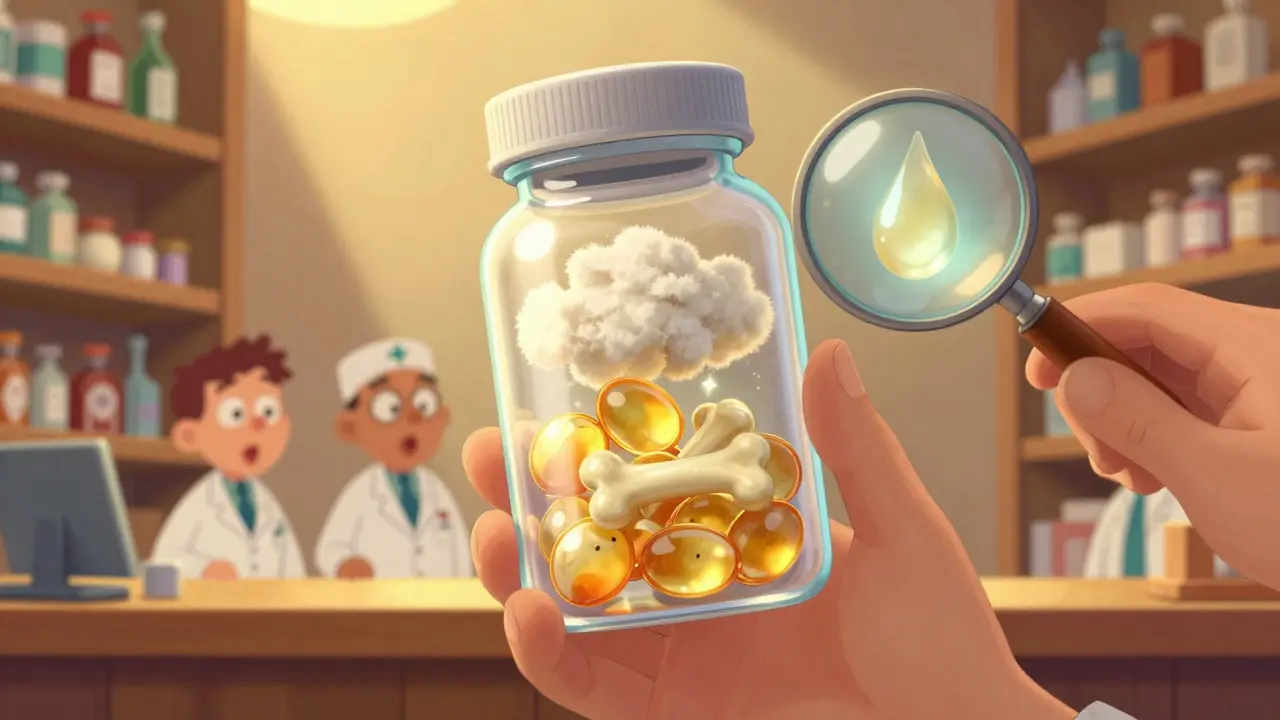
You won’t find "pig fat" listed on the label. Instead, you’ll see chemical names like magnesium stearate, stearic acid (E570), or glycerin. These sound harmless, but they often come from animals. Magnesium stearate, used as a filler in pills, is made from animal fats in about 65% of cases. Stearic acid? It’s typically rendered from cows, sheep, or pigs. Glycerin can be plant-based or sourced from animal fat-it’s rarely labeled clearly. Capsules are the biggest problem. Almost all softgels and gel capsules use gelatin, which comes from boiling down bones, skin, and tendons of pigs, cows, and chickens. Even if the active ingredient is vegan, the shell isn’t. Some brands use cellulose-based capsules instead, but they’re not common. If your pill looks shiny and flexible, it’s likely gelatin. If it’s hard and brittle, it might be plant-based. Vitamin D3 is another sneaky one. Over 80% of Vitamin D3 supplements are made from lanolin, a waxy substance pulled from sheep’s wool. It’s processed into a usable form, but it still starts as animal byproduct. The vegan alternative? Algae-derived D3. It’s chemically identical, just sourced from a plant. You’ll find it labeled as "vegan Vitamin D3" or "D3 from algae." Don’t assume your multivitamin is safe-check the source.Medications That Are Definitely Not Vegan
Some drugs aren’t just questionable-they’re outright animal-based. These aren’t fillers or coatings. The active ingredient itself comes from animals. - Premarin: Used for menopause, this estrogen drug is made from the urine of pregnant mares. The horses are kept in confined stalls to collect their urine, a practice many find ethically unacceptable. Synthetic alternatives exist, like estradiol, but they’re not always prescribed by default. - Armour Thyroid: This thyroid medication is made from dried pig thyroid glands. It’s popular because it contains both T3 and T4 hormones, unlike synthetic levothyroxine, which only has T4. But there’s no vegan version that works the same way. - Heparin: A blood thinner, heparin is extracted from pig intestines. There’s no plant-based substitute, and synthetic versions are still experimental. For people on dialysis or recovering from surgery, this isn’t optional. - Creon and Viokace: These pancreatic enzyme pills come from pig pancreas. They’re essential for people with cystic fibrosis or chronic pancreatitis. No vegan alternative exists yet. - Vascepa: This fish oil-based drug treats high triglycerides. It’s pure omega-3 from anchovies and sardines. While plant-based omega-3s exist (from algae), they’re not approved for this specific use. - Propofol: An IV anesthetic, it contains egg phospholipids. People with egg allergies can’t use it, and vegans face the same dilemma. Alternatives exist but are less commonly used.What Can You Do? A Practical Guide
You don’t have to accept animal-derived meds just because they’re the default. Here’s how to take control. Start by asking your pharmacist: "Is this medication free from animal-derived ingredients?" Don’t say "Is this vegan?"-pharmacists aren’t trained to answer that. Instead, name the ingredients you want to avoid: gelatin, magnesium stearate, lanolin, glycerin, stearic acid. Be specific. Ask for alternatives. For Vitamin D3, request the algae-based version. For capsules, ask if a tablet or liquid form is available. Many drugs come in multiple formats. If your pill comes in a gel capsule, maybe it’s also sold as a tablet with a different filler. Check with Pill Clarity (formerly VeganMed). This nonprofit platform verifies medications for animal-free ingredients. They’ve built a database of over 10,000 drugs and label which ones are confirmed vegan. Their certification logo on a product means it’s been independently verified. For thyroid medication, talk to your doctor about switching from Armour Thyroid to levothyroxine (T4 only). It’s synthetic, plant-based, and works for most people. If you need both T3 and T4, ask about compounded versions made without animal products-some specialty pharmacies can make them. If you’re on heparin or Creon, don’t panic. There are no vegan alternatives yet. But you can still ask if there are newer, non-animal-based treatments in development. Some clinical trials are exploring recombinant heparin from genetically modified organisms. It’s not available yet, but awareness is growing.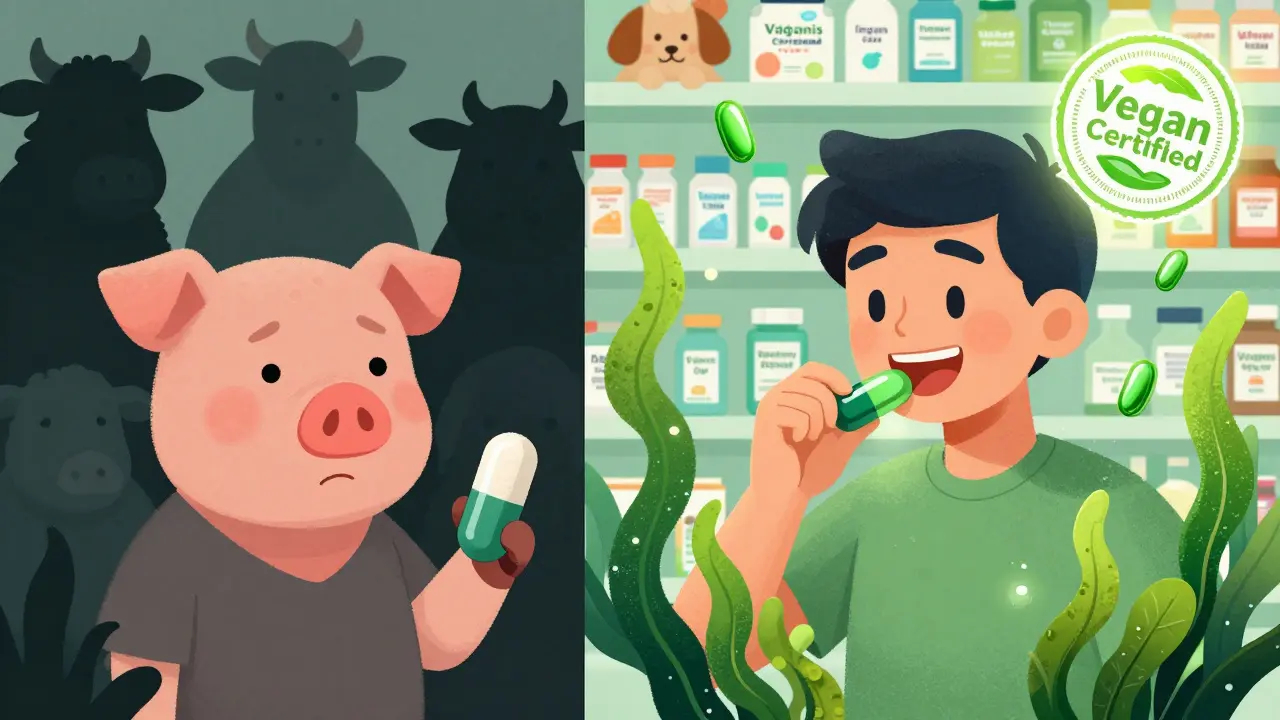
What About Supplements?
Supplements are the wild west. A 2022 study found that 50% of supplements contain hidden animal ingredients, and most labels don’t say so. Omega-3s? Often fish oil. Collagen peptides? Made from cow or fish skin. Glucosamine and chondroitin? Usually from shellfish. Stick to brands that clearly label their sources. Look for "vegan-certified" or "plant-based" on the bottle. For omega-3s, choose algae oil. For collagen, look for plant-based alternatives like silica or vitamin C boosters that support natural collagen production. Don’t trust "natural" or "organic" claims-they mean nothing for animal content. A supplement can be organic and still contain gelatin or lanolin.When There’s No Alternative
Sometimes, there’s no vegan option. That’s the hard truth. If you need heparin to survive a surgery, or Creon to digest food, you’re faced with a moral conflict. There’s no perfect answer. Some vegans choose to take these medications anyway, reasoning that the harm of refusing medical care outweighs the harm of using an animal product. Others work with their doctors to minimize use, explore clinical trials, or support advocacy for alternatives. It’s not about being "perfectly vegan." It’s about making informed choices when you can, and accepting that medicine isn’t always aligned with ethics. That’s okay. Your health matters too.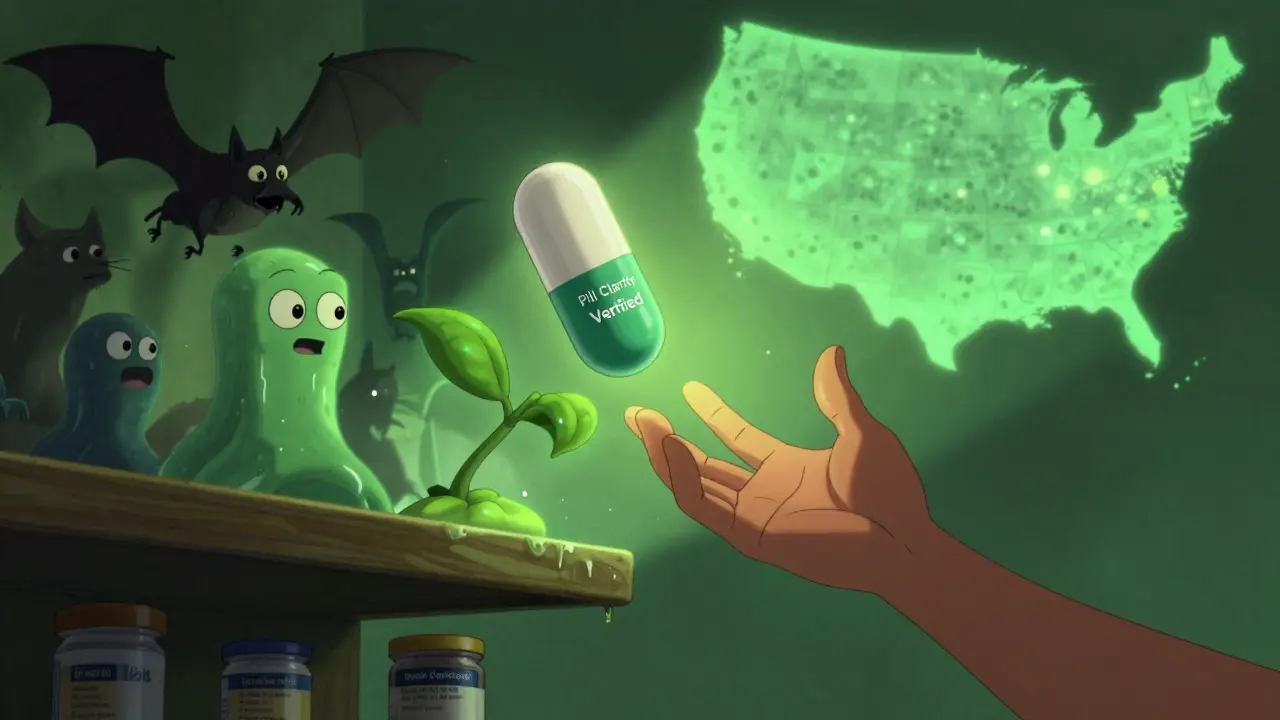
Where to Find Help
You don’t have to figure this out alone. - Pill Clarity (pillclarity.com) has a searchable database of verified animal-free medications. They also offer a free email service where you can send them a drug name and get a detailed breakdown. - PETA’s Animal-Derived Ingredients List is a free PDF that lists over 100 hidden animal ingredients and their plant-based alternatives. Print it out. Bring it to your pharmacist. - Dr. Vegan offers a line of vegan supplements, including algae-based D3 and B12. Their website has a free guide to reading supplement labels. - Talk to your pharmacist. Pharmacists are trained to know formulation details. Many don’t know about vegan concerns, but they’re willing to learn if you ask.What’s Changing?
The demand is growing. About 3% of U.S. adults identify as vegan, and that number is rising. More people are asking questions. Pharmaceutical companies are starting to respond. Pill Clarity’s rebrand in 2023 wasn’t just a name change-it was a shift in focus. They’re no longer just helping vegans. They’re helping people with allergies, religious restrictions, and ethical concerns. That’s a big step. The American Pharmacists Association is drafting guidelines for pharmacists to handle these questions properly. By 2025, you might see more labels like "animal-free" or "vegan-compatible" on medication boxes. For now, the burden is on you. But you’re not alone. Thousands of people are asking the same questions. And every time you ask, you push the system to change.Are all gel capsules made from animals?
No, but most are. About 90% of softgel capsules use gelatin from pigs, cows, or chickens. The vegan alternative is cellulose-based capsules made from plant fibers. You can ask your pharmacist for a tablet form or a capsule labeled "vegan" or "plant-based." Some specialty pharmacies carry them.
Is Vitamin D3 always from sheep?
Most over-the-counter Vitamin D3 is made from lanolin, which comes from sheep wool. But plant-based D3 from algae is available and just as effective. Look for "D3 from algae" on the label. Brands like Garden of Life, Deva, and Future Kind offer vegan options. Don’t trust "natural" or "organic" claims-they don’t guarantee animal-free sourcing.
Can I get vegan heparin or thyroid meds?
Currently, no. Heparin comes from pig intestines, and Armour Thyroid is made from pig thyroid glands. There are no approved vegan alternatives yet. For thyroid medication, synthetic levothyroxine (T4 only) is animal-free and works for many people. If you need T3 too, ask your doctor about compounded versions made without animal products. For heparin, there’s no substitute-this is a medical necessity where ethics must be weighed against survival.
What’s the difference between active and inactive ingredients?
The active ingredient is what treats your condition-like estrogen in Premarin or thyroid hormone in Armour Thyroid. Inactive ingredients are fillers, binders, or coatings, like gelatin or magnesium stearate. Animal products are more common in inactive ingredients, and those are often replaceable. But when the active ingredient itself comes from animals (like heparin or pancrelipase), there’s usually no vegan alternative yet.
How do I know if my medication is vegan?
You can’t always tell from the label. Check with Pill Clarity’s database or call your pharmacist and ask specifically about gelatin, magnesium stearate, lanolin, glycerin, and stearic acid. Some brands list "vegan" on the box, but don’t rely on that unless it’s certified. When in doubt, assume it’s not vegan until proven otherwise.



So I just checked my vitamin D3 and it's from lanolin. Guess I'm eating sheep grease now. Not ideal, but I need the D3. Maybe I'll switch to algae next refill.
i just looked up my blood pressure med and it had magnesium stearate... i had no idea it could be from animals... now i'm paranoid about everything i take
For anyone looking for vegan alternatives, Pill Clarity is a game-changer. I used their database to switch my entire supplement stack to plant-based, and my doctor didn’t even blink. Just ask for the right terms: cellulose capsules, algae D3, non-gelatin coatings. It’s doable.
What if the vegan option costs 3x more and your insurance won’t cover it? That’s the real issue here. Ethics are great, but bills don’t care.
Let’s be real-our ancestors didn’t have vegan meds, and we’re still here. The body doesn’t care if your capsule came from a pig or a tree. What matters is whether it works. But hey, if labeling it as "vegan" makes you feel better, go for it. Just don’t act like you’re morally superior because you chose algae over sheep fat.
Oh wow, so now I’m a monster for taking antibiotics that might’ve touched a cow? Next you’ll tell me my ibuprofen has horse tears in it. I’m just trying to survive, not run a vegan pharmaceutical lab.
There’s a reason these animal-based ingredients are used-they’re stable, cheap, and effective. The whole vegan-med movement feels like a luxury problem. You want to avoid animal products? Fine. But don’t pretend the system owes you a plant-based heparin just because you read a blog.
It’s not about pills. It’s about the entire paradigm of exploitation. We normalize suffering until it’s in our bloodstream. The pig doesn’t know its fat is in your capsule. The sheep doesn’t know its wool is in your vitamin. We’re all complicit, and that’s the real horror-not the ingredient list, but the silence around it.
Actually, did you know that the gelatin in capsules is often sourced from China, where animal welfare standards are... nonexistent? And the lanolin? Often from factory farms in Australia that shear sheep until they bleed. So even if you think you’re being ethical by avoiding beef gelatin, you’re just swapping one horror for another. Welcome to the vegan paradox.
Did you know the FDA doesn’t require disclosure of animal-derived ingredients? It’s all hidden under "inactive ingredients." Big Pharma knows this. They’ve been doing this for decades. The fact that you’re just now hearing about it? That’s not an accident. They want you to stay quiet.
wait so my birth control has gelatin??? i thought it was just chemicals?? i just took a whole pack last month and now i feel like i betrayed my values??
My grandma’s on Creon. She can’t digest food without it. She’s 82. She doesn’t care if it’s from pigs. She just wants to eat pancakes. I get the ethics, but when someone’s body depends on it, there’s no moral high ground-just love and survival. And that’s okay.
There’s no such thing as a "vegan medication." That’s a marketing term invented by people who think their dietary choices are a moral crusade. Medicine is science. Science uses what works. If pig intestines work better than lab-grown alternatives, we use them. Until we have a viable, FDA-approved synthetic heparin, stop pretending your veganism overrides biology.