

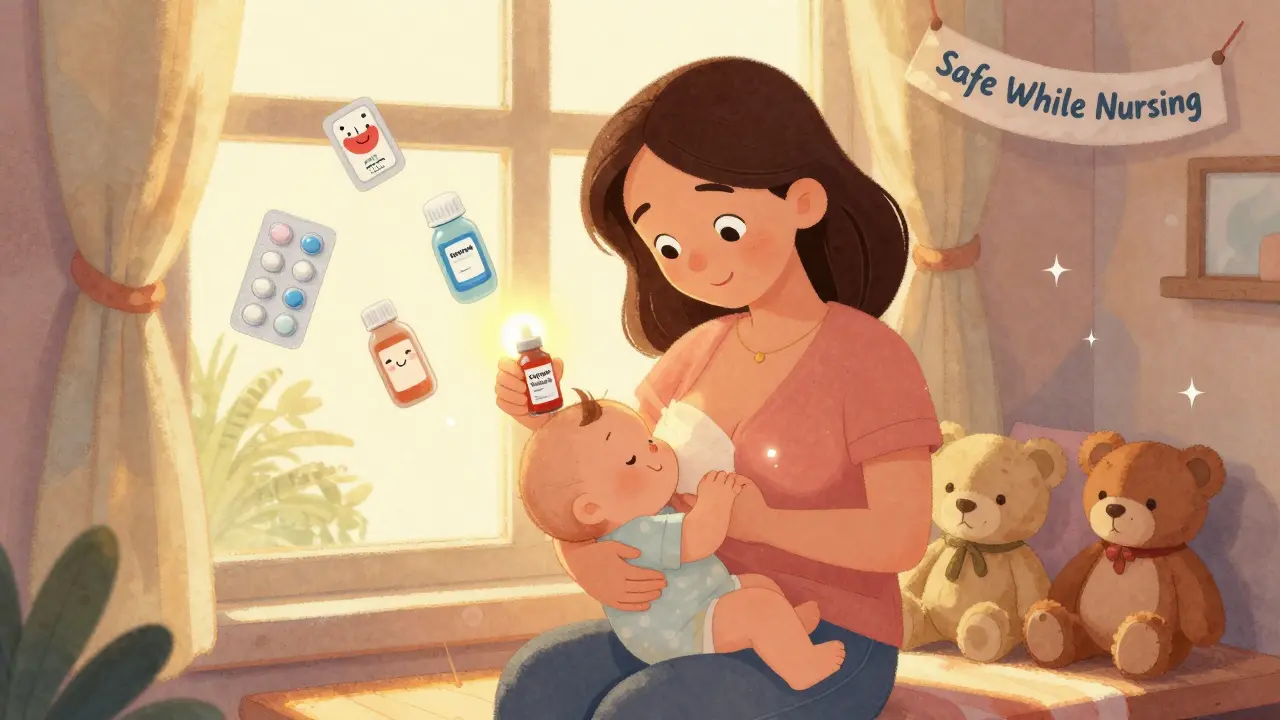
When you're breastfeeding, every pill, drop, or injection feels like a decision that could affect your baby. You want to feel better-whether it’s from a headache, infection, anxiety, or allergies-but you also don’t want to risk your child’s health. The good news? Most medications are safe while breastfeeding. In fact, fewer than 5% of drugs have any real risk to a nursing infant. The bigger problem isn’t the medications themselves-it’s the fear, misinformation, and outdated advice that leads many mothers to stop breastfeeding unnecessarily.
What Makes a Medication Safe During Breastfeeding?
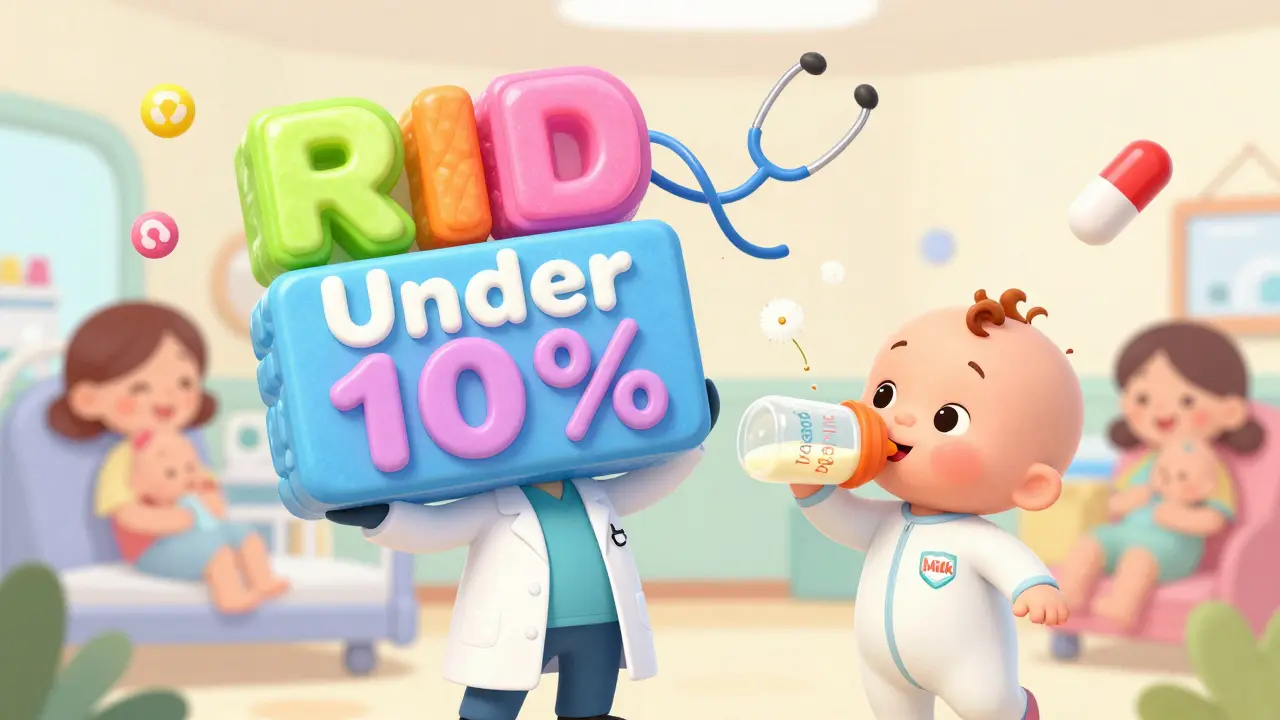
Not all drugs behave the same way in breast milk. Safety depends on three key factors: how much of the drug gets into your milk, how much your baby absorbs, and whether that amount could cause harm. The most reliable way to measure this is the Relative Infant Dose (RID). This number tells you what percentage of your dose ends up in your baby’s system through milk. If the RID is under 10%, the drug is generally considered safe. Most common medications have RIDs far below that-often under 1%.For example, acetaminophen (Tylenol) has an RID of just 0.04-0.23%. That means your baby gets less than a quarter of a percent of your dose. Ibuprofen (Advil) is similarly low at 0.38-1.85%. Both are routinely given to newborns in hospitals, so it’s no surprise they’re safe in breast milk. The American Academy of Family Physicians and Mayo Clinic both list them as first-line choices for pain or fever during breastfeeding.
On the flip side, some drugs are risky because they build up over time. Naproxen (Aleve), for example, has a long half-life-12 to 17 hours. That means it sticks around in your body longer, and even though its RID is still under 2%, the constant exposure increases the chance of side effects like bleeding or stomach upset in your baby. That’s why short-term use is okay, but daily use isn’t recommended.
Pain Relief: What You Can Take Without Worry
For most moms, pain relief is the most common reason to reach for medication after birth. The safest options are simple, over-the-counter drugs that have been studied for decades.- Acetaminophen (Tylenol): Safe at standard doses (up to 3,000 mg/day). Minimal transfer. No known side effects in infants.
- Ibuprofen (Advil, Motrin): Preferred over naproxen. Low RID, breaks down quickly, and even used in premature babies.
- Morphine and hydromorphone: If you need stronger pain control after delivery, these are the safest opioids. Avoid codeine-your body turns it into morphine differently than most people, and some moms produce dangerously high levels that can sedate or even stop a baby’s breathing.
Always take the lowest effective dose for the shortest time. If you’re on opioids for more than a few days, watch your baby for signs of drowsiness, difficulty feeding, or slow breathing. If you notice any of these, call your doctor right away.
Antibiotics: Safe Choices for Infections
Getting an infection while breastfeeding doesn’t mean you have to stop nursing. In fact, continuing to breastfeed often helps your baby fight off the same germs. Most antibiotics pass into milk in tiny amounts and don’t cause problems.- Penicillins (amoxicillin, ampicillin): First choice for most infections. RID 0.3-1.5%. No adverse effects reported.
- Cephalosporins (cefdinir, cephalexin): Also very safe. Used in newborns routinely.
- Vancomycin: Safe even for serious infections. Doesn’t absorb well in the baby’s gut, so it rarely causes issues.
- Azithromycin (Zithromax): Preferred over erythromycin. Lower RID (0.05-0.1%) and no link to infant pyloric stenosis.
- Ciprofloxacin (Cipro): Even though animal studies raised concerns about joint damage, no cases have been documented in breastfed babies. Used safely in infants for serious infections.
- Doxycycline: Safe for short courses (under 21 days). Long-term use could theoretically affect tooth color, but no cases have been seen in nursing babies.
Clindamycin can cause diarrhea in infants because it changes gut bacteria. If your baby gets loose, watery stools, talk to your doctor. It’s not always a reason to stop the antibiotic, but it’s something to monitor.
Antidepressants and Anxiety Medications: Managing Mental Health While Nursing
Postpartum depression and anxiety are common-but they don’t have to mean stopping breastfeeding. In fact, untreated mental health conditions can have a bigger impact on your baby than most medications.- Sertraline (Zoloft): The most studied and recommended SSRI. Low transfer, undetectable levels in most babies’ blood, and no long-term effects shown in follow-up studies.
- Paroxetine (Paxil): Also low transfer. Safe for most mothers. Avoid if you’re also taking other medications that interact with it.
- Lorazepam (Ativan): The safest benzodiazepine for breastfeeding. Short half-life (10-20 hours). Use only as needed and avoid daily use.
- Quetiapine (Seroquel): Used for bipolar disorder and severe anxiety. Studies show infants exposed to doses up to 400 mg/day have normal development and no side effects.
Fluoxetine (Prozac) is different. It stays in your system for days-even weeks-because of its long half-life. That means it builds up in breast milk over time. Some babies become fussy, have trouble sleeping, or feed poorly. It’s not forbidden, but it’s not first-line. If you’re already on fluoxetine and doing well, don’t stop without talking to your doctor. But if you’re starting a new medication, sertraline is the better option.
Allergy and Cold Medications: What’s Safe and What’s Not
Seasonal allergies and colds don’t take a break just because you’re breastfeeding. But not all remedies are created equal.- Nasal sprays (fluticasone, budesonide): Best choice. Less than 1% gets into your bloodstream, so almost none reaches your milk. No effect on babies.
- Loratadine (Claritin): Non-drowsy. RID under 0.25%. No side effects reported in over 150 cases.
- Cetirizine (Zyrtec): Slightly higher RID (0.1-0.5%), but still safe. Some babies get sleepy-watch for that.
- Fexofenadine (Allegra): Lowest sedation risk. No documented infant side effects.
First-generation antihistamines like diphenhydramine (Benadryl) are a different story. They cross into milk more easily and can make babies sleepy, irritable, or even cause feeding problems. Avoid them unless absolutely necessary.
And then there’s pseudoephedrine (Sudafed). This decongestant can reduce your milk supply by up to 24%. One study found 10-15% of mothers experienced a significant drop in production. If you need relief, try saline nasal rinses, steam, or a humidifier instead. If you must use it, take it right after a feeding and wait a few hours before the next one to minimize exposure.
What to Avoid Completely
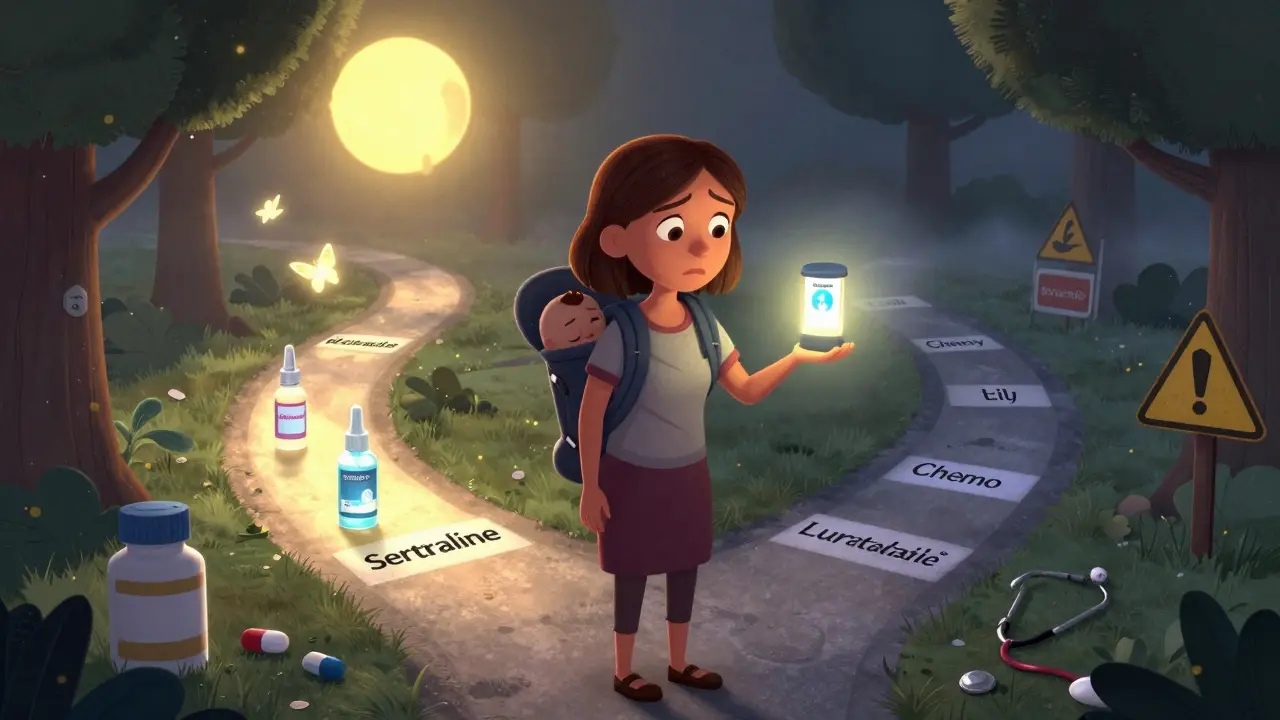
There are a few medications that are truly not safe during breastfeeding. These aren’t just “use with caution”-they’re contraindicated.- Radioactive iodine (I-131): Used for thyroid conditions. Stops breastfeeding permanently for 3-6 weeks. Your milk becomes radioactive and can damage your baby’s thyroid.
- Anticancer drugs (chemotherapy): These are designed to kill fast-growing cells-including your baby’s. Breastfeeding must stop during treatment. Talk to your oncologist about timing and alternatives.
- Lithium: Used for bipolar disorder. It passes into milk at 30-50% of your blood level. Babies can develop toxicity-tremors, poor feeding, thyroid issues. If you’re on lithium, your baby needs weekly blood tests to check levels. Only continue if closely monitored.
If you’re ever unsure, don’t guess. Use trusted resources like LactMed (from the National Library of Medicine) or the InfantRisk Center. They give you exact numbers, not opinions.
How to Use Trusted Resources
You don’t need to memorize every drug. You just need to know where to look.- LactMed: Free, evidence-based, updated quarterly. Covers over 1,000 drugs. Includes RID, milk/plasma ratios, and infant effects. Available as a website and app.
- InfantRisk Center: Run by Dr. Christina Chambers. Offers real-time advice by phone or online. Handles over 15,000 questions a year. Their fact sheets are simple and clear.
- Hale’s Lactation Risk Categories: A simple scale from L1 (safest) to L5 (contraindicated). Medications like acetaminophen, ibuprofen, sertraline, and loratadine are L1. Radioactive iodine and chemotherapy are L5.
- MotherToBaby: Free counseling service. They’ll walk you through your specific situation with a specialist.
These aren’t just for doctors. You can use them too. If your provider says a drug is unsafe, ask them to check LactMed. Many times, they’re working from old memory, not current data.
What to Watch For in Your Baby
Even safe medications can cause reactions in rare cases. Watch for:- Unusual sleepiness or difficulty waking to feed
- Poor feeding or refusal to latch
- Excessive fussiness or crying
- Diarrhea or rash
- Slowed breathing (especially with opioids)
If you notice any of these, contact your pediatrician. But don’t assume the medication is the cause-many babies go through fussy phases anyway. Keep a log: what you took, when, and what your baby did. That helps your doctor figure it out faster.
Final Thought: You Don’t Have to Choose Between Your Health and Your Baby
Too many mothers stop breastfeeding because they were told a medication was unsafe-when it wasn’t. The truth is, breastfeeding offers powerful protection for your baby. Stopping it for a preventable reason puts your child at higher risk for infections, allergies, and even obesity later in life.Most medications you take won’t hurt your baby. In fact, staying healthy enough to care for your child is one of the best things you can do. Work with your doctor, use reliable resources, and trust the evidence-not fear.
If you’re on medication and breastfeeding, you’re not alone. Millions of mothers do it every day. And with the right information, you can too.




Wow, finally someone who gets it. I had a nurse tell me ibuprofen was 'unsafe' while breastfeeding-like I was poisoning my kid with Advil. I almost cried. My baby was 3 weeks old and I couldn’t even take a headache pill without feeling like a monster. Turned out she was quoting a 1998 pamphlet. Thanks for listing the RIDs-this is the kind of info that should be handed out at the hospital, not buried in some PDF no one reads.
Thank you for this. I was terrified to take Zoloft after my daughter was born. Everyone kept saying 'it might make the baby sleepy' or 'it could affect development.' I read the LactMed entry, saw sertraline had near-zero transfer, and started taking it. My baby never slept better-and neither did I. Mental health isn’t a luxury. It’s the foundation of good parenting. This post saved my breastfeeding journey.
Oh sweet jesus, the fact that someone actually wrote a comprehensive, non-sensationalized guide about breastfeeding meds and didn’t say 'just pump and dump' once? I’m crying. Also, can we please make this required reading for OBs? Because my OB told me to stop nursing if I took anything stronger than aspirin. And I’m pretty sure aspirin is what they use to euthanize hamsters. Thank you for being the voice of reason in a sea of fearmongering.
While the data presented is technically accurate, the underlying assumption-that all mothers have access to reliable healthcare, time to research drugs, or even internet access-is dangerously naive. Many women are pressured into breastfeeding by cultural norms while being denied adequate postpartum support. This post reads like a privileged manifesto. What about the mother working two jobs, without a lactation consultant, who just needs to sleep? You can't just 'use LactMed' when you're drowning.
STOP letting doctors scare you. I took naproxen for three weeks after my c-section because my OB said it was 'fine.' My baby developed a rash and wouldn’t nurse for 12 hours. I didn’t know about RIDs. I didn’t know anything. Don’t trust your doctor’s memory. Don’t trust your mom’s advice. Don’t trust Pinterest. Check LactMed. Do it. Now. This isn’t optional. Your baby’s life is on the line.
Bro I just took a Zyrtec and now my baby is staring at me like I’m the devil. I swear I didn’t do anything wrong. I’m just trying to get through allergy season. Now I’m crying in the bathroom because I think I ruined her brain. Is this it? Am I a bad mom? Someone please tell me she’s not autistic now because of Claritin.
u think this is safe? what about 5g of aspartame in your coffee? or the glyphosate in your kale? or the 5G towers outside your house? they all get into breastmilk too. they dont tell u this but the FDA is owned by big pharma. sertraline is just a gateway drug to the matrix. i stopped breastfeeding after reading this. now i feed my baby moonwater and prayers. trust no one.
Thank you for the balanced, evidence-based approach. I’ve seen too many new moms paralyzed by fear, convinced every medication is a poison. This post gives them back agency. The LactMed and InfantRisk Center recommendations alone are worth a thousand blog posts. I’m sharing this with my sister who’s just had her first baby. Knowledge is the real medicine here.