

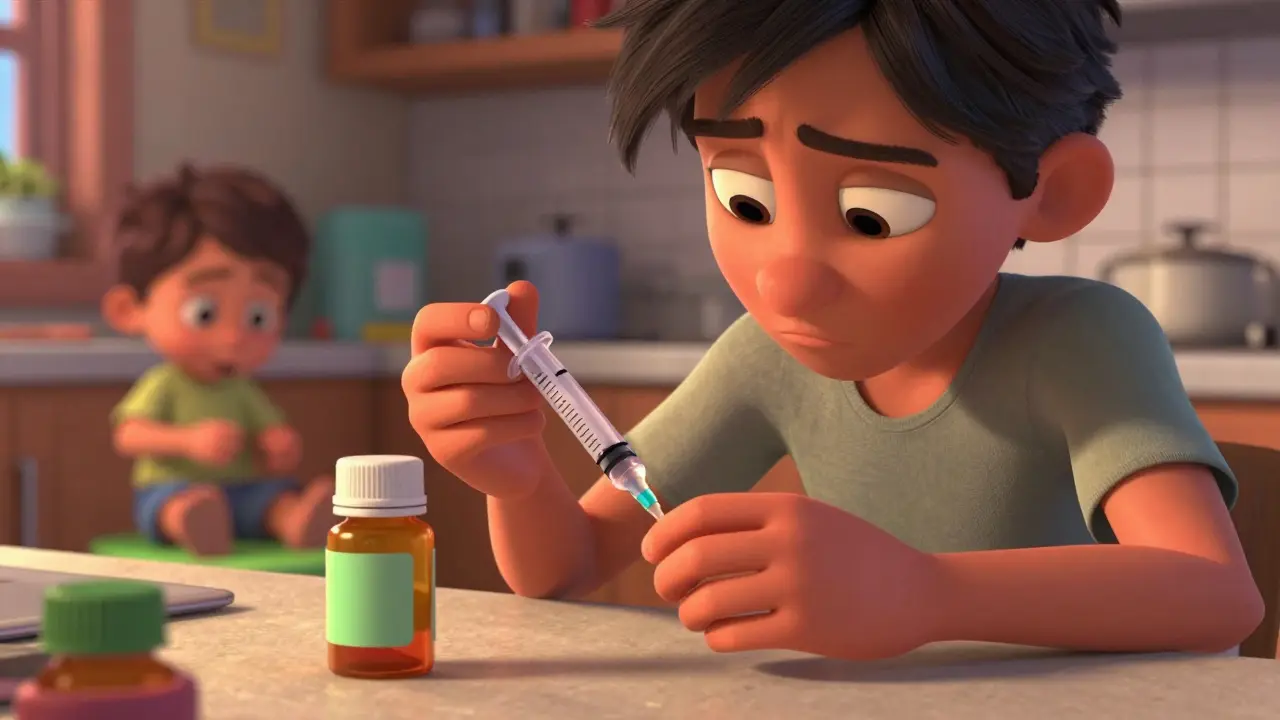
Most parents assume that a generic version of a medication is exactly the same as the brand-name original. For adults, this is usually true enough. But when you are giving medicine to a child, especially an infant, that assumption can be dangerous. Studies show that nearly half of all drugs used in children lack proper testing for their age group. Pediatric patients differ physiologically from adults in how they process chemicals. A drug safe for a parent might cause severe side effects in a toddler. We need to look beyond the pill to see what is actually inside.
The Physiology Gap in Children
Your child’s body is not just a smaller adult system. It is a developing environment where organs function differently at various stages. The kidneys and liver, which filter medications, do not reach full maturity until puberty or later. This creates a significant gap in safety margins for generic drugsmedicines that contain the same active ingredients as a reference listed drug.
For children under two years old, metabolism rates are unpredictable. A study from the FDA noted that acute toxicity profiles change drastically with age. Take acetaminophen, for example. While generally safe, young children produce higher levels of glutathione, making them less susceptible to certain toxicities compared to adults, but highly susceptible to others if dosing is off. On the other hand, aspirin carries a risk of Reye’s syndrome specifically for those under 19, which does not apply to the general adult population.
This physiological variation means that pharmacokinetics-the way the body moves through the drug-varies. Absorption, distribution, metabolism, and excretion happen faster or slower depending on the weight and developmental stage. If a generic manufacturer tested their product on healthy adults, they cannot guarantee the same behavior in a six-month-old. This is why “off-label” prescribing happens so often; there simply isn’t enough data to label the drug officially for that specific pediatric age group.
Active Ingredients Are Not the Whole Story
When regulators approve a generic, they focus heavily on the active ingredient. It must match the brand name within tight percentages. However, the inactive ingredients, known as excipients, are where the problems often hide. These include fillers, preservatives, dyes, and flavors.
A brand-name liquid antibiotic might use a specific sugar alcohol that is gentle on a baby’s stomach. A cheaper generic version might use a different binder that causes severe diarrhea in infants. Research indicates that nearly 18% of adverse reactions reported by parents were linked to these inactive components rather than the main drug. Flavorings are another common culprit. A generic cough syrup might use artificial fruit flavoring that triggers an allergic reaction, while the original used natural extracts.
| Feature | Brand-Name Formulation | Generic Formulation |
|---|---|---|
| Testing Population | Often includes specific pediatric studies | Rarely tested on children directly |
| Excipient Consistency | Frozen formula over decades | Varies between manufacturers |
| Dosing Precision | Often pre-measured tools included | Rely on household spoons frequently |
| Allergen Risk | Documented history available | May contain undisclosed traces |
The KIDs List and Dangerous Substitutions
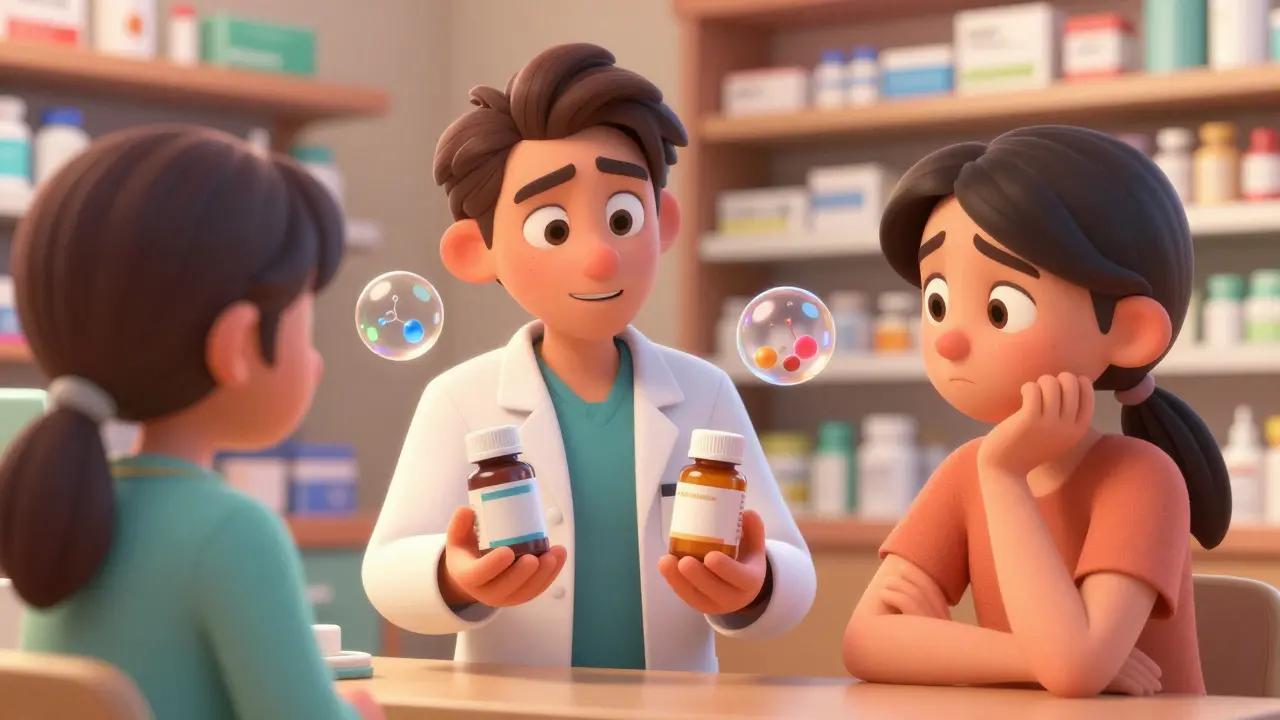
To combat this confusion, experts developed the KIDs List. Stood for Key Potentially Inappropriate Drugs List, this resource was created by the Pediatric Pharmacy Association. The 2025 update now flags thousands of drugs that require caution or avoidance in younger populations. This list goes beyond just the active drug to identify specific formulations that pose risks.
Consider promethazine, a common antihistamine. The KIDs List explicitly advises avoiding this generic drug in children under two years old due to the risk of respiratory failure and death. Even between ages 2 and 18, extreme caution is required. Another major concern is trimethobenzamide, an anti-nausea medication. It has been flagged for causing acute dystonic reactions in anyone under 18. Dystonia involves uncontrollable muscle contractions that can lock a child’s neck or jaw shut.
Topical medications are often overlooked hazards. Benzocaine, a common anesthetic cream found in many stores, can cause methemoglobinemia in children under two. This condition prevents the blood from carrying oxygen properly. Similarly, lidocaine viscous solutions carry a risk of central nervous system depression. The strength of evidence for these warnings varies, but the consensus among pediatricians is clear: always verify the specific product before applying it near the mouth.
Navigating Off-Label Prescribing
About 40% of prescriptions filled for children today are considered off-label. This doesn't mean the doctor is doing something wrong, but rather that the drug hasn’t been formally approved for that specific age or dose by the FDA. When this overlaps with generic substitution, the risk of error increases threefold.
The Government Accountability Office reported that 60% of generic drugs still lack specific pediatric dosing information. Compare this to brand-name drugs, where the number sits around 35%. Doctors often rely on clinical experience or textbooks to calculate doses for generics because the packaging instructions might say “Not for children.” This ambiguity forces the caregiver to become a math expert at home, calculating milligrams per kilogram of weight precisely.
Pharmacy technicians note that narrow therapeutic index drugs are particularly risky. Levothyroxine and phenytoin are examples where a tiny deviation in dosage leads to toxicity or treatment failure. Since generic versions vary slightly in how fast they dissolve in the stomach, switching brands can disrupt the delicate balance needed for seizure control or thyroid management.

Safety Protocols for Home Care
If your child needs medication, you have rights and responsibilities to ensure safety. You can ask your doctor to specify “Dispense As Written” on the prescription if you believe the brand-name formulation is safer for your child due to past sensitivities. While pharmacies usually encourage generics to save costs, health comes first.
When administering liquids, never use a kitchen spoon. Household spoons vary wildly in volume and lead to inconsistent dosing. Oral syringes are the gold standard. Using a calibrated device reduces dosing errors by 50%, according to safety guides. Always turn on bright lights when measuring. Read the concentration (mg/mL) every time, as some bottles come in strengths like 5mg/mL while others are 10mg/mL.
Keep a current list of all medications, including vitamins and herbal supplements. Adverse events often happen when multiple products interact. The Institute for Safe Medication Practices highlights that parents should avoid expired medicines strictly, as chemical breakdown products in old syrups can be more harmful than the original drug. Never give someone else’s prescription, even if they are twins.
Regulatory Changes on the Horizon
The landscape is shifting toward greater transparency. The FDA issued a mandate in 2024 requiring generic manufacturers to include pediatric-specific dosing information whenever available. Full compliance for this rule is expected by the end of 2025. Additionally, a mobile app from the American Academy of Pediatrics is scheduled for beta testing later in 2024, which will provide instant access to the KIDs List and automated calculators.
These steps aim to close the gap left by legislation like the Pediatric Research Equity Act. While market analysis shows generics make up 90% of prescriptions, spending on them remains lower due to cost savings. However, safety gaps persist because mandatory testing for all new generics isn't fully enforced yet. Until comprehensive testing becomes standard, vigilance at home remains the most effective safety net.
Can I substitute brand-name medicine with generics for my toddler?
You generally can, but you must exercise caution. Some generic formulations contain different inactive ingredients or sweeteners that may cause allergic reactions. For narrow therapeutic drugs or complex conditions, stick to one specific manufacturer to maintain consistency.
What is the KIDs List?
The KIDs List is a tool developed by the Pediatric Pharmacy Association identifying drugs that are potentially inappropriate for children. It categorizes them by "avoid" or "caution" recommendations based on recent safety evidence.
Why are children more sensitive to generic drugs?
Children have immature liver and kidney functions. Their metabolic pathways are different, meaning they process chemicals faster or slower than adults, which alters the toxicity profile of both active and inactive ingredients.
Is off-label use of generic drugs safe?
Off-label use is common practice but requires careful monitoring. About 40% of pediatric prescriptions are off-label. It is safe only when the doctor calculates the exact weight-based dose and monitors the child closely for side effects.
How do I measure liquid medicine accurately?
Always use an oral syringe or a calibrated cup provided by the pharmacy. Do not use household teaspoons or tablespoons. Measure the medicine under good lighting and double-check the milliliter markings.



The pharmacokinetic profile shifts drastically during development phases.
Hepatic enzyme maturation dictates clearance rates significantly in infants.
We often overlook bioequivalence thresholds in pediatric populations routinely.
Generic formulations frequently alter dissolution characteristics unnoticed.
This impacts peak plasma concentrations unpredictably in small bodies.
Excipient variance leads to unexpected allergic responses often times.
Lactose intolerance manifests differently in infants versus adult systems.
Sugar alcohols can cause osmotic diarrhea quite easily here.
The therapeutic index narrows with smaller body weight consistently.
Dosing errors become critical when margins are thin enough.
Narrow therapeutic index drugs require strict adherence always.
Levothyroxine variations disrupt homeostasis quickly without warning.
Pharmacists need to verify manufacturer consistency always during dispensing.
Parent education regarding administration tools matters immensely overall.
Oral syringes remain the gold standard for accurate measurement.
Household spoons introduce massive variability in liquid volume.
Regulatory oversight lags behind current manufacturing capabilities sadly.
Clinical trials rarely include sufficient infant demographic samples today.
We must prioritize metabolic safety above cost considerations now.
This information is vital for every caregiver to read!
Parents often forget that chemistry changes inside the bottle!
We need to prioritize safety over savings constantly!
The list of ingredients matters more than we realize!
OMG!!! This really scares me so much!!!
I never thought about how sugar affects babies this way!!!
We really need to check everything ourselves!!!
Why isn't this taught in schools more often!!!
Stop trusting those generic labels until you see the ingredient breakdown yourself.
i think using the syringe really helps everyone
parents should just stick to what works for their kid
safety comes first always really
It is interesting how some folks think they understand the science fully.
Most people do not grasp the nuance of pharmacology properly.
Professional guidance remains essential in these complex scenarios.
Blunt advice rarely accounts for individual medical histories.
Society treats children as miniature humans fundamentally incorrectly.
This assumption drives systemic negligence in modern healthcare policies.
We accept risk as a necessary cost of saving money globally.
Corporations prioritize profit margins over developmental safety standards.
The FDA loopholes protect manufacturers from liability claims effectively.
Parents become accidental testers for new drug formulations constantly.
Innocence is compromised by regulatory blindness everywhere today.
Bioavailability remains a gamble with every single prescription filled.
Trust is eroded slowly by these silent failures repeatedly.
Medical professionals lack the power to demand testing data fully.
We normalize the unacceptable risks involved here casually.
Metabolic vulnerabilities are ignored for market efficiency purposes.
True safety requires full transparency on inactive compound lists.
Silence protects the industry while children suffer consequences alone.
Vigilance becomes the only shield against corporate negligence effectively.
History shows us that complacency kills patients silently.
I think childerns medisin needs care and attention.
We shoud check the label everthing carefully.
Doctors are busy but they try their best.
Parents have to be smart and watchfull too.