

Psychiatric Medication Interaction Checker
Check Combination Risk
Risk Assessment
Risk LevelPrimary Danger:
Mechanism:
Taking a single psychiatric medication can be life-changing, but when two or more are combined, the chemistry in your brain changes in ways that aren't always predictable. For some, a combination is the only way to find stability. For others, mixing the wrong classes of drugs can lead to a medical emergency. The real danger often isn't a slow buildup of side effects, but a sudden, violent reaction that happens when two medications fight for the same receptor or block the same enzyme in the liver.
Whether you are managing a complex diagnosis or just adding a sleep aid to your antidepressant, understanding how these chemicals interact is a safety requirement. While doctors aim for a therapeutic balance, about 30% to 50% of adverse drug events in psychiatric settings are actually caused by these interactions. Knowing which combinations are "red flags" can be the difference between a successful recovery and a trip to the ER.
Quick Safety Summary
- Highest Risk: Combining MAOIs with SSRIs or other serotonergic drugs can cause life-threatening serotonin syndrome.
- Monitoring: Lithium requires strict checks because common painkillers like NSAIDs can spike its levels by 25-50%.
- Enzyme Blocks: Some drugs, like fluvoxamine, act as "blockers" in the liver, making other medications stay in your system longer and potentially reach toxic levels.
- First-Dose Danger: The highest risk for a bad reaction is usually during the first few doses of a new combination.
The Chemistry of Conflict: How Interactions Happen
To understand why medications clash, you have to look at the brain's messaging system. Most psychiatric drugs target three main neurotransmitters: Serotonin is the chemical primarily responsible for mood, sleep, and appetite, Norepinephrine is the driver of the body's stress response and alertness, and Dopamine is the reward and motivation molecule that also regulates movement.
Interactions usually happen in one of two ways: pharmacodynamic or pharmacokinetic. A pharmacodynamic interaction is like two people trying to push a swing in opposite directions-they are fighting for the same spot in the brain. For example, combining Tricyclic Antidepressants (TCAs) is a class of older antidepressants that affect both serotonin and norepinephrine with alcohol can create a synergistic effect, leading to extreme sedation and a dangerous drop in central nervous system activity.
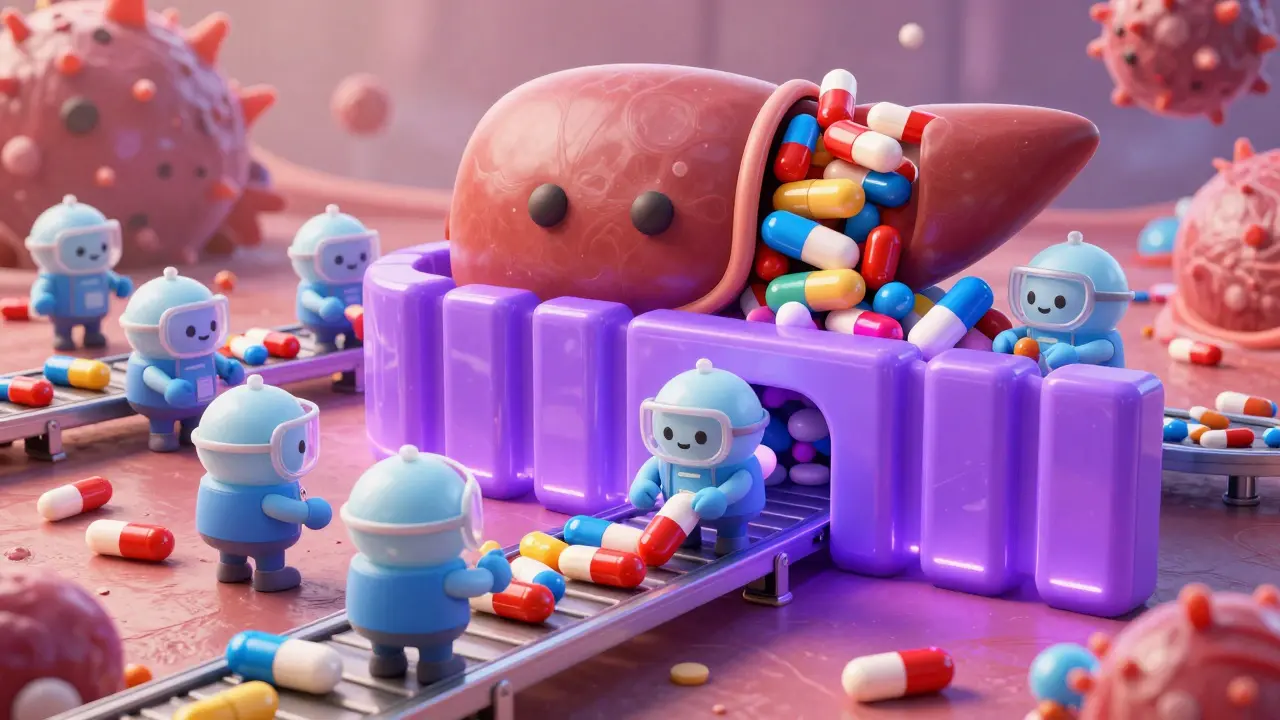
Pharmacokinetic interactions happen in the liver using the Cytochrome P450 (CYP) enzyme system. These enzymes are the "cleanup crew" that break down medication. If you take a drug like fluvoxamine, which is a potent CYP inhibitor, it essentially fires the cleanup crew. As a result, other drugs you take aren't broken down and begin to pile up in your bloodstream, which can lead to toxicity even if you're taking the "correct" dose.
Dangerous Combinations You Need to Know
Some drug pairings are strictly avoided because the risks far outweigh the benefits. The most notorious is the combination of MAO Inhibitors (MAOIs), which are potent antidepressants that block the enzyme monoamine oxidase, and SSRIs (Selective Serotonin Reuptake Inhibitors). This pair can trigger Serotonin Syndrome, a condition where the brain is flooded with too much serotonin. In severe cases, this has a mortality rate between 2% and 12%.
Another high-risk area involves Lithium, a mood stabilizer used primarily for bipolar disorder. Lithium has a very narrow therapeutic window, meaning the difference between a dose that works and a dose that is toxic is tiny. If you take an NSAID (like ibuprofen) while on lithium, your kidneys may process the medication slower, potentially increasing lithium levels in your blood by 25% to 50%, leading to tremors, confusion, or kidney failure.
| Drug Class / Entity | Dangerous Pair | Primary Risk | Mechanism |
|---|---|---|---|
| MAOIs | SSRIs / SNRIs | Serotonin Syndrome | Serotonin Overload |
| Lithium | NSAIDs (Ibuprofen) | Lithium Toxicity | Reduced Renal Clearance |
| TCAs | Alcohol / Benzodiazepines | Severe CNS Depression | Additive Sedation |
| Fluvoxamine | Many Antipsychotics | Increased Drug Levels | CYP Enzyme Inhibition |
Navigating Polypharmacy: How to Stay Safe
Polypharmacy-the use of multiple medications at once-is common in mental health care. However, it requires a structured approach to prevent disasters. The best way to manage this is by selecting "low-interaction" agents. For instance, if a patient needs an SSRI but is already on several other medications, doctors often prefer sertraline or citalopram over fluvoxamine because they don't mess with the liver's CYP enzymes as aggressively.
If you are starting a new combination, the first 7 to 10 days are the most critical. Experts recommend "first-dose monitoring," where the patient is observed for 2 to 4 hours after the first dose of a new interacting medication. This allows clinicians to spot early signs of a bad reaction before it becomes a crisis.
For those on long-term antipsychotics, the Abnormal Involuntary Movement Scale (AIMS) is a vital tool. Since many antipsychotics interact with dopamine pathways, they can cause movement disorders. Quarterly AIMS assessments help catch these side effects early, ensuring that the interaction between the drug and the dopamine receptors isn't causing permanent neurological damage.

The Future of Personalized Dosing
We are moving away from the "trial and error" method of prescribing. The emergence of pharmacogenomic testing allows doctors to see how your specific DNA affects your drug metabolism. For example, testing for the CYP2D6 and CYP2C19 genes can tell a provider if you are a "poor metabolizer" of certain antidepressants. If you can't break down the drug efficiently, a standard dose might be toxic for you, while another person might need double that amount to feel any effect.
Additionally, AI-powered monitoring tools are being integrated into electronic health records. These systems don't just flag an interaction; they use your specific medical history and genetic profile to predict the risk level. Some early implementations have already shown a 37% reduction in serious interaction events by alerting doctors in real-time before the prescription is even printed.
Practical Checklist for Patients and Caregivers
- Maintain a Master List: Include every supplement, over-the-counter pill, and prescription. Don't forget that "natural" herbs like St. John's Wort can trigger serotonin syndrome.
- Ask About the "Washout": If switching from an MAOI to an SSRI, ask your doctor how many days you need to be completely off the first drug before starting the second.
- Monitor Kidney/Liver Function: If you are on lithium or valproate, ensure you are getting the required blood tests every few months.
- Watch for Red Flags: Be alert for sudden fever, shivering, muscle rigidity, or extreme confusion-these are hallmarks of dangerous interactions.
What exactly is Serotonin Syndrome?
Serotonin Syndrome is a potentially fatal condition caused by an excess of serotonin in the nervous system. It typically happens when two medications that increase serotonin (like an SSRI and an MAOI, or an SSRI and certain opioids like tramadol) are taken together. Symptoms range from mild (shivering and diarrhea) to severe (muscle rigidity, fever, and seizures). If you suspect this is happening, it is a medical emergency.
Can over-the-counter painkillers affect my psych meds?
Yes, specifically for those taking Lithium. Non-steroidal anti-inflammatory drugs (NSAIDs) like ibuprofen or naproxen can reduce the kidneys' ability to clear lithium from the body. This can lead to a 25-50% increase in lithium levels, which can quickly become toxic. Always consult your doctor before starting a daily regimen of painkillers.
Why do some antidepressants cause more interactions than others?
It comes down to how they affect the Cytochrome P450 (CYP) enzymes in the liver. Drugs like fluvoxamine are "strong inhibitors," meaning they block these enzymes from breaking down other drugs. This causes the other medications to build up in the blood. Drugs like sertraline are "weak inhibitors," meaning they leave the liver's cleanup process largely alone, making them safer for people taking multiple different medications.
What is a "washout period"?
A washout period is a specific amount of time you must wait after stopping one medication before starting another to ensure the first drug is completely gone from your system. This is critical when switching from an MAOI to an SSRI, as the MAOI's effect on enzymes lasts much longer than the drug itself. Skipping a washout period can lead to a life-threatening interaction.
Are all antipsychotics equally risky when combined?
No. Atypical antipsychotics vary widely. For example, quetiapine generally has a lower risk of complex enzyme interactions compared to others. However, all antipsychotics must be monitored for extrapyramidal symptoms (movement issues), which is why the AIMS scale is used quarterly for long-term patients.



Write a comment