

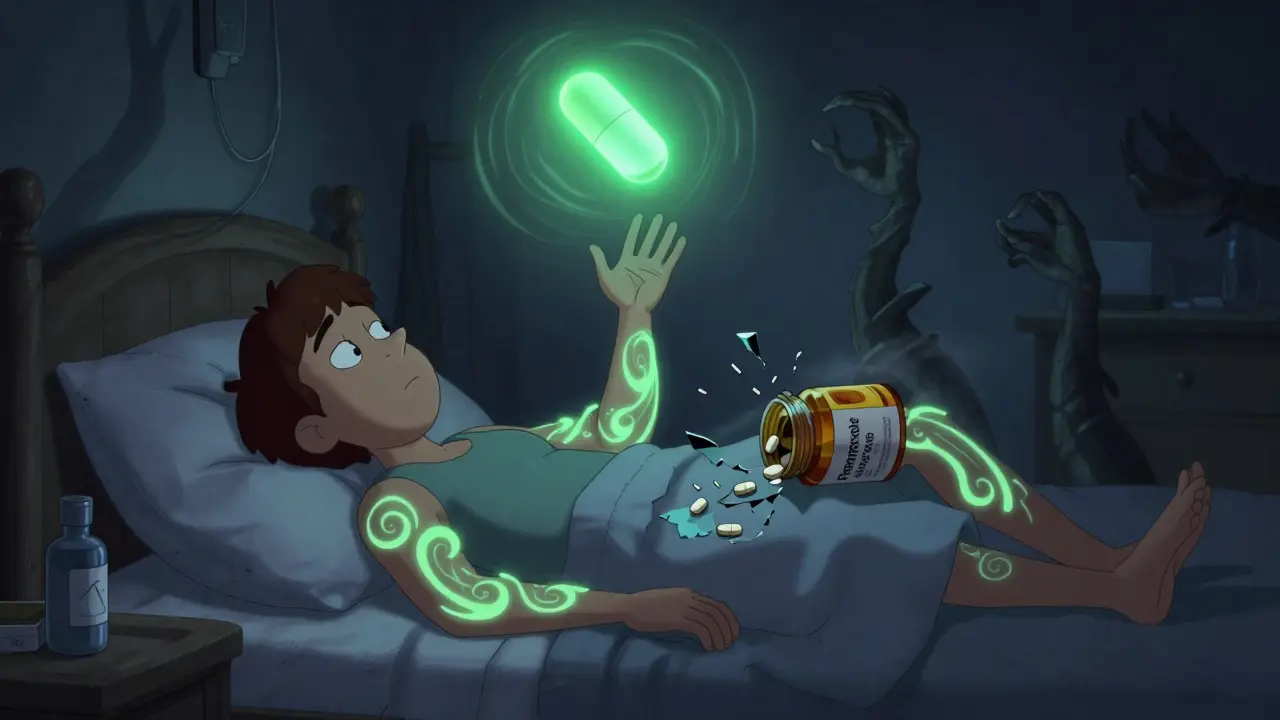
For decades, if you had restless legs syndrome (RLS), your doctor likely prescribed a dopamine agonist like pramipexole or ropinirole. It was the go-to solution. Fast relief. Easy pill. But here’s the truth most people don’t hear until it’s too late: dopaminergic medications are no longer the best first choice for RLS - and for good reason.
What Happens When Dopamine Medications Stop Working
Restless legs syndrome isn’t just about wanting to move your legs at night. It’s a neurological condition where uncomfortable sensations - crawling, aching, tingling - hit hardest when you’re still. Sitting, lying down, trying to sleep. For years, doctors thought boosting dopamine in the brain would fix it. And for a while, it did. But after months or years, something worse starts happening: augmentation. Augmentation means your symptoms get worse, not better. They start earlier in the day - maybe by 2 p.m. instead of 8 p.m. They spread from your legs to your arms. They hit more nights a week. And the dose you used to take? Now it doesn’t touch them. You need more. And then more. A 2018 study in Neurology found that 40 to 60% of people on daily dopamine agonists develop augmentation within 1 to 3 years. By five years, that number climbs to nearly 80%. It’s not just about the symptoms getting worse. Dopamine agonists can trigger impulse control disorders. People start gambling compulsively, shopping uncontrollably, or binge-eating. A 2019 study in Movement Disorders showed 6.1% of RLS patients on these drugs developed these behaviors - compared to just 0.5% in the general population. That’s a 12-fold increase. And once it starts, stopping the medication doesn’t always fix it.The New First-Line: Alpha-2-Delta Ligands
The American Academy of Sleep Medicine updated its guidelines in December 2024. The message was clear: stop starting with dopamine agonists. Instead, begin with alpha-2-delta ligands - gabapentin enacarbil (Horizant) or pregabalin (Lyrica). These drugs don’t touch dopamine. They calm overactive nerves in the spinal cord. They take longer to work - days, sometimes weeks. But they don’t cause augmentation. Ever. In head-to-head trials, they match dopamine agonists in symptom relief at 12 weeks. But at 52 weeks? Dopamine agonists lose 35% of their effect. Alpha-2-delta ligands? They stay strong. Gabapentin enacarbil, approved by the FDA in 2011, reduces RLS symptoms by 40 to 60% on the standard rating scale. Pregabalin works similarly. Side effects? Dizziness, fatigue, weight gain - about 2.5 kg over 12 weeks. But none of the dangerous, irreversible complications that come with dopamine drugs. A 2023 meta-analysis in JAMA Neurology compared pramipexole (0.5 mg) to pregabalin (150 mg). At 12 weeks, both lowered symptoms by about 12 points on the IRLSSG scale. At one year? Pregabalin still worked. Pramipexole? Most patients had to stop because their symptoms had exploded.Why the Shift? Real Data, Real Patients
This isn’t just theory. It’s what doctors are seeing - and what patients are reporting. On Reddit’s r/RLS community, 78% of recent posts about dopamine agonists mention augmentation. One user, RLSWarrior42, wrote: “After two years on Mirapex, my symptoms started at 2 p.m., spread to my arms, and doubled in severity. Tapering off took six months.” Patient reviews on Drugs.com reflect this. Pregabalin has a 7.8/10 average rating, with 65% reporting moderate to high satisfaction. Pramipexole? 6.2/10. Only 42% are satisfied - mostly because the relief fades and the side effects pile up. Even the FDA and European Medicines Agency now require black box warnings on dopamine agonists for augmentation risk. Prescriptions have dropped 62% since 2018. In 2024, alpha-2-delta ligands made up 65% of new RLS prescriptions. Dopamine agonists? Just 20%. That’s a complete flip from 2010, when they were 75% of prescriptions.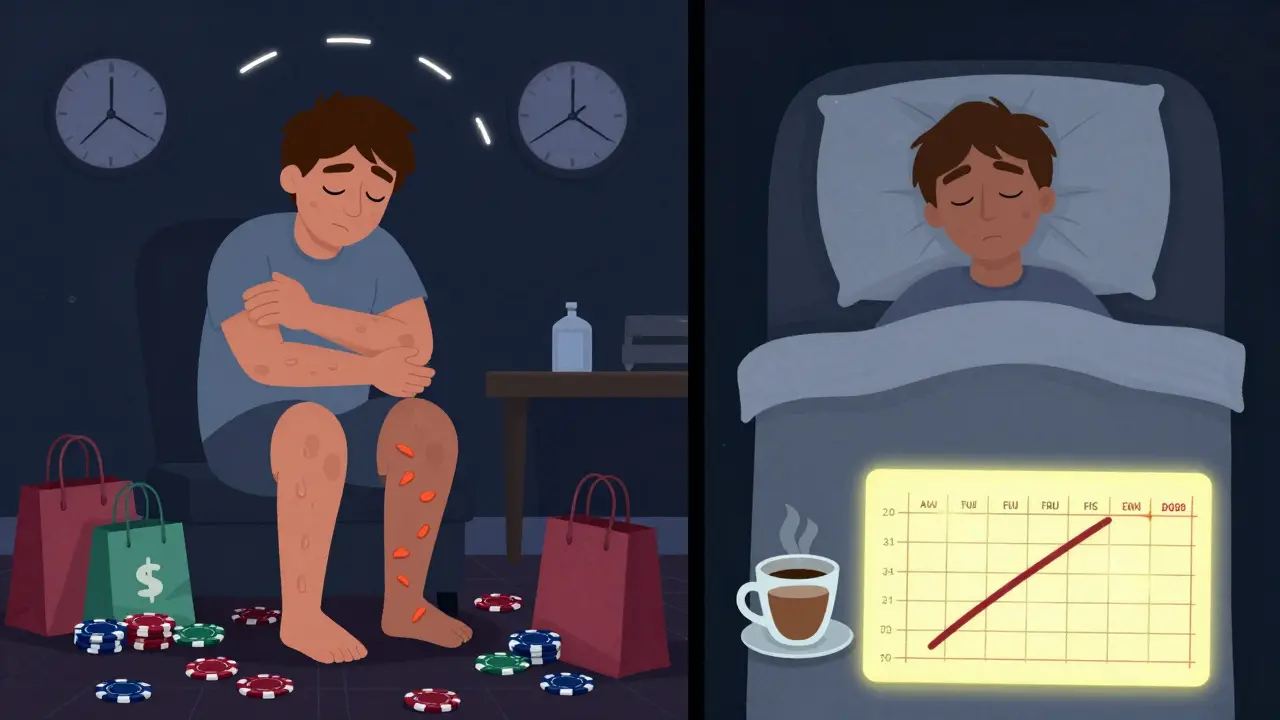
Who Still Gets Dopamine Medications?
It’s not all off the table. Dopamine agonists still have a place - but only for specific cases. If you have RLS only 1 to 2 nights a week, and symptoms hit right before bed, a low-dose dopamine agonist taken as needed might still make sense. But daily use? No. Even then, the dose must stay low: pramipexole no more than 0.5 mg, ropinirole no more than 3 mg. And never longer than 6 months. Carbidopa-levodopa (Sinemet) is another option for occasional use. It works fast - within 30 to 60 minutes. But if you take it daily for more than 6 months, 70% of people develop augmentation. That’s why it’s strictly for “as-needed” use, not daily maintenance.Non-Medication Strategies That Actually Help
Medication isn’t the only tool. And sometimes, skipping pills altogether is the best move. Iron deficiency is a root cause for many. If your serum ferritin is below 75 mcg/L, oral iron (100-200 mg elemental iron daily) can improve symptoms by 35% in 12 weeks, according to a 2024 meta-analysis. A simple blood test can tell you if this applies to you. Caffeine? 80% of RLS patients consume it daily. Cutting it out reduces symptoms by 20-30%. Alcohol? It worsens symptoms in 65% of people. Even one drink at night can make your legs feel like they’re on fire. Sleep hygiene matters. Going to bed and waking up at the same time every day, avoiding screens before bed, keeping your bedroom cool - these aren’t just “good habits.” They’re medical interventions. A 2022 study in the Journal of Clinical Sleep Medicine showed consistent sleep patterns reduced RLS severity nearly as much as medication - without side effects.
What to Do If You’re Already on Dopamine Medication
If you’ve been on pramipexole, ropinirole, or rotigotine for more than 6 months - and your symptoms have gotten worse or spread - you’re not alone. And you’re not failing. This is a known side effect, not a personal shortcoming. Talk to your doctor about tapering. Don’t stop cold turkey. Reduce the dose by 25% every 1-2 weeks. While you taper, start gabapentin enacarbil or pregabalin. A 2023 study in Sleep Medicine showed an 85% success rate when switching during tapering. Ask for a QUIP test - the Questionnaire for Impulsive-Compulsive Disorders in Parkinson’s Disease. It’s not just for Parkinson’s. It catches gambling, shopping, or binge behaviors early. If you’ve been spending more, feeling urges you can’t control, or lying about your medication use - this is your sign to act.The Future: What’s Coming Next
The RLS treatment landscape is changing fast. Three new therapies are in Phase 3 trials for 2025-2027:- A novel iron chelator called Fazupotide - designed to fix brain iron deficiency at the source.
- A selective A11 dopamine receptor agonist - meant to relieve symptoms without triggering augmentation.
- Transcranial magnetic stimulation - a non-drug option that uses magnetic pulses to calm nerve activity.
Bottom Line: Stop Digging
Dr. John Winkelman, who helped lead the research that changed RLS treatment, says it best: “Will Rogers said, ‘If you find yourself in a hole, stop digging.’ This is good advice for doctors who are giving these medicines: Stop increasing the dose.” If you have RLS and are on a dopamine agonist, ask yourself: Are my symptoms worse than they were six months ago? Do they start earlier? Have they spread? Am I feeling urges I can’t control? If you answered yes to any of these - you’re not just managing RLS. You’re caught in its trap. The solution isn’t more pills. It’s a different kind of treatment. One that doesn’t make your condition worse over time. Talk to your doctor. Get your iron checked. Cut the caffeine. Consider gabapentin enacarbil or pregabalin. Your legs - and your life - will thank you.Are dopamine agonists still used for restless legs syndrome?
Yes, but only in limited cases. Dopamine agonists like pramipexole and ropinirole are no longer first-line treatment due to high risk of augmentation - where symptoms worsen over time. They may still be used short-term (under 6 months) for people with infrequent symptoms (less than 3 nights per week) or as needed for occasional relief. Daily, long-term use is strongly discouraged.
What are the best alternatives to dopamine agonists for RLS?
The current first-line options are alpha-2-delta ligands: gabapentin enacarbil (Horizant) and pregabalin (Lyrica). These medications calm overactive nerves without causing augmentation. They take days to weeks to work fully, but their effectiveness lasts long-term. Iron supplementation is also recommended if ferritin levels are below 75 mcg/L, as iron deficiency is a key driver of RLS in many patients.
What is augmentation in restless legs syndrome?
Augmentation is a dangerous side effect of long-term dopamine agonist use. Symptoms start earlier in the day (often 2-6 hours sooner), become more severe, spread to arms or other body parts, and occur more frequently - sometimes nearly every night. It affects 40-60% of patients within 1-3 years of daily use and can become irreversible. This is why dopamine agonists are no longer recommended for chronic RLS.
Can lifestyle changes help with RLS without medication?
Yes. Eliminating caffeine, reducing alcohol, improving sleep hygiene, and exercising regularly can reduce RLS symptoms by 20-30%. Iron deficiency is a major contributor - if your ferritin is below 75 mcg/L, taking 100-200 mg of elemental iron daily for 12 weeks can improve symptoms in 35% of patients. These changes are safe, effective, and should always be tried before or alongside medication.
How do I know if I’m experiencing augmentation?
Watch for these signs: symptoms starting earlier in the day (like mid-afternoon instead of bedtime), spreading to your arms or torso, feeling more intense, or occurring on more nights per week. If you’ve been on a dopamine agonist for over 6 months and notice any of these, you’re likely experiencing augmentation. Don’t increase your dose - talk to your doctor about switching to a safer medication like gabapentin enacarbil.
Is it safe to stop dopamine agonists cold turkey?
No. Stopping abruptly can cause severe rebound symptoms, including worsening RLS, insomnia, anxiety, and even hallucinations. Always taper under medical supervision. Reduce the dose by 25% every 1-2 weeks while introducing an alternative like gabapentin enacarbil. Studies show this approach has an 85% success rate in managing withdrawal and preventing rebound.
Why did doctors stop prescribing dopamine agonists for RLS?
Because long-term data showed they cause more harm than good. Originally approved based on short-term studies (12 weeks), later research revealed that 40-80% of patients developed augmentation, impulse control disorders, or worsening symptoms over time. Updated guidelines from the American Academy of Sleep Medicine in December 2024 explicitly recommend against dopamine agonists as first-line treatment. The medical community now prioritizes safer, non-augmenting alternatives.




Oh my god, I can't believe people are still taking these dopamine pills like they're candy. I was on pramipexole for 18 months and woke up one day with my arms twitching at 3 p.m. and my husband caught me buying 17 pairs of shoes online at 2 a.m. I thought I was having a breakdown - turns out, it was the drug. Now I'm on gabapentin and I haven't felt this calm in years. If your doctor still prescribes this stuff without warning you, fire them. This isn't medicine, it's a slow-motion trap.
Stop digging.
Let me tell you something they don't want you to know - this whole RLS shift? It's Big Pharma playing mind games. Gabapentin? That's a drug originally made for seizures, now repackaged as a miracle cure. And who profits? The same companies that made billions off dopamine agonists. They just changed the label. Meanwhile, your ferritin levels? They're not checking that. They're not even testing. It's all about the next prescription. Wake up. This isn't science. It's a money play.
ok but like... what if you're broke and your insurance won't cover horizant? like i got pregabalin but it makes me feel like a zombie and i still can't sleep?? also why is iron so hard to get? my dr said 'just eat spinach' like i'm 5?? 🤡
Thank you for writing this 💛 I’ve been on ropinirole for 4 years and didn’t even know augmentation was a thing until I read this. My legs used to only bother me at night… now they’re awake by 4 p.m. and I cry every time I try to sit still. I started gabapentin last week and my husband said I’ve been smiling more. I’m not cured but I’m not drowning anymore. You’re not alone. I see you. 🤍
This is one of the most comprehensive, evidence-based summaries on RLS treatment I’ve encountered. The shift in clinical guidelines reflects a mature understanding of long-term pharmacological consequences. It is imperative that patients are educated about augmentation risk prior to initiation of dopamine agonists. Iron studies, sleep hygiene, and non-dopaminergic alternatives must be prioritized as first-line interventions. Thank you for raising awareness with clarity and precision.
Hi there, I just wanted to say - thank you, thank you, thank you - for sharing this. I’ve been reading about RLS for years, and this is the first time I felt like someone actually understood how lonely it is to have legs that feel like they’re filled with ants and electricity at 11 p.m. I started iron supplements last month - ferritin was at 32 - and now I’m sleeping through the night. Not perfectly, but better. And I’m not alone. We’re all in this together. ❤️
Let’s deconstruct the epistemological underpinnings of this pharmacological hegemony. The dopamine paradigm is a reductive neurochemical narrative that pathologizes somatic restlessness as a neurotransmitter deficiency - a bourgeois construct that ignores the phenomenological lived experience of bodily alienation under late capitalism. The alpha-2-delta ligands? Merely another pharmacological palliative, masking the ontological dissonance of modern sleep deprivation and techno-somatic disintegration. We must interrogate the biopolitical apparatus that commodifies rest. The iron deficiency? A symptom, not a cause. The real diagnosis: neoliberal exhaustion.
You people are all crazy. Dopamine drugs work fine for me. I’ve been on them for 10 years and I’m fine. You think this new gabapentin stuff is better? Please. I’ve seen people on that stuff nodding off at work. And iron? You think eating a spinach salad fixes your nerves? That’s what your grandma would say. This whole thing is just another fad. Doctors don’t know anything. They just follow the latest study like sheep. I’m keeping my pills. And if my legs get worse? I’ll just take more. Simple.
so i just got off mirapex after 5 years and my legs felt like they were on fire for 3 weeks 😭 i was crying in the shower every night. pregabalin is helping but i still wake up at 3am feeling like my bones are crawling. also why is it so hard to find a dr who gets this?? i feel like i’m begging for help and they just shrug. 😩
Hey, I just wanted to say - you’re not weird for feeling this way. I used to think I was just lazy or anxious. Turns out, my legs were screaming. I started walking 20 minutes after dinner and cutting out soda. No magic, just consistency. And now? I sleep. Not perfect, but enough. If you’re reading this and you’re tired - you’re not broken. You’re just waiting for the right fix. We got you.