


The Basics: What Are You Actually Counting?
When we talk about "carbs," we're talking about the nutrients that your body breaks down into glucose (sugar) after you eat. This is why carbohydrates have the most direct impact on your blood sugar. In the world of diabetes management, we measure these in grams. To keep things simple, health professionals often use the concept of a "carb serving." According to the Centers for Disease Control and Prevention (CDC), one standard carbohydrate serving is roughly 15 grams. Think of it this way: 15 grams of carbs is roughly equivalent to:- One slice of whole-grain bread
- One small apple (about 4 ounces)
- A half-cup of cooked rice or pasta
- A half-cup of beans
How to Decode Nutrition Labels
Reading a label can feel like staring at a puzzle, but you only need to focus on one specific area: the "Total Carbohydrates" line. This number is the gold standard because it includes everything-sugars, starches, and fiber. However, not all carbs are created equal. If you want to be precise, you need to make two key adjustments:- Subtract Fiber: Fiber is a type of carbohydrate that your body doesn't digest as sugar. If the label lists dietary fiber separately, subtract it from the total carbohydrate count. This gives you the "net carbs," which is what actually affects your blood sugar.
- Handle Sugar Alcohols: If you're eating "sugar-free" snacks, you'll see sugar alcohols. These provide only about half the calories and impact glucose less than regular sugar. Divide the sugar alcohol grams by two, then subtract that number from the total.
| Component | Action | Why? |
|---|---|---|
| Dietary Fiber | Subtract full amount | Not digested as sugar |
| Sugar Alcohols | Subtract half amount | Half the glycemic impact |
| Starches/Sugars | Count fully | Directly increase glucose |
Matching Carbs to Insulin
For those using insulin, carb counting isn't just about tracking; it's about dosing. This is where the Carb-to-Insulin Ratio comes in. This ratio tells you how many grams of carbohydrates one unit of insulin will cover in your body. For example, if your doctor determines you have a 1:10 ratio, that means 1 unit of insulin covers 10 grams of carbs. If your meal contains 50 grams of carbs, you would take 5 units of insulin (50 divided by 10). Keep in mind that your ratio isn't set in stone. You might be more sensitive to insulin in the morning than in the evening, or your needs might change after a heavy workout. This is why working closely with a Certified Diabetes Care and Education Specialist (CDCES) is vital to fine-tune these numbers.
Carb Counting vs. Other Methods
You've probably heard of the "Plate Method" or the "Glycemic Index." While these are helpful, they serve different purposes. The Plate Method is great for people who want a visual guide without doing math-it's a "rough estimate" approach. The Glycemic Index focuses on the *quality* of the carb (how fast it spikes your sugar), but it doesn't tell you *how much* to eat. Carbohydrate Counting is the precision tool. It allows for the most flexibility because it doesn't tell you *what* to eat, but *how much* of it fits into your target. This is especially critical for people using Insulin Pumps or multiple daily injections, where a small error in estimation can lead to a significant blood sugar swing.Step-by-Step Implementation Plan
You won't be an expert overnight. Most people take 4 to 8 weeks to feel comfortable with estimations. Here is the most effective way to learn:- Week 1: The Baseline. Don't change how you eat yet. For three days, write down everything you eat and drink. Use a food scale and measuring cups. You can't estimate what you haven't measured.
- Week 2: Label Mastery. Start identifying the "Total Carbohydrates" on everything you consume. Practice subtracting fiber and sugar alcohols.
- Week 3: Digital Integration. Use apps like MyFitnessPal or Carb Manager. These tools use massive databases to do the math for you, which reduces the mental load.
- Week 4: Real-World Testing. Try estimating a meal and then check the actual count using an app or label. See how close you were.
Avoiding the Most Common Mistakes
Even experienced carb counters trip up. One of the biggest traps is forgetting "hidden" carbs. Many people forget to count carbohydrates in milk, yogurt, or starchy vegetables like carrots and peas. According to recent studies, these overlooked sources can account for up to 25% of a person's daily carb intake. Another challenge is the "Restaurant Gap." Restaurant portions are often much larger than the nutrition guides suggest. A "side of rice" at a local bistro might actually be three servings of carbs. To combat this, check the chain's official website for nutrition facts or assume the carb count is 20-30% higher than you think.The Role of Technology
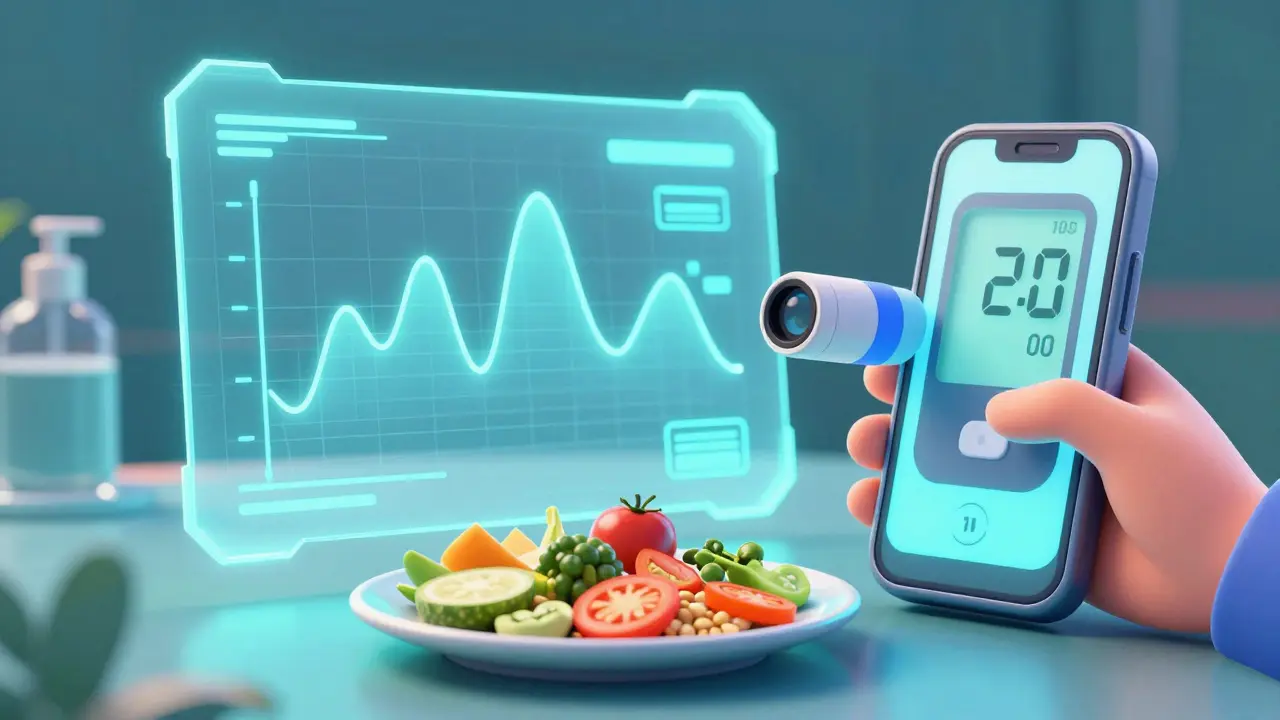
We are lucky to live in an era where technology does the heavy lifting. Continuous Glucose Monitors (CGMs) are game-changers for learning. Instead of waiting hours for a finger-prick test, a CGM shows you in real-time how a specific carb count affected your glucose. If you see a sharp spike after a meal you thought was "low carb," you know you need to adjust your count or your insulin ratio next time. Looking forward, AI is making this even easier. New image-recognition tools can now scan a plate of food and estimate the carb content with roughly 85% accuracy. While not perfect, it's a fantastic way to double-check your guesses.Is carb counting only for people who use insulin?
No. While it is essential for insulin dosing, people with Type 2 diabetes who use oral medications or diet alone can use carb counting to prevent blood sugar spikes and manage weight. It provides a level of awareness that simpler methods lack.
Do I have to count every single gram of carbs?
Precision is important, but perfection isn't always possible. For most, getting within 5-10 grams of the actual count is sufficient to maintain stability. The goal is consistency over absolute mathematical perfection.
What happens if I miscount my carbs?
If you undercount, you may experience hyperglycemia (high blood sugar). If you overcount and take too much insulin, you risk hypoglycemia (low blood sugar). This is why it's important to always have fast-acting glucose, like glucose tabs or juice, on hand.
Can I still eat dessert if I count carbs?
Yes. That is the primary benefit of this method. By knowing the carb content of a dessert, you can either subtract those carbs from another meal or adjust your insulin dose to cover the treat.
How often should I review my carb targets with a doctor?
Typically every 3 to 6 months, or whenever you experience significant changes in weight, activity level, or medication. Your insulin sensitivity changes over time, and your ratios will need updating.






Write a comment