

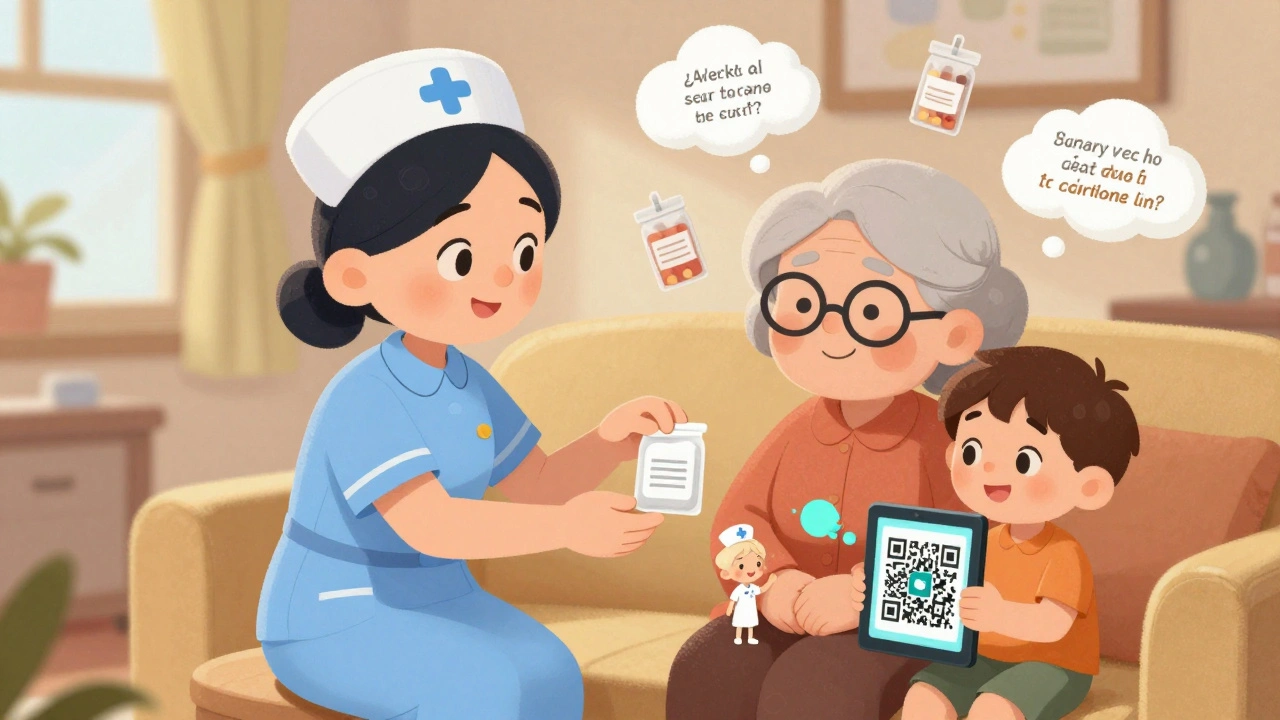
Managing medications at home can be overwhelming-especially for seniors taking five, ten, or even more pills a day. Missed doses, wrong times, drug interactions, and confusing instructions aren’t just inconveniences. They lead to hospital trips, dangerous side effects, and worse outcomes. That’s where home health services for medication management come in. These aren’t just reminders or pill organizers. They’re professional, structured support systems designed to keep older adults safe, healthy, and out of the hospital.
What Home Health Medication Management Actually Does
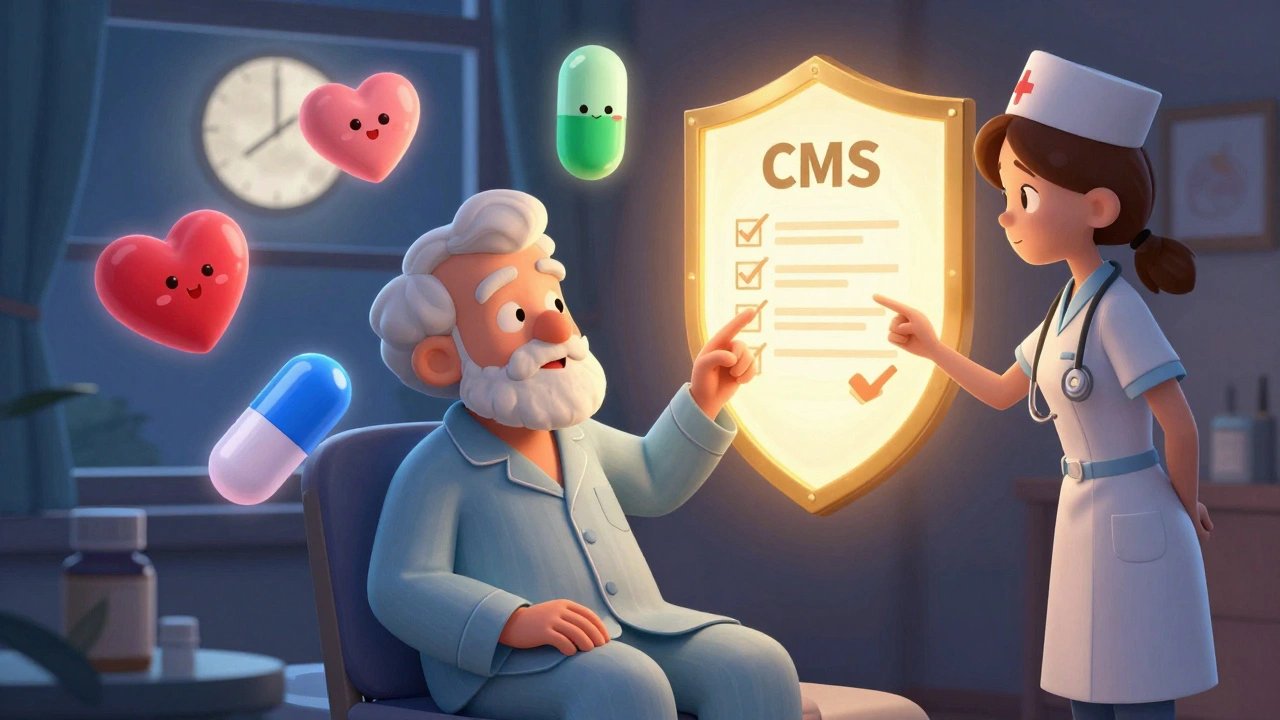
Home health medication management isn’t just about handing someone a pill. It’s a full-service system that tracks every medication, checks for conflicts, schedules doses, and makes sure the patient understands what they’re taking and why. Agencies that are Medicare-certified follow strict federal rules set by the Centers for Medicare & Medicaid Services (CMS). These rules require them to do medication reconciliation every time a patient moves from hospital to home, or when a new doctor changes a prescription.Here’s what it looks like in practice:
- A nurse or trained technician visits your home weekly-or even daily-to give or supervise medication.
- They update a master list of every drug, including brand names, generic names, dosages, and reasons for use.
- They check for overlaps: Is someone taking two different drugs that cause dizziness together? Are blood thinners conflicting with new supplements?
- They document every dose given and report any side effects or missed pills to the patient’s doctor within 24 hours.
According to MedPro’s 2022 risk analysis, professional medication management cuts adverse drug events by 60% compared to self-management. For seniors on polypharmacy (five or more medications), that’s not a small number-it’s life-saving.
How It’s Different from Just Using a Pill Organizer
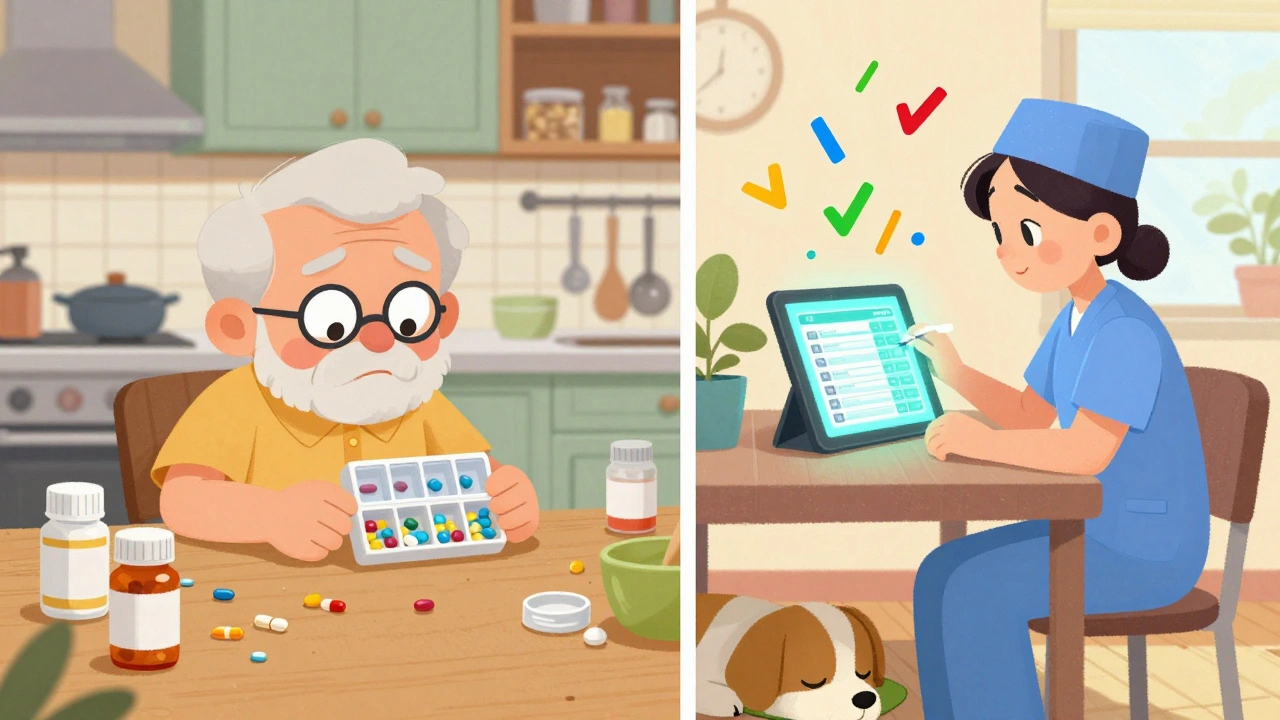
Pill organizers are helpful. They’re cheap. You can buy them at any pharmacy. But they’re not enough.A pill box doesn’t know if your blood pressure med was changed last week. It doesn’t catch that your new antibiotic interacts with your heart medication. It doesn’t call your doctor when you start feeling dizzy after a dose.
Home health services add human judgment and medical training. A nurse doesn’t just hand out pills. They ask: “Did you eat breakfast before taking this?” “Did you feel any nausea after your last dose?” “Do you know why you’re taking this blue pill?”
Studies show that using a pill organizer alone reduces missed doses by 45%. But when you add trained staff who verify each dose and communicate with doctors, adherence jumps to over 90%. That’s the difference between “mostly okay” and “safe and effective.”
Who Qualifies for Home Health Medication Management?
Not everyone can get this service for free. Medicare Part A covers it-but only under specific conditions:- You must be homebound (leaving home takes considerable effort or medical risk).
- You need skilled nursing care-like medication administration or monitoring.
- You must have a doctor’s order stating the need for home health services.
- Services must be intermittent (not 24/7). Daily visits are allowed if medically necessary.
If you don’t qualify for Medicare-covered care, private home health agencies offer medication management services for a fee. In 2023, rates ranged from $20 to $40 per hour. Some agencies offer package deals for daily support.
That’s a barrier for many. But if you’re recovering from surgery, recently discharged from the hospital, or struggling with complex meds, the investment often pays off. Clarest’s 2023 data shows a 20% drop in 30-day hospital readmissions among patients using professional medication management. That’s $1,200 in avoided hospital costs per patient, every month.
Tools and Systems Used by Home Health Providers
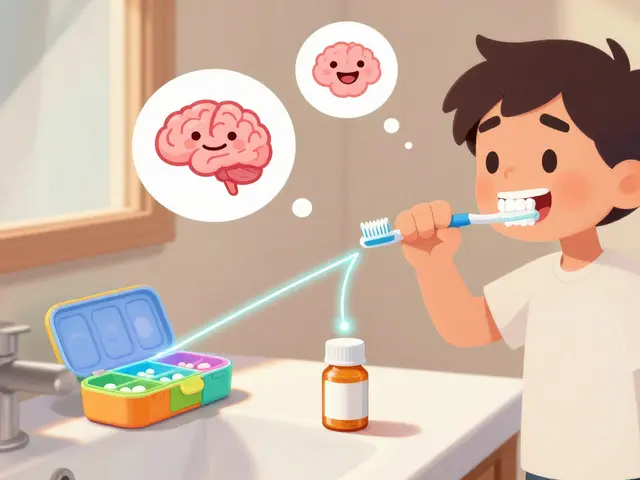
Most agencies don’t rely on paper lists or memory. They use proven tools:- WellPack Daily Pouches: Used by Phoenix Home Care, these are individual sealed pouches labeled with the day and time. Each pouch contains all meds for that dose. No sorting needed. No confusion.
- Digital Apps with Alarms: Apps like CritiCare’s Medication Planner send push notifications and require biometric verification (like a fingerprint) to confirm the dose was taken. Their pilot program cut errors by 40%.
- QR Code Videos: Some agencies link each medication pouch to a short video in the patient’s language. If your mom speaks Spanish but the label is in English, she can scan the code and watch a nurse explain the pill in her native tongue.
- Medication Reconciliation Forms: These are standardized checklists that compare every drug on file with what’s actually being taken. They’re required by CMS and used during every transition of care.
These tools aren’t gimmicks. They’re backed by data. A Clarest survey of 500 caregivers found that 67% said visual aids with large-print charts and simple language made a big difference in understanding. For someone with vision problems or mild dementia, that’s everything.
Step-by-Step: How to Get Started
Getting home health medication management isn’t complicated-but it does take action.- Ask your doctor: Say, “My loved one is taking several medications and I’m worried about errors. Can you order home health services for medication management?”
- Check eligibility: If they qualify for Medicare-covered home health, the agency will handle the paperwork. If not, ask for a list of private agencies in your area.
- Gather all meds: Bring every pill bottle, patch, inhaler, and liquid to the first visit. Include vitamins, supplements, and over-the-counter drugs. Many interactions happen with these.
- Ask for a medication list: The agency should give you a printed or digital copy of the updated list. Keep it in your wallet or phone. Share it with every new doctor.
- Confirm the plan: Make sure the schedule matches daily routines. If meds are due at 7 a.m. but your loved one sleeps until 9, ask if the timing can be adjusted.
Don’t wait for a crisis. If your parent is forgetting doses, mixing up pills, or has been to the ER twice in six months because of a bad reaction, it’s time to act.
Common Problems and How to Solve Them
Even with professional help, challenges pop up:- Scheduling conflicts: If meds need to be taken at 8 a.m. and 8 p.m., but the nurse only comes at noon, that’s a problem. Ask the agency if they can adjust visits or if they offer a phone check-in for unsupervised doses.
- Communication gaps: One Reddit user shared that conflicting prescriptions from two specialists led to a dangerous blood thinner interaction. Solution: Request that the home health agency coordinate directly with all prescribers. They’re required to do this under CMS rules.
- Language barriers: If the patient doesn’t speak English well, insist on materials in their preferred language. Many agencies now offer multilingual videos and printed guides.
- Staff turnover: If a new nurse shows up and doesn’t know the routine, ask for a handoff report. Every change should be documented.
Also, be wary of agencies that don’t document changes within 24 hours. CMS requires it. If they’re skipping this, they’re cutting corners.
What to Look for in a Home Health Agency
Not all agencies are the same. Here’s what to ask:- Are you Medicare-certified? (This ensures federal standards are followed.)
- Do you use medication reconciliation during every care transition?
- What tools do you use for organizing meds? (Pouches? Apps? QR codes?)
- How do you handle missed doses or side effects?
- Can you provide references from other families?
Look for agencies that specialize in geriatric medication management. The ones that train staff in the Beers Criteria-a list of potentially inappropriate drugs for seniors-are more likely to catch dangerous prescriptions.
Why This Matters More Than Ever
The U.S. home health market is growing fast. It was worth $118 billion in 2022 and is expected to grow 5.3% a year through 2027. Why? Because the population over 85 is rising fast. AARP reports that 62% of adults over 85 now use home health services for meds-compared to just 28% of those aged 65-74.And it’s not just about aging. It’s about complexity. More seniors are living with multiple chronic conditions: diabetes, heart failure, arthritis, depression. Each needs meds. Each has risks. Each interaction matters.
Agencies that get this right are seeing fewer hospitalizations, better quality of life, and lower long-term costs. The ones that don’t? They’re getting penalized. CMS now ties reimbursement to medication adherence rates. If your agency’s patients miss too many doses, they lose money.
This isn’t just care. It’s a system designed to protect the most vulnerable. And it works-if you know how to use it.
When Home Health Medication Management Isn’t Enough
There are limits. Home health services are great for routine medication administration. But they’re not designed for:- Patients needing daily psychiatric med adjustments (like lithium or antipsychotics).
- Those requiring continuous monitoring (like IV antibiotics or insulin pumps).
- Cases where the patient refuses to take meds or is cognitively unable to understand the need.
In those cases, you may need a higher level of care: a skilled nursing facility, memory care unit, or 24-hour in-home nursing. Don’t force home health to do something it’s not built for.
Also, if you’re paying out of pocket and the cost is too high, talk to your local Area Agency on Aging. Some offer subsidies or sliding-scale programs for low-income seniors.
Can home health services give me my medications if I’m not homebound?
Medicare only covers home health services if you’re homebound-meaning leaving home requires considerable effort or medical risk. If you’re able to go to the pharmacy or doctor’s office regularly, you won’t qualify for Medicare-covered home visits. However, private home care agencies can still provide medication management services for a fee, even if you’re not homebound.
Do I need a doctor’s order to get home health medication management?
Yes. A licensed healthcare provider must write an order stating the need for skilled nursing care, including medication management. This order is required for Medicare coverage and for most private agencies to begin services. Your primary care doctor or specialist can provide this.
What if my loved one takes vitamins and supplements? Do those count?
Absolutely. Vitamins, herbal supplements, and over-the-counter drugs like ibuprofen or antacids can interact dangerously with prescription medications. Home health providers will include all of these in the medication list. Never assume they’re “safe” just because they’re not prescribed.
How often should the medication list be updated?
The list should be reviewed and updated every time there’s a change in medication-whether it’s a new prescription, a dose change, or a drug being stopped. Medicare-certified agencies are required to reconcile all medications during every care transition. Families should also review the list with the doctor at least every three months.
Can home health nurses adjust my medication doses?
No. Only the prescribing doctor can change doses. Home health nurses can observe side effects, note missed doses, and report concerns to the doctor-but they cannot change anything on their own. If you notice a pattern of side effects, ask the nurse to document it and alert your doctor immediately.
Are home health medication services covered by Medicare Advantage plans?
Many Medicare Advantage plans offer additional benefits beyond Original Medicare. Some now cover continuous medication monitoring devices, daily check-ins, or even transportation to pharmacies. Check your plan’s benefits booklet or call customer service to ask if medication management services are included-and if there are extra perks available.
Next Steps: What to Do Today
If you’re worried about medication safety for a senior in your life:- Collect every pill bottle, supplement, and prescription today.
- Call their doctor and say: “We need to set up home health medication management.”
- Ask for a list of Medicare-certified agencies in your area.
- Attend the first visit. Take notes. Ask questions.
- Keep the updated medication list in your phone and wallet.
Medication errors are preventable. You don’t have to manage this alone. Professional help exists-and it works.





Been there. My grandma was on 12 meds and we were barely keeping up. Home health nurse came twice a week, did the whole reconciliation thing, and suddenly we weren’t panicking every time she missed a pill. The pouch system? Game changer. No more guessing what’s what.
Also, they caught a bad interaction between her blood thinner and a new OTC painkiller. Saved her from a bleed.
Worth every penny.
Oh please. This is just corporate healthcare repackaged as ‘compassion’. They don’t care about your grandma. They care about Medicare reimbursement rates. Every ‘life-saving’ stat is padded with insurance loopholes. They’ll drop you the second you’re no longer profitable.
And don’t get me started on QR codes-what’s next? A TikTok nurse explaining your pills?
This system is designed to keep seniors dependent, not empowered.
They’re watching you. Every pill. Every scan. Every voice note. They’re building a profile. You think they’re helping? They’re collecting data for the algorithm that decides if you’re worth keeping alive. The ‘medication reconciliation’? It’s not for you. It’s for the AI that predicts your next hospital stay so they can bill more.
They know when you’re dying before you do. And they’re charging for it.
I know this sounds like a lot but trust me it’s worth it. My mom had dementia and we were terrified she’d overdose or skip everything. The home health nurse came every morning, made sure she ate before her meds, and even called us if she was being stubborn.
She didn’t just hand out pills-she talked to her. Made her feel seen.
And yes, it’s expensive but we used our HSA and it was the best money we ever spent.
You’re not alone in this. I’m here if you wanna talk.
It is a disturbing development that the state, through Medicare, has incentivized the institutionalization of care within the domestic sphere. The very notion that a senior citizen requires a nurse to administer basic pharmaceuticals is a tacit admission of societal failure. We have outsourced familial duty to bureaucratic contractors. This is not care. It is commodified neglect.
My aunt got this service after her hip surgery and it changed everything 😊 The nurse even printed out a big-print schedule with pictures of the pills! She didn’t know what anything was before. Now she says, ‘I feel like I’m in charge again.’
Don’t wait for a crisis. Just call the doctor. You got this 💪
The entire paradigm of home health medication management is predicated upon a fallacious assumption that pharmacological compliance constitutes therapeutic efficacy which is patently untrue as evidenced by the persistent rise in polypharmacy related mortality despite increased surveillance and technological intervention yet the system persists because it is profitable and politically expedient and not because it is clinically superior
Let me tell you what they’re not telling you. The ‘medication reconciliation’ forms? They’re used to flag you for insurance denial later. If you have too many meds, they’ll say you’re ‘non-compliant’ and cut your benefits. The nurse is a spy. The QR codes? They’re tracking your movements. They’re building a dossier on you.
And if you’re on Medicaid? They’ll send you to a nursing home the second you slip up.
I’ve seen it happen. It’s not paranoia. It’s policy.
Why do we let big pharma and the government control our meds? Why not just stop taking all the pills? My neighbor took herself off 8 meds and now she’s hiking every day. No more dizziness. No more doctors.
They call it ‘noncompliance’ but it’s called FREEDOM.
They want you dependent. Don’t be their puppet.
My dad’s on 7 meds. We did the home health thing last year. It’s not perfect. But it’s better than what we had.
It’s not about the tech. It’s about someone showing up. Someone who notices when you’re quiet. Someone who writes down what you say.
That’s the real magic. Not the pouches. Not the apps.
Just someone who cares enough to remember.
Thank you for this comprehensive overview. In India, we often rely on family members for medication management, which leads to frequent errors due to lack of training. The structured approach described here is commendable and aligns with international best practices. I believe such models could be adapted with cultural sensitivity for elderly populations in developing nations, especially where healthcare infrastructure is limited.
You think this is about care? No. It’s about control. The system wants you dependent. It wants you scared. It wants you to believe you can’t manage your own body. So they sell you a nurse. A pill box. A QR code. All to make you feel safe while they strip away your autonomy.
They’ll take your freedom one pill at a time.
And you’re thanking them for it.
My mum had a home health nurse for six months after her stroke. She didn’t just give meds-she’d sit with her, read the paper, play cards. One day mum said, ‘She’s the only one who remembers I like Earl Grey.’
That’s the part no one talks about.
It’s not just safety.
It’s dignity.
Let’s be real-this is just a glorified pill-pushing operation with a CMS compliance checklist. The ‘tools’ they use? All patented by Big Pharma subsidiaries. The ‘data’ they collect? Sold to insurers to adjust premiums. The ‘reconciliation’? A legal shield so they don’t get sued when someone dies.
It’s not healthcare. It’s a regulatory smokescreen.
And you’re buying it.