

Isotretinoin Depression Risk Assessment Tool
Personal Risk Assessment
This tool helps estimate your personal risk of developing depression while taking isotretinoin based on factors discussed in the article.
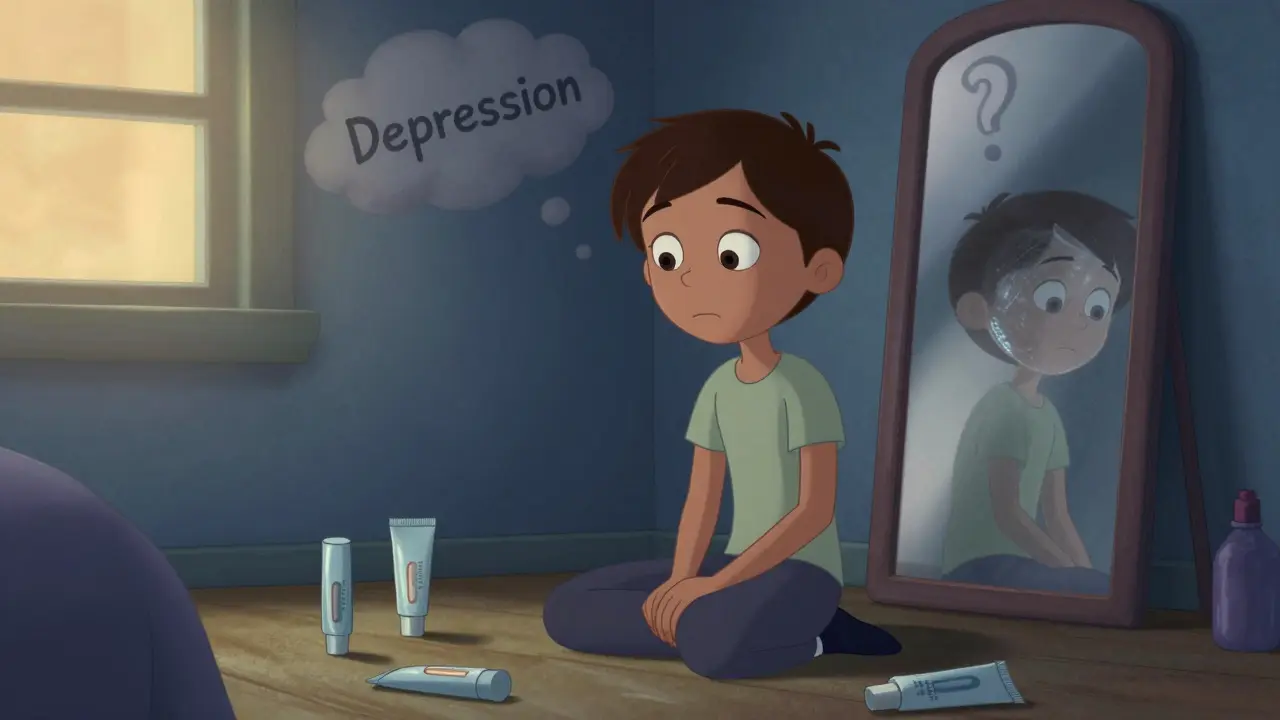
When you’re struggling with severe acne, isotretinoin can feel like a lifeline. It clears up skin that nothing else can touch-sometimes in just a few months. But behind that promise is a quiet, persistent question: isotretinoin and depression. Are they connected? And if so, what should you actually be watching for?
What Isotretinoin Actually Does
Isotretinoin isn’t just another acne pill. It’s a powerful retinoid that shrinks oil glands, cuts sebum production by up to 90%, and prevents clogged pores from forming. For people with nodular or cystic acne, it’s often the only treatment that delivers lasting results. About 85% of users see their acne clear completely after one 15- to 20-week course, according to the Journal of the American Academy of Dermatology. That’s why millions still take it, even after the original brand, Accutane, was pulled from the U.S. market in 2009. Today, generic versions like Claravis, Amnesteem, and Sotret make up over 90% of prescriptions in the U.S. And while the drug works wonders on skin, it’s also been tied to reports of mood changes-sometimes severe ones. The FDA added a black box warning in the early 2000s, the strongest possible alert, for potential psychiatric side effects. That warning never went away. But here’s the twist: the science behind it is deeply divided.The Evidence Is Conflicting
One side of the debate comes from real-world reports. The FDA’s Adverse Event Reporting System (FAERS) collected over 19,000 psychiatric cases linked to isotretinoin between 2004 and 2024. Of those, nearly half were depression, 18% were suicidal thoughts, and 15% were anxiety. The reporting odds ratio for depression was 3.3 times higher than in non-users. For suicidal ideation, it jumped to 11.2 times higher. These aren’t small numbers. They’re loud signals. But then there’s the other side. A massive 2023 meta-analysis in JAMA Dermatology looked at data from over 1.6 million people. It found no increased relative risk of depression or suicide among isotretinoin users compared to the general population. The absolute risk of a suicide attempt during treatment? Just 0.14%. That’s lower than the rate of suicide attempts in teens without acne. The study concluded: the fear might be bigger than the actual danger. So why the gap? One big reason: acne itself is a mental health burden. People with severe acne have higher rates of depression, social anxiety, and low self-esteem-even before they start any medication. When their skin clears, their mood often improves. That’s what many users report on Reddit and Drugs.com. One person wrote: “My depression lifted dramatically on isotretinoin-likely because my acne was causing it.” Another said: “Week 8 brought severe depression I’d never felt before. Stopped it. Symptoms vanished in three weeks.” The truth? Both can be true. Isotretinoin might trigger mood changes in some. For others, clearing their skin lifts depression they didn’t even realize they had.Who’s Most at Risk?
It’s not random. If you’ve had depression, anxiety, bipolar disorder, or a family history of psychiatric illness, your risk goes up. The JAMA study showed patients with prior mental health conditions were far more likely to experience serious side effects. That’s why screening isn’t optional-it’s essential. Age and gender matter too. Studies show older patients (over 25) have lower rates of depression on isotretinoin. Men are more likely to report completed suicide attempts-consistent with general suicide trends where men are less likely to seek help but more likely to act on impulses. Even your dose might play a role. Surprisingly, higher cumulative doses were linked to *lower* suicide risk in the same study. That doesn’t mean taking more is safer-it just suggests that people who respond well to higher doses might have fewer underlying mental health vulnerabilities. And here’s something many don’t know: isotretinoin can lower vitamin B12 levels. In one 2022 study, nearly 19% of users developed deficiency. Low B12 can cause fatigue, brain fog, irritability, and even depression. Before you assume your mood changes are from the drug, get your B12 checked.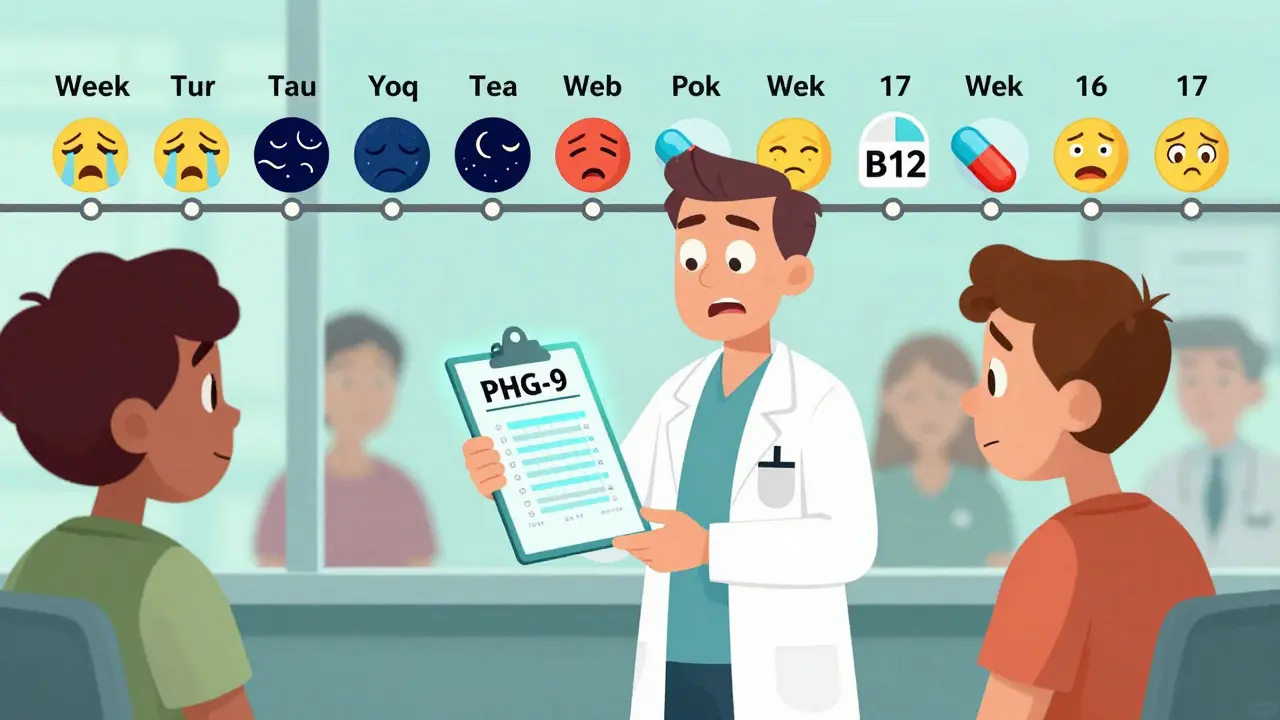
What Doctors Are Doing Now
Regulators aren’t ignoring the issue. In January 2025, the U.S. updated its iPLEDGE program to require all prescribers to complete two hours of mental health training every year. Miss it, and you lose your ability to prescribe isotretinoin. In Australia, the TGA tightened guidelines in March 2024, demanding better documentation of mental health checks. The European Medicines Agency now requires doctors to rule out B12 deficiency, thyroid issues, and other medical causes before labeling symptoms as isotretinoin-related. Best practice? It’s not just a one-time check. It’s a process:- Before starting: Full psychiatric history. Ask about past depression, anxiety, therapy, medications, suicide attempts, or family mental illness. Use the PHQ-9 or Beck Depression Inventory to score baseline mood.
- Weeks 1-8: Weekly check-ins. This is when 44% of psychiatric events show up. Watch for crying spells, withdrawal from friends, loss of interest in hobbies, or sudden anger.
- Weeks 9-16: Biweekly visits. Keep using the PHQ-9. If your score rises above 10, pause treatment and refer to a mental health professional.
- Week 17 onward: Monthly monitoring. Don’t let up. Mood changes can still happen.
Red Flags You Can’t Ignore
Not every bad day means you need to stop. But these signs? They’re urgent:- Any talk of suicide-even jokingly
- Feeling hopeless or worthless
- Self-harm or reckless behavior
- Sudden, unexplained rage or emotional numbness
- Loss of sleep, appetite, or energy that lasts more than a week
What About Other Acne Treatments?
Some people think switching to antibiotics or topical retinoids avoids the risk. But it’s not that simple. Minocycline, a common oral antibiotic for acne, has its own link to depression-in about 1.7% of users. Topical retinoids like tretinoin can cause irritation and stress, which may worsen anxiety. Isotretinoin isn’t the only acne drug with mental health risks. But it’s the only one with such a clear pattern of timing-peaking around week 8-and such a high volume of reports. That’s why monitoring is non-negotiable.What’s Next?
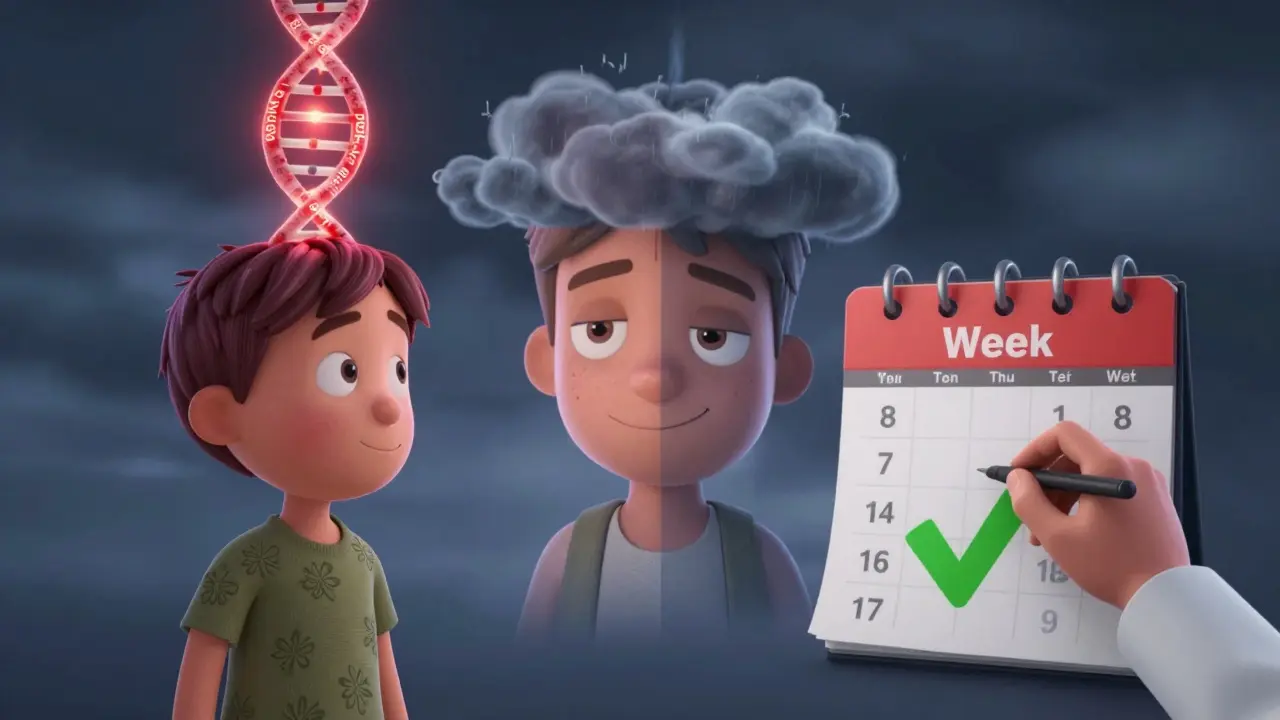
Science is catching up. A 2024 study in the Journal of Clinical Psychiatry found a genetic marker-BDNF Val66Met-that predicts susceptibility to isotretinoin-induced depression with nearly 80% accuracy. In the future, a simple blood test might tell you if you’re at higher risk before you even start. The American Psychiatric Association’s 2025 guidelines will soon recommend personalized monitoring based on risk factors-not a one-size-fits-all approach. That’s progress.Final Thoughts
Isotretinoin isn’t dangerous for most people. For many, it’s life-changing. But it’s not harmless either. The key isn’t avoiding it-it’s approaching it with eyes wide open. If you’re considering isotretinoin, ask your doctor: “What’s my baseline mood? What signs should I watch for? What happens if I feel off?” Don’t let skin clarity come at the cost of your mental health. And if you’re already on it and feeling strange-don’t brush it off. Talk to someone. Get help. Your skin matters. But so does your mind.Can isotretinoin cause depression even if I’ve never had it before?
Yes. While most people who experience mood changes on isotretinoin have a prior history of depression or anxiety, it can happen to anyone. About 5-10% of users without prior mental health conditions report new-onset depression, especially between weeks 6 and 10. That’s why baseline screening and weekly check-ins are critical-even if you’ve never felt this way before.
How long do mood side effects last after stopping isotretinoin?
For most people, symptoms improve within 2 to 6 weeks after stopping the drug. In clinical reports, patients who stopped due to depression saw their mood return to normal within 3 weeks on average. But if symptoms persist beyond 6 weeks, it’s likely not caused by isotretinoin anymore. That’s when you need to treat the depression itself, not just assume it’s a drug reaction.
Should I avoid isotretinoin if I have anxiety?
Not necessarily. Many people with anxiety use isotretinoin safely with proper monitoring. The key is to have your anxiety well-managed before starting. If you’re on SSRIs or in therapy, tell your dermatologist. Some patients report improved anxiety after their skin clears. But if your anxiety is severe or uncontrolled, your doctor may recommend stabilizing it first-or choosing a different treatment.
Does isotretinoin affect sleep or cause insomnia?
Yes, sleep disturbances are common. Up to 30% of users report trouble falling asleep or staying asleep, especially in the first 6 weeks. This isn’t always directly depression-it can be a separate side effect of the drug. If you’re waking up at 3 a.m. with racing thoughts, talk to your doctor. Adjusting timing of your dose (taking it earlier in the day) or checking for low magnesium or B12 levels can help.
Is it safe to take antidepressants while on isotretinoin?
Yes, but only under close supervision. There’s no proven dangerous interaction between isotretinoin and SSRIs like sertraline or fluoxetine. Many patients take both safely. But because isotretinoin can affect mood independently, your psychiatrist and dermatologist should coordinate care. Never start or stop an antidepressant without medical guidance-especially while on isotretinoin.
What should I do if my doctor won’t screen me for depression?
Insist. The iPLEDGE program requires mental health screening. If your doctor refuses, ask for a referral to another prescriber. You can also request a PHQ-9 form yourself and bring it to your appointment. Your mental health isn’t optional-it’s part of the treatment protocol. If you’re turned away, contact your state medical board or the FDA’s MedWatch program to report the issue.


My skin cleared in 10 weeks and I felt like a new person
But for two weeks around week 7 I just cried for no reason
Didn't tell anyone until I stopped it
Let's be clear: the FDA's black box warning exists for a reason. The JAMA study? Flawed methodology. They used self-reported data from people who never even saw a psychiatrist. Meanwhile, real clinical case reports-thousands of them-show a clear temporal link between isotretinoin and suicidal ideation. This isn't 'anecdotal.' It's pharmacovigilance 101. If you're dismissing this because the absolute risk is low, you're ignoring how catastrophic that one case can be. Your skin isn't worth your life. And no, vitamin B12 deficiency doesn't explain away the spike in depressive episodes at week 8. That timing is too consistent to be coincidence. Stop trusting industry-funded meta-analyses over lived experience.
They're hiding something. Why did Accutane get pulled? Why do doctors now require mandatory mental health training? Why is the iPLEDGE program so strict? Because Big Pharma knew. They knew isotretinoin was a chemical weapon against the psyche. They just found a way to repackage it as 'generic' and keep selling it. They don't care about your depression. They care about your monthly prescription. Look at the timeline: the black box warning stayed. The lawsuits piled up. But the profits? Never dropped. Wake up. This isn't medicine. It's corporate exploitation wrapped in a dermatology coat.
I’ve seen patients on this med for 12 years now. Some come in glowing-skin clear, eyes bright, smiling for the first time in years. Others? Quiet. Withdrawn. One guy stopped coming back after week 6. We found out later he’d tried to end it. That’s why I check in every week. Not because I’m scared-I’m because I care. If you’re on this, don’t suffer in silence. Tell your doctor. Tell a friend. Even if it feels weak. Strength is asking for help when your skin is healing but your soul isn’t.
In India, we call isotretinoin 'the silent transformer'-it changes your face but also your mind, sometimes without warning. My cousin took it for cystic acne and came back a different person-calmer, quieter, like the spark was gone. We didn’t know why until she mentioned the crying fits. We got her off it, checked her B12, started therapy. Now she’s fine. But here’s the thing: no one in our village knew about mental health monitoring. We thought it was just 'bad luck.' That’s why I’m sharing this. In places where psychiatry is stigmatized, the risk is higher because silence is the default. If you’re reading this and you’re on isotretinoin-don’t wait for a crisis. Talk. Even if it’s to a stranger online. Your mind deserves the same care as your skin.
Look, I was skeptical too. I thought depression from a pill was just drama. But when I started isotretinoin, I went from laughing with friends to staring at the ceiling at 3 a.m. feeling like I was underwater. No reason. No trigger. Just… empty. I told my derm and she didn’t blink. Said, 'That’s why we do the PHQ-9.' We lowered my dose, checked my B12 (it was low), and within two weeks I felt like me again. This isn’t about fear. It’s about awareness. You wouldn’t ignore a rash. Why ignore a sinking feeling? This drug is powerful-so treat it like a tool, not a magic bullet. And if your doctor won’t screen you? Find one who will. Your future self will thank you.
Stop normalizing this. If your doctor isn’t doing a baseline PHQ-9 before prescribing isotretinoin, they’re cutting corners. The iPLEDGE program exists for a reason. Mental health isn’t an afterthought-it’s part of the protocol. If you’re not being asked about your mood, your history, your sleep patterns-you’re being treated like a number, not a person. Demand the screening. Bring your own PHQ-9 printout. If they refuse, report them. This isn’t optional. It’s medical ethics. Your skin doesn’t get to be healed at the cost of your sanity.
Let’s be brutally honest: if you’re taking isotretinoin without a prior psychiatric evaluation, a full thyroid panel, a B12 test, AND a baseline Beck Inventory-you’re not being treated. You’re being experimented on. The fact that so many doctors skip these steps is not negligence-it’s malpractice. And the JAMA study? Please. It’s funded by a pharma subsidiary that manufactures generic isotretinoin. Of course they’re going to downplay the risk. Real science doesn’t ignore temporal clustering, doesn’t dismiss case reports as ‘anecdotal,’ and doesn’t reduce human suffering to a percentage. You’re not a statistic. You’re a person. And if your doctor won’t treat you like one? Find a new one. Immediately.