

Medication Hiccup Risk Calculator
Assess Your Medication Hiccup Risk
Based on the latest clinical evidence, select your medication type to see risk levels and effective remedies.
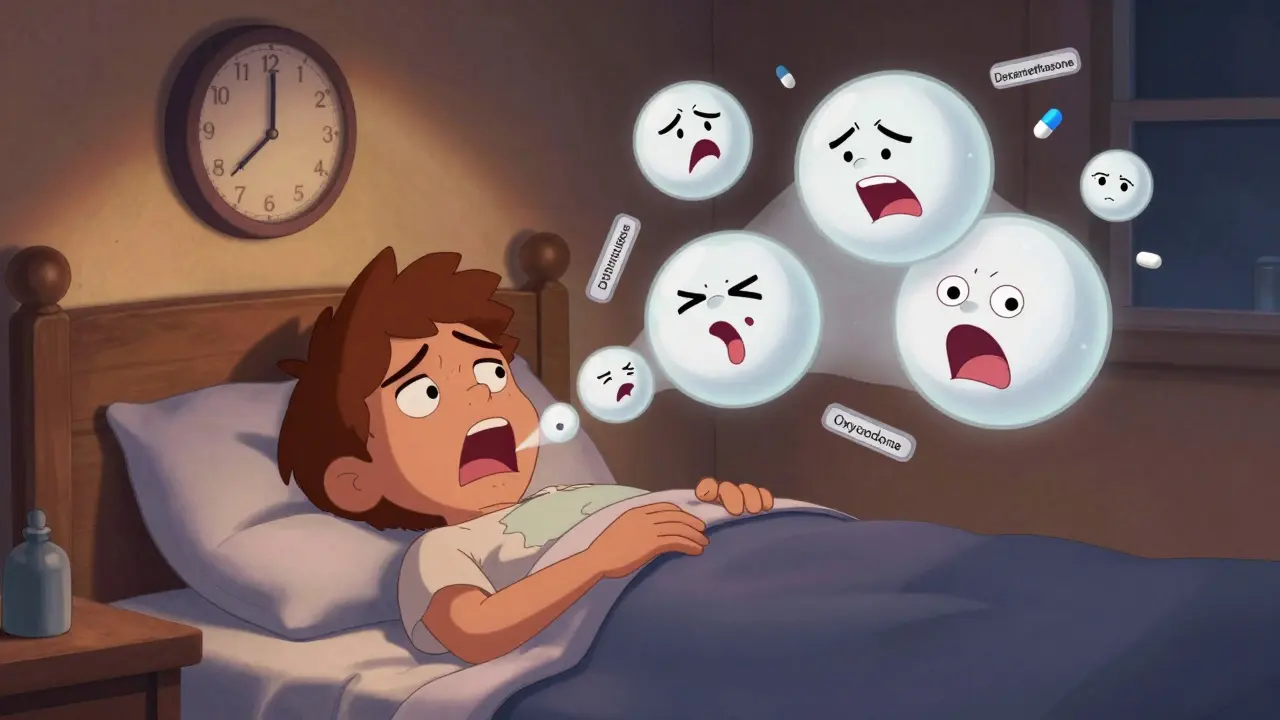
Most people think hiccups are just a funny, annoying glitch - a quick hic that fades after a few minutes. But when hiccups stick around for days or weeks, they’re not funny anymore. They ruin sleep, make eating impossible, and leave you drained. And for some people, the culprit isn’t a too-fast meal or carbonated drink - it’s a medication they’re taking.
Why Your Medicine Might Be Making You Hiccup
Hiccups happen when the diaphragm spasms suddenly, and your vocal cords snap shut. It’s a reflex, controlled by nerves running from your brainstem down to your chest. But certain drugs mess with that system. They don’t just cause nausea or drowsiness - they can directly trigger the hiccup reflex. The biggest offenders? Corticosteroids like dexamethasone and prednisone. These are common in cancer treatment, autoimmune conditions, and even severe allergies. In one study, 41% of patients getting dexamethasone with chemotherapy developed hiccups. That’s not rare - it’s expected. The higher the dose, the worse it gets. Even 4mg a day can do it. Opioids like morphine and oxycodone are another major cause. They can irritate the vagus nerve or cause stomach bloating, both of which set off hiccups. About 5-7% of chronic pain patients on opioids report persistent hiccups. It’s not listed on most pill bottles, but it’s real. Benzodiazepines - drugs like midazolam used before surgery - cause hiccups in up to 12% of patients. Even antibiotics like azithromycin and moxifloxacin have been linked to cases, though they’re rare. The pattern? Drugs that act on the brain, nerves, or digestive system are the most likely culprits.How Long Do Medication Hiccups Last?
Most hiccups from meds are short-lived - less than 48 hours. But about 30% become persistent, lasting more than two days. And 5% turn into intractable hiccups - lasting over a month. That’s when things get serious. People with long-lasting hiccups lose weight. They can’t sleep. Some get depressed. In one case, a patient went 11 days without proper rest after starting prednisone. He lost 12 pounds. His doctor thought it was anxiety. It wasn’t. It was the drug. The timing matters. If hiccups start within hours or days of beginning a new medication, that’s a red flag. If they began after a dose increase? Even more telling. Many doctors miss this link because hiccups aren’t listed as a common side effect on drug labels. That’s why up to 35% of cases get misdiagnosed.What to Do When Your Medicine Gives You Hiccups
First, don’t panic. Don’t stop your meds on your own - especially if it’s for cancer, epilepsy, or a serious condition. But do talk to your doctor. Here’s what works:- Try sugar. Swallow a teaspoon of granulated sugar. In a 2021 study, it stopped hiccups in 72% of people within minutes. No side effects. Easy. Cheap.
- Gargle ice water. Cold刺激 (stimulation) of the throat nerves can reset the reflex. Success rate: 65%.
- Hold your breath. Breathe in deeply, hold for 10-15 seconds, then exhale slowly. Repeat three times. Works about 58% of the time.
When You Need Medicine to Stop the Hiccups
If home tricks fail and hiccups keep going, your doctor might prescribe something. Here’s what’s used - and why.- Baclofen (5mg three times a day): This muscle relaxant targets GABA-B receptors in the brainstem. It’s the top choice for steroid-induced hiccups. Studies show 60-70% success. Side effects? Drowsiness, dizziness. But often worth it.
- Chlorpromazine (25-50mg daily): The only FDA-approved drug for hiccups. It blocks dopamine receptors. Works in about half of cases. But it can cause low blood pressure, tremors, and sedation. Used when nothing else works.
- Ondansetron: Usually for nausea, but some patients report hiccups vanish after switching from dexamethasone to ondansetron for chemo-related nausea. It’s not official, but it’s happening.
What If You Can’t Stop the Medication?
This is the hardest part. Cancer patients need dexamethasone with cisplatin. People with MS need prednisone. Stopping isn’t an option. Here’s the game-changer: prophylaxis. Give baclofen before the steroid. In a 2012 study, giving 5mg of baclofen twice daily before dexamethasone dropped hiccup rates from 41% down to 13%. That’s a 70% reduction. It’s not standard yet. But it should be. If you’re on high-dose steroids and have had hiccups before, ask your oncologist or doctor to add baclofen to your regimen. It’s cheap, safe, and effective.The Bigger Picture: Why This Matters
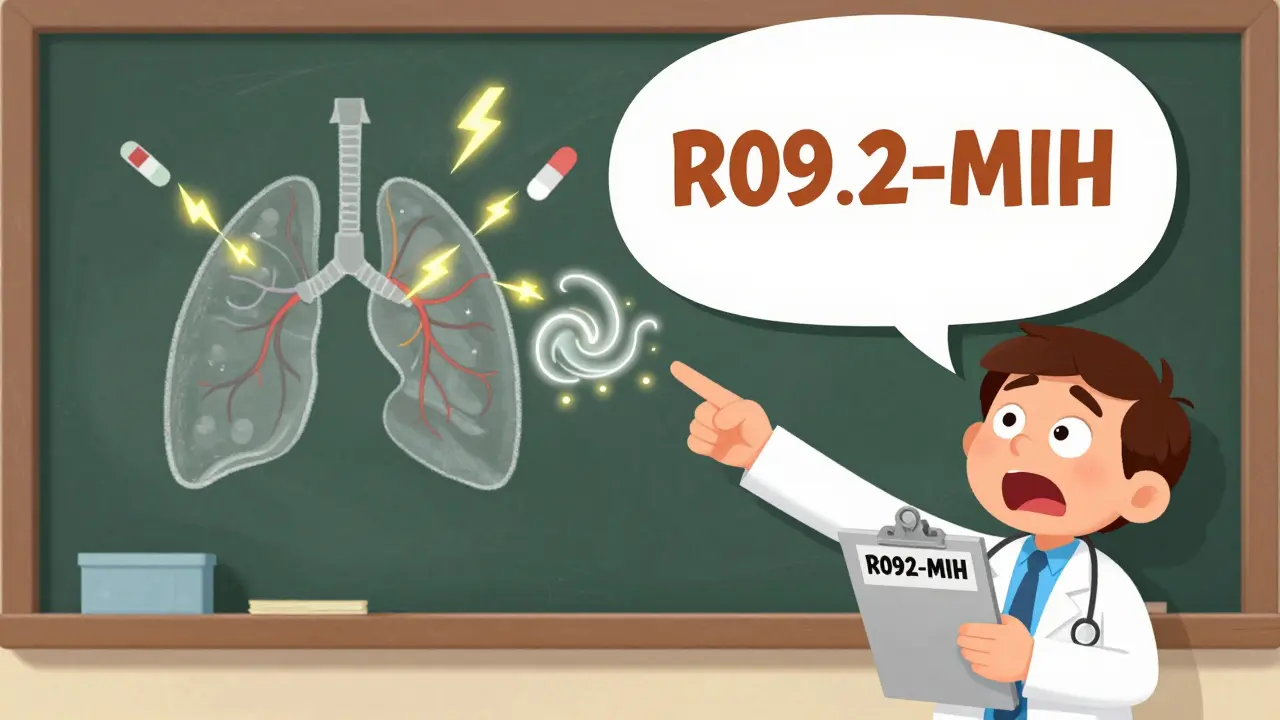
Hiccups from meds aren’t just annoying - they’re costly. People end up in ERs. Get unnecessary CT scans. Miss work. Lose sleep. The U.S. healthcare system spends an estimated $28.7 million a year treating avoidable complications from unmanaged medication-induced hiccups. In January 2024, a new ICD-10 code - R09.2-MIH - was introduced specifically for medication-induced hiccups. That means doctors will start tracking it. Pharmacies will start flagging it. Insurance companies will start paying attention. And new drugs are coming. In June 2023, the FDA gave breakthrough status to a new GABA-B agonist called GBX-204. Early trials show 82% of patients stopped hiccups within days. It’s not on the market yet, but it’s coming.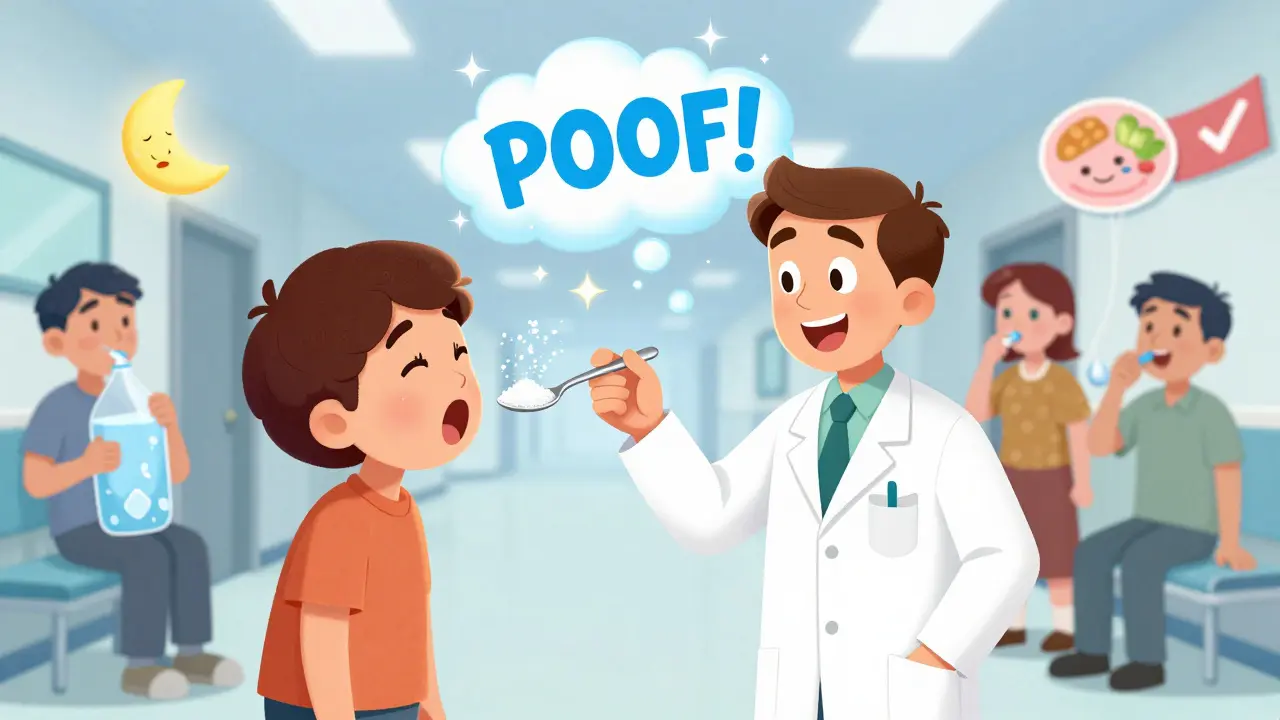
Real Stories, Real Relief
One Reddit user wrote: “After my 8mg dexamethasone dose, I hiccuped nonstop for 72 hours. Couldn’t eat. Couldn’t sleep. My doctor laughed. Then I asked for baclofen. Two hours later - silence.” Another on Drugs.com: “Dexamethasone ruined my chemo experience. Hiccups every night. Then I switched to ondansetron. Gone in a day.” And a patient on Patient.info: “I’d had hiccups for 5 days. My pharmacist suggested sugar. One teaspoon. Stopped. Instantly.” These aren’t outliers. They’re common outcomes when the right fix is applied.What to Ask Your Doctor
If you’re on a new medication and hiccups start:- “Could this drug be causing my hiccups?”
- “Is there a lower dose I can try?”
- “Can we switch to a different drug with fewer side effects?”
- “Would baclofen help prevent this?”
- “Can we try sugar or ice water first before more meds?”

That sugar trick actually worked for me after my last chemo round. I was hiccuping for 36 hours straight. One teaspoon and boom - silence. No joke, I cried. Not from sadness, just relief.
Why isn’t this in every oncology packet?
This is the kind of post that makes me believe in Reddit again. So many people suffer in silence thinking it’s just ‘annoying’ when it’s actually a red flag. Thanks for laying it all out like this.
My dad had steroid hiccups for 11 days. They thought it was acid reflux. Turned out it was the prednisone. Baclofen saved him. Wish more docs knew this.
so uhhhh i think this is all a big pharma scam
they dont want you to know sugar fixes hiccups because then you wont buy their $200 baclofen pills
and why is there a new icd code?? who funds that??
theyre just trying to make you dependent on drugs
also why is the fda letting this happen??
theyre all in cia pocket
ask yourself who benefits
im just saying
why are you telling people to take sugar instead of just stopping the damn meds
if your drug causes hiccups maybe you shouldnt be on it
you dont need a 1500 word essay on this
just quit the steroids if you can
and if you cant then why are you complaining
you signed up for this
also baclofen is a muscle relaxer not a magic wand
grow up
you missed the most important thing
the vagus nerve stimulation from cold water works because it resets the dorsal motor nucleus of the vagus
which is why ice gargling beats holding breath
holding breath is just vagal tone increase
but cold directly inhibits the hiccup center in the medulla
also baclofen is GABA-B agonist not GABA-A
you got that wrong
and sugar? it works because it triggers afferent vagal fibers from the oropharynx
not because it's 'magic'
stop oversimplifying neurophysiology
and yes i'm a neurologist
you're welcome
people are dying from hiccups and you're talking about sugar
you think this is a joke
you think this is a lifestyle tip
no
it's a systemic failure
doctors don't learn this in med school
pharmaceutical labels lie
and patients are left to figure it out on their own
and you call that healthcare
it's not
it's negligence dressed up as advice
I’m so tired of people treating this like a minor annoyance.
My sister was on dexamethasone for lupus. Hiccups for 17 days. She lost 18 pounds. Her kidneys started acting up because she couldn’t hydrate properly.
Her rheumatologist told her to drink more water.
Not one person asked if it was the drug.
Now she’s on baclofen and fine.
But she almost died because no one connected the dots.
Stop normalizing this.
While I appreciate the clinical precision of the piece, I must express my profound concern regarding the normalization of pharmacological interventions for what is, at its core, a neuroreflexive phenomenon. The reliance on baclofen - a GABA-B receptor agonist, as previously elucidated by Dr. Shams - while statistically efficacious, perpetuates a paradigm of pharmacological dependency that is antithetical to holistic neurophysiological equilibrium. Furthermore, the introduction of ICD-10 code R09.2-MIH, while ostensibly a step toward recognition, may inadvertently institutionalize the pathologization of a transient autonomic response, thereby entrenching the very medical-industrial complex that has, in part, precipitated this very crisis. One must ask: Is the solution to medicate the symptom, or to interrogate the causative agent with greater rigor? The sugar intervention, while charmingly archaic, remains the only truly non-invasive, non-pharmaceutical, and ethically unambiguous modality. One is left to wonder: Why must we always reach for the pill before the spoon?
Man. This post hit me like a freight train.
I’ve had hiccups for three days straight after my antibiotics. Thought I was losing my mind.
Then I remembered this thread. Tried the sugar. Didn’t even swallow it - just let it dissolve under my tongue. Hiccups vanished in 47 seconds.
Went to my doc. She said ‘oh yeah, that’s a thing’ like it was common knowledge.
It’s not. It should be.
So thank you. And also - next time I see a pharmacist, I’m handing them a spoon and saying ‘you owe the world this.’