

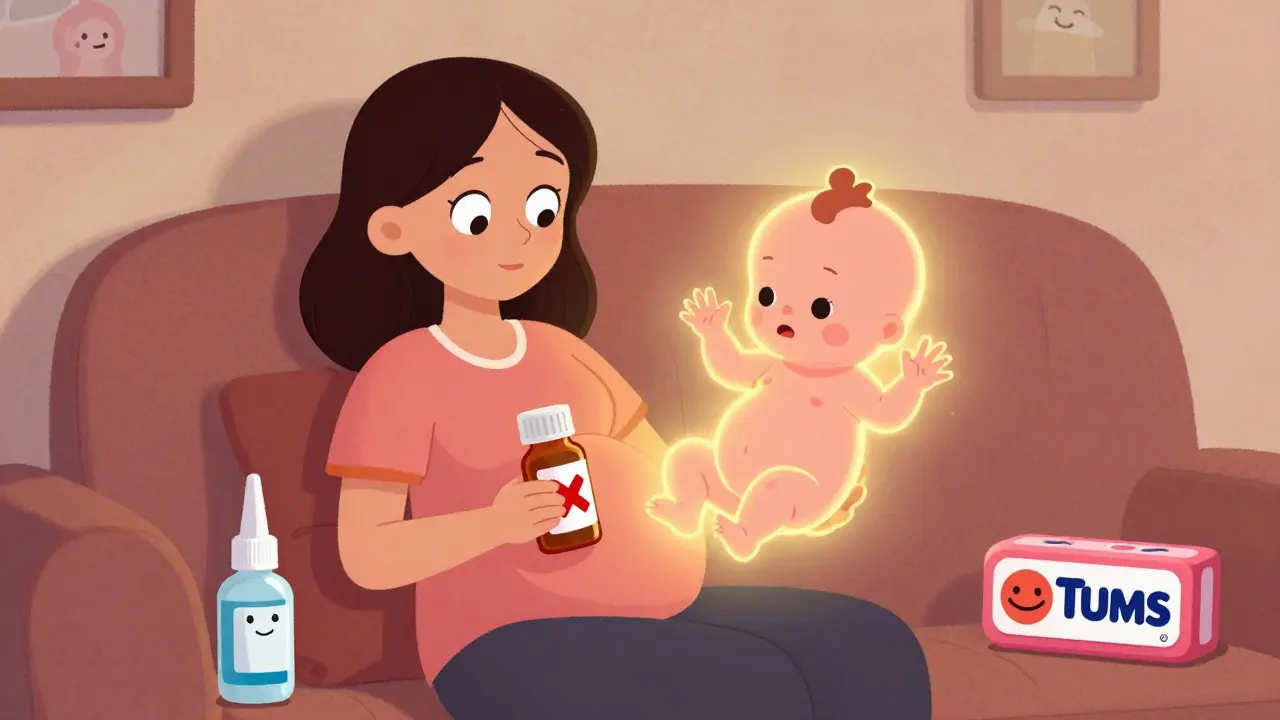
When you're pregnant, every pill, drop, or patch feels like a decision with two lives on the line. You want to feel better-whether it's a headache, a stuffy nose, or heartburn-but you're terrified of hurting your baby. The truth is, not all medications are created equal during pregnancy. Some are safe. Others can cause serious harm, even if you’ve taken them without thinking for years.
What Medications Are Actually Dangerous During Pregnancy?
It’s not just about prescription drugs. Over-the-counter meds, herbal supplements, and even some acne treatments carry real risks. The biggest culprits fall into a few key categories.
NSAIDs like ibuprofen (Advil, Motrin) and naproxen (Aleve) are common pain relievers, but they’re off-limits after 20 weeks of pregnancy. Why? They can shut down your baby’s kidney function, leading to low amniotic fluid (oligohydramnios), which can cause lung underdevelopment and limb contractures. A 2020 FDA warning made this clear, and studies show the risk doubles after this point. Even aspirin, unless prescribed at low doses for preeclampsia prevention, should be avoided.
ACE inhibitors and ARBs-drugs like lisinopril, enalapril, and valsartan-are used for high blood pressure. But they’re toxic to developing kidneys. If taken during pregnancy, they can cause fetal kidney failure, low amniotic fluid, skull underdevelopment, and even death. If you’re on these and planning pregnancy-or find out you’re pregnant-talk to your doctor immediately. There are safer alternatives like methyldopa or labetalol.
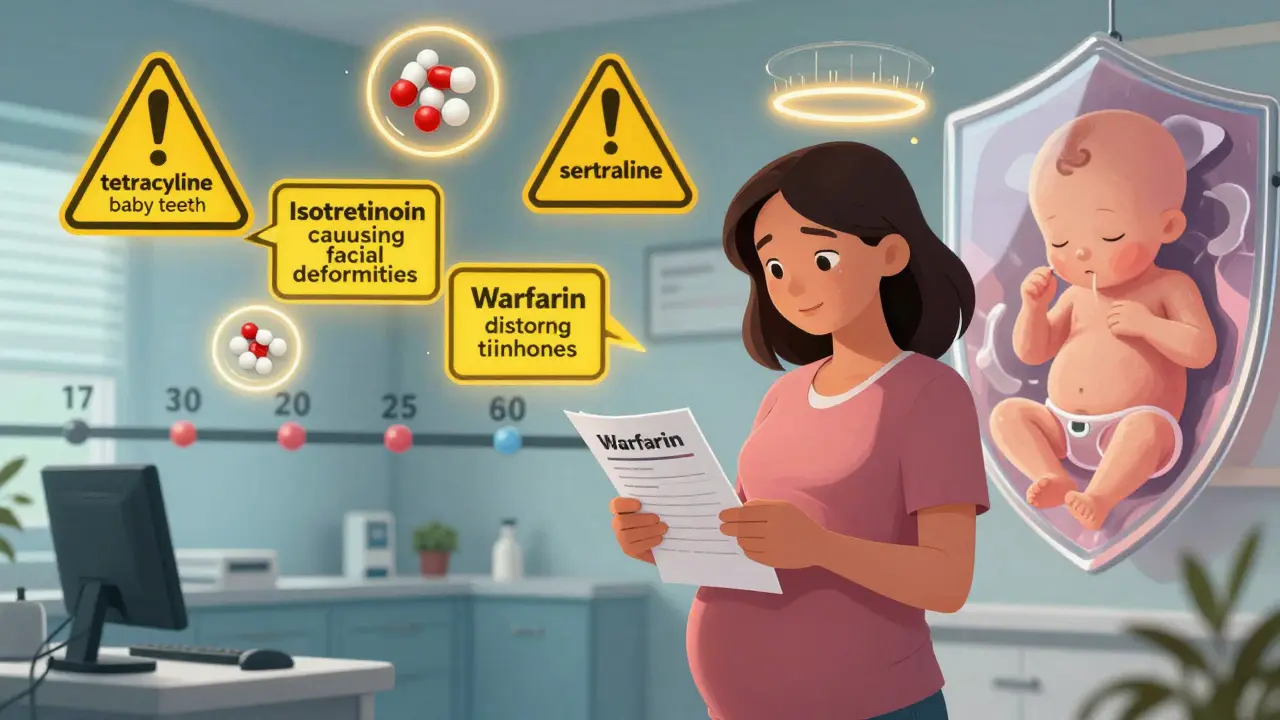
Tetracycline antibiotics (doxycycline, minocycline) aren’t just ineffective for some infections-they stain developing teeth and weaken bones. If you’ve taken these for acne or a sinus infection, your baby’s teeth may come in with a gray or yellow tint. Fluoroquinolones like ciprofloxacin are linked to joint and tendon damage in the fetus.
Isotretinoin (Accutane) for severe acne is one of the most dangerous. Just one dose can cause major birth defects: missing ears, heart problems, brain malformations. The FDA’s iPLEDGE program requires strict birth control for women taking it, but accidents happen. If you’re on this drug and think you might be pregnant, stop immediately and call your doctor.
Valproic acid, used for epilepsy and bipolar disorder, carries a 10.7% risk of major birth defects-nearly four times higher than the general population. These include spina bifida, heart defects, and cognitive delays. If you have epilepsy and are planning pregnancy, switching to lamotrigine or levetiracetam before conception can drop that risk to under 3%.
Warfarin (Coumadin) crosses the placenta and can cause fetal warfarin syndrome: facial deformities, bone problems, and intellectual disability. If you’re on warfarin for a blood clot disorder, switch to heparin (like Lovenox) before getting pregnant. Heparin doesn’t cross the placenta, making it much safer.
The Acetaminophen Debate: Is Tylenol Still Safe?
For decades, acetaminophen (Tylenol) was the gold standard for pain and fever relief in pregnancy. But in September 2025, the FDA issued a new notice to physicians: prolonged or frequent use may increase the risk of ADHD and autism spectrum disorder.
A 2021 JAMA Pediatrics study tracking 95,000 children found a 28.6% higher risk of ADHD and a 20.4% higher risk of autism in kids whose mothers used acetaminophen throughout pregnancy. The risk wasn’t from occasional use for a headache-it was from daily or near-daily use over weeks or months.
Here’s the catch: ACOG still lists acetaminophen as the preferred option. The CDC says to avoid it as a precaution. The FDA says the evidence isn’t conclusive, but the risk is real enough to warrant caution.
So what do you do? If you have a fever of 102°F or higher, untreated high temperature poses a bigger threat to your baby’s brain development than acetaminophen. A 2020 meta-analysis showed hyperthermia increases neural tube defect risk by 8.2 times. In that case, take the lowest effective dose of acetaminophen (325-650 mg) for the shortest time possible.
But for a mild headache or occasional muscle ache? Try a warm compress, rest, or a gentle massage first. Don’t reach for Tylenol out of habit.
Safer Alternatives for Common Pregnancy Complaints
You don’t have to suffer. There are safer ways to manage everyday discomforts.
Pain and fever: Acetaminophen is still the top choice-but use it wisely. Stick to 3,000 mg per day max. Don’t combine it with cold medicines that already contain it. Read labels carefully.
Allergies and runny nose: Second-generation antihistamines like loratadine (Claritin), cetirizine (Zyrtec), and fexofenadine (Allegra) are considered safe. Studies of over 2,000 pregnancies show no increased risk of birth defects. Avoid first-gen ones like diphenhydramine (Benadryl) if possible-they can cause drowsiness and may affect fetal movement.
Nasal congestion: Start with saline sprays or a neti pot. If you need more, pseudoephedrine (Sudafed) is okay after the first trimester. But don’t use it if you have high blood pressure-it can raise your numbers by 5-10 mmHg. Phenylephrine is less effective and not recommended.
Constipation: Fiber is your best friend. Aim for 25-30 grams a day from fruits, veggies, oats, and beans. Drink plenty of water. If you need help, docusate sodium (Colace) is safe and gentle. Polyethylene glycol (Miralax) is also Category B and doesn’t get absorbed into your bloodstream.
Heartburn: Avoid spicy, fatty foods. Eat smaller meals. Elevate your head while sleeping. Calcium-based antacids like Tums are safe in moderation. Avoid those with sodium bicarbonate or magnesium trisilicate.
What About Antidepressants?
Depression during pregnancy is real-and dangerous if left untreated. Untreated depression raises the risk of preterm birth by 64% and low birth weight by 73%.
Paroxetine (Paxil) carries a small but real risk of heart defects (1.5-2% vs. 0.7% baseline). So if you’re on it and pregnant, talk to your doctor about switching to sertraline or citalopram, which have better safety profiles.
But stopping antidepressants? That’s risky too. A 2016 JAMA study found that 20-25% of women who quit SSRIs during pregnancy relapse into depression. That’s worse for the baby than staying on a safer medication.
The goal isn’t to avoid all meds-it’s to use the safest one at the lowest dose. Work with your OB and a psychiatrist to make a plan before you get pregnant, if possible.

What You Should Do Right Now
If you’re pregnant or trying to conceive:
- Make a full list of everything you take-prescription, OTC, vitamins, herbs, supplements.
- Bring it to your next appointment. Don’t assume your doctor knows.
- Ask: “Is this safe in pregnancy?” Not “Is this okay?” The wording matters.
- Use MotherToBaby (free service run by teratology experts). They answer questions 24/7 and have fact sheets on over 1,000 medications.
- Check the FDA’s Pregnancy and Lactation Labeling Rule (PLLR) for updated drug info-no more vague A, B, C, D, X categories.
If you’ve already taken a risky medication:
- Don’t panic. Many exposures don’t lead to problems.
- Call your provider. Tell them exactly what you took, when, and how much.
- Most birth defects happen between weeks 3 and 8. If you took something before then, the risk is often lower.
What’s Changing in 2025 and Beyond
Medication safety isn’t static. The FDA’s 2025 acetaminophen notice is just the start. More drugs will be re-evaluated. The NIH is funding $15 million to find non-drug pain relief options for pregnant women. The ABC Study, tracking 50,000 pregnant women across 15 countries, will give us clearer answers by late 2025.
Meanwhile, lawsuits against acetaminophen manufacturers are moving forward. The first major trial is set for March 2024. This isn’t about blame-it’s about transparency. We need better labeling, better warnings, and better data.
For now, the best rule is simple: Don’t take anything unless you’ve checked with your provider. Even if it’s been safe for years. Pregnancy changes everything.
Is it safe to take Tylenol while pregnant?
Acetaminophen (Tylenol) is still considered the safest pain reliever during pregnancy when used at the lowest effective dose for the shortest time. However, the FDA issued a new warning in September 2025, noting that prolonged or frequent use may be linked to higher risks of ADHD and autism in children. Occasional use for a headache or fever is generally okay, but daily use should be avoided. Always talk to your doctor before using it regularly.
Can I take ibuprofen if I’m pregnant?
No, ibuprofen and other NSAIDs like naproxen should not be used after 20 weeks of pregnancy. They can cause serious kidney problems in the baby and lead to low amniotic fluid. Even before 20 weeks, they’re not recommended unless your doctor says so. Use acetaminophen instead for pain or fever.
What’s the safest allergy medicine during pregnancy?
Loratadine (Claritin), cetirizine (Zyrtec), and fexofenadine (Allegra) are considered safe during pregnancy. Studies involving over 2,000 pregnancies show no increased risk of birth defects. Avoid older antihistamines like Benadryl, which can cause drowsiness and may affect fetal movement.
Are antidepressants safe during pregnancy?
Some antidepressants are safer than others. Paroxetine (Paxil) has a higher risk of heart defects and should be avoided. Sertraline and citalopram are preferred. But stopping antidepressants can increase the risk of depression relapse, which is harmful to both mother and baby. Never stop or switch medication without talking to your doctor.
What should I do if I took a dangerous medication before knowing I was pregnant?
Don’t panic. Many exposures don’t lead to problems. Call your doctor or midwife and tell them exactly what you took, when, and how much. Most birth defects occur between weeks 3 and 8, so if you took the medication before then, the risk is often lower. Your provider may recommend an early ultrasound or referral to a specialist, but most pregnancies proceed normally even after accidental exposure.




Just read this while nursing my 3-month-old and honestly? I wish I’d had this list when I was pregnant. I took ibuprofen for a week thinking it was fine because my mom did it in the 80s. Turns out, she didn’t know either. We’re all just winging it with half the info.
Of course the FDA waits until after half the population is already pregnant to say ‘maybe don’t take Tylenol every day’ like it’s some shocking revelation. Wake up people, corporations don’t care if your kid has ADHD as long as the profit margin’s healthy.
Same. I used Tylenol for 3 months straight because my back was killing me. Now I’m second-guessing every decision. 😔
Don’t beat yourself up. You did what you thought was best with the info you had. The real win is that you’re learning now - and that means you’ll make smarter choices next time. Knowledge is power, not guilt.
This is all part of the globalist agenda to make mothers feel guilty so they’ll take fewer drugs and rely on the state for ‘safe alternatives’ - which are just more control disguised as care. They don’t want you healthy. They want you compliant. Tylenol is fine. Your body knows what to do.
While I appreciate the intent of this comprehensive overview, I must respectfully assert that the lack of standardized, longitudinal, peer-reviewed meta-analyses across diverse maternal populations renders many of the cited associations statistically inconclusive. The correlation between acetaminophen exposure and neurodevelopmental outcomes remains confounded by socioeconomic, genetic, and environmental variables that are neither controlled nor accounted for in the referenced studies. Furthermore, the FDA’s advisory language explicitly denotes ‘potential risk’ rather than established causation - a critical distinction often lost in public discourse.
As a physician in India, I see this daily - women avoiding all meds out of fear, then suffering uncontrolled hypertension or depression, which harms the baby far more than any approved drug. Please, if you're on SSRIs or blood pressure meds - do not stop without consulting your doctor. The fear of pills is worse than the pills themselves. Your health matters too.
For those of us in multicultural families, this is gold. My wife is from Mexico, her mom swore by chamomile tea for everything - turns out, it’s not safe in large doses. We used MotherToBaby and got a call back in 10 minutes. No judgment, just facts. That’s the kind of support we need - not fear, not ads, not influencers. Real science, real people.
Too long. Don't read.
I took Zyrtec every day for my allergies and didn't even think twice. Now I'm wondering if I should've tried saline sprays more. But I also didn't want to be miserable. Guess there's no perfect answer
Thank you for this meticulously researched and compassionate guide. As a healthcare provider, I have witnessed the profound anxiety that accompanies pregnancy and medication use - often compounded by misinformation, cultural stigma, and fragmented care. The distinction between ‘avoid’ and ‘contraindicated’ is not merely semantic; it is lifesaving. Your emphasis on individualized risk assessment, early consultation, and the critical importance of treating maternal mental health as a prenatal priority reflects the highest standards of evidence-based, patient-centered care. I will be distributing this to every expectant patient in my practice. The clarity, nuance, and humanity embedded in these recommendations are rare - and deeply needed.